
The Supreme Court has cancelled the bail granted to a Maharashtra corporator and three other accused in a case concerning the alleged assault and intimidation of doctors and medical staff at Shastri Nagar Municipal Hospital, Dombivli.
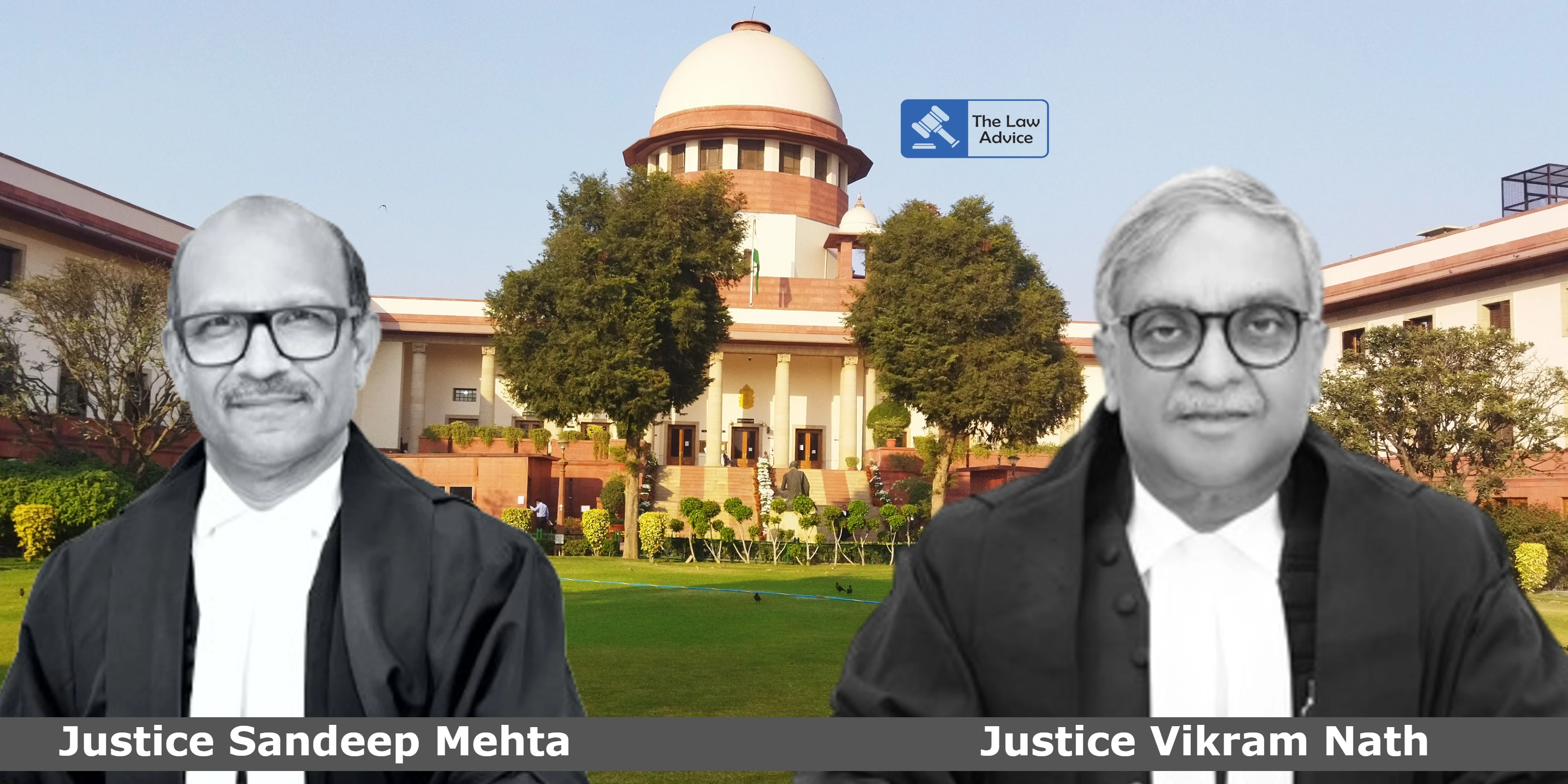
A Bench of Justice Vikram Nath and Justice Sandeep Mehta held that the High Court had failed to properly consider material circumstances, including the criminal antecedents of the accused, the alleged influence exercised by the principal accused and the impact of the incident on the medical fraternity. Pasted markdown
The Court was dealing with an appeal filed by the State of Maharashtra against the Bombay High Court's August 7, 2026 order restoring bail to the accused.
According to the prosecution, on July 6, 2026, Ramesh Sukrya Mhatre, an elected Corporator of the Kalyan Dombivli Municipal Corporation from Ward No. 24, allegedly led three others in assaulting and verbally abusing three doctors, including a woman doctor, who were on duty in the Labour Ward of Shastri Nagar Municipal Hospital.
The incident allegedly arose out of a dispute concerning the shifting of a pregnant woman in labour.
An FIR was registered on July 7, 2026 under various provisions of the Bharatiya Nyaya Sanhita, 2023 and the Maharashtra Medicare Service Persons and Medicare Service Institutions (Prevention of Violence and Damage or Loss to Property) Act, 2010.
The accused were subsequently granted bail by the Magistrate. The Bombay High Court initially stayed those bail orders after taking suo motu cognizance of the incident, but later restored bail subject to conditions, including a direction that the accused reside outside Maharashtra until commencement of trial.
The Supreme Court emphasised the special responsibility carried by doctors and observed that a doctor must be able to exercise professional judgment without the apprehension of physical violence, intimidation or coercion.
The Court stressed that patients and their families have every right to question medical treatment, complain of negligence or delay and pursue remedies available in law. However, threat, violence and coercion cannot replace lawful remedies for expressing dissatisfaction with medical treatment.
The Court observed that an atmosphere of fear in a healthcare institution can affect the safe and effective delivery of medical care.
It further held that any attempt to intimidate or assault medical professionals while they are discharging their duties cannot be tolerated, particularly when such conduct is attributed to a person holding elected office.
The Supreme Court noted that the High Court had initially found prima facie grounds to stay the Magistrate's bail orders and had directed the principal accused to surrender.
However, while subsequently restoring bail, the High Court relied primarily upon the period of custody undergone, progress in investigation and the expected completion of forensic analysis.
The Supreme Court held that the High Court had not identified any intervening circumstance sufficient to displace its earlier prima facie assessment.
The Court observed that mere passage of time in custody, progress in investigation or anticipated completion of forensic analysis, without anything further, does not explain why circumstances earlier considered relevant had ceased to operate.
The Supreme Court also took note of the criminal antecedents attributed to Ramesh Mhatre, against whom 18 criminal cases were stated to have been registered, including cases involving serious offences under Sections 302 and 307 of the IPC.
The Court reiterated that criminal antecedents are a relevant consideration while deciding bail, particularly where they may bear upon the likelihood of repetition of criminal conduct, interference with justice or intimidation of witnesses.
The Court also noted that although the accused had secured acquittal or discharge in 16 proceedings, the nature of the allegations and the overall circumstances could not be completely ignored while assessing the apprehension of influence over witnesses.
The Supreme Court ultimately set aside the Bombay High Court's order insofar as it restored the bail granted to the four accused.
The bail granted to all four accused has consequently been cancelled, and they have been directed to surrender before the concerned trial court on or before October 5, 2026.
The Court clarified that if there is a material change in circumstances, the accused would remain at liberty to renew their prayer for bail before the appropriate forum.
The Supreme Court also directed the Special Fast Track Court to endeavour to conclude the trial as expeditiously as possible and, in any event, within six months from the date of the order.
Given that the prosecution case substantially relies upon the testimony of doctors and hospital staff, the Court directed the trial court to ensure adequate protection to all material witnesses and to take appropriate protective measures wherever there is an apprehension of threat, intimidation or coercion.
Case: State of Maharashtra v. Ramesh Sukrya Mhatre & Ors.
Citation: 2026 INSC 1075
Date of Judgment: 28 September 2026
Bench: Justice Vikram Nath and Justice Sandeep Mehta

Website designed, developed and maintained by webexy