
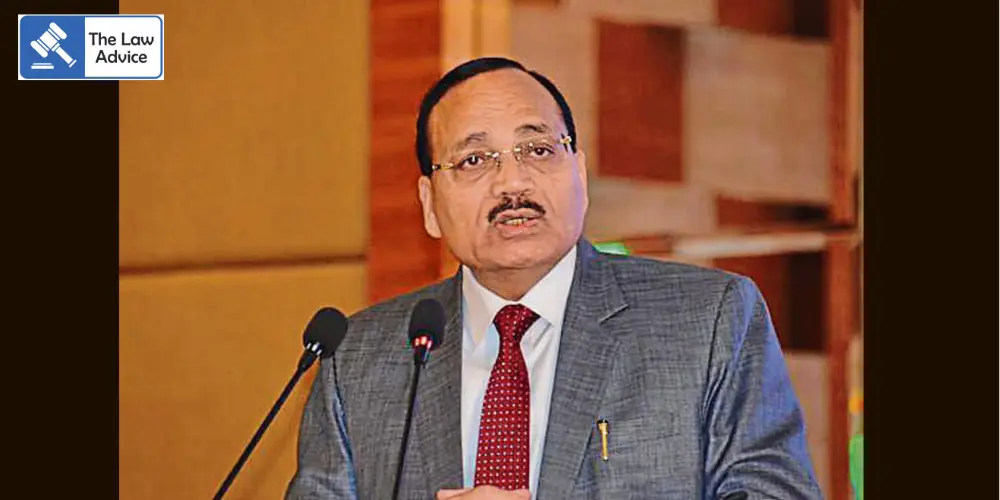
For the first time, the Supreme Court held vacation benches during the winter break, with Chief Justice of India Surya Kant himself presiding over sittings to hear urgent matters involving life and liberty and cases requiring immediate judicial intervention.
Traditionally, the Supreme Court holds vacation benches only during the longer summer recess, now referred to as partial court working days. This year, the court decided to change the past practice by constituting vacation benches even during the shorter winter break.
The Supreme Court remained closed for Christmas and New Year holidays from December 22 to January 2, 2026, and is scheduled to reopen on January 5.
Earlier, on 19th December CJI Kant had made it clear that vacation benches, including those headed by him, would sit to take up urgent cases.
On December 22, the first day of the winter recess, a vacation bench comprising the CJI and Justice Joymalya Bagchi heard 17 urgent matters, spanning both criminal and civil cases. The Supreme Court said the special sittings were arranged to ensure that pressing cases did not go unheard during the holiday period.
A week later, on December 29, a three-judge vacation bench led by CJI Kant took up a suo motu case concerning the revised definition of the Aravalli hills amid public concern. The bench kept in abeyance its earlier directions issued on November 20, which had accepted a uniform definition of the Aravalli ranges, noting the need to address critical ambiguities. The court flagged concerns over whether criteria such as a 100-metre elevation and a 500-metre gap between hills could potentially strip large portions of the range of environmental protection.
During the winter break, a vacation bench comprising Justices J K Maheshwari and Augustine George Masih also stayed the Delhi High Court’s order suspending the life sentence of expelled BJP leader Kuldeep Singh Sengar in the 2017 Unnao rape case, directing that he should not be released from custody. While hearing the CBI’s challenge to the high court order, the bench said substantial questions of law had arisen and sought Sengar’s response.
On the last day of the year, a vacation bench of Justices M M Sundresh and Prashant Kumar Mishra conducted online hearings in two matters, including a habeas corpus petition alleging illegal arrest by the Uttar Pradesh Police and a civil dispute relating to property.
Meanwhile, on December 29, the Supreme Court also issued a standard operating procedure (SOP) laying down timelines for oral arguments and written submissions by lawyers in all cases. The SOP, which takes effect immediately, requires counsel to submit proposed timelines for oral arguments at least a day before the hearing through the court’s online portal. It also mandates filing of written submissions, limited to five pages, at least three days in advance after serving a copy on the opposite side.
The move is aimed at improving court management and speeding up the delivery of justice. Chief Justice Surya Kant has earlier indicated that further measures to rationalise judicial time are likely to be introduced in the new year
Website designed, developed and maintained by webexy