
The Supreme Court has held that private individuals can file criminal complaints against election candidates for allegedly furnishing false information or concealing information in their election affidavits under Section 125A of the Representation of the People Act, 1951.
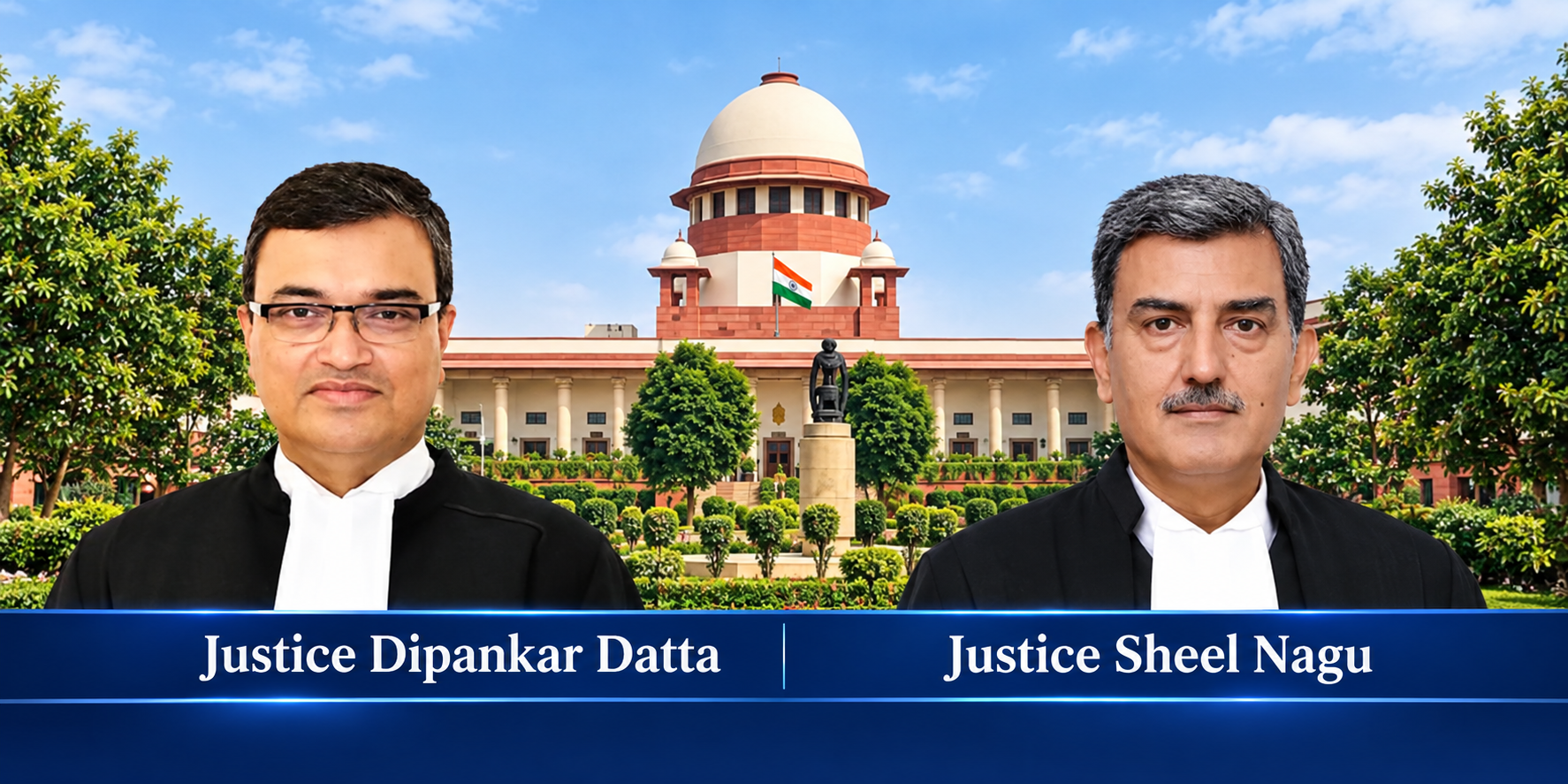
A bench of Justice Dipankar Datta and Justice Sheel Nagu ruled that such complaints are not barred by Section 195(1) of the Code of Criminal Procedure (CrPC), 1973, which requires a complaint by the concerned public servant for certain specified offences.
The Court observed that Section 125A, which penalises candidates for knowingly providing false information or concealing information in their nomination papers or affidavits, does not fall within the offences covered by Section 195(1) of the CrPC.
“If indeed it were the intention of the legislature that cognizance of any offence relating to furnishing of false information by a candidate in an affidavit with intent of being elected in an election could only be taken if the complainant were a public servant, the same could have been provided by an amendment of Section 195, CrPC,” the Court observed.
Justice Datta, who authored the judgment, noted that Section 125A was introduced in 2002, while Section 195 of the CrPC was amended in 2006. However, the legislature did not include Section 125A among the offences covered by Section 195, indicating that the omission was deliberate.
The bench further noted that no statutory provision restricts the filing of complaints under Section 125A exclusively to public servants. It also relied on the provision in Section 125A that its punishment applies “notwithstanding anything contained in any other law for the time being in force”.
The ruling came in an appeal filed by Rajkumar Madki challenging a Karnataka High Court decision that quashed his criminal complaint against Dr. Shailendra Beldale, a Karnataka Legislative Assembly member elected from the Bidar constituency in 2023.
Madki had alleged that Beldale furnished a false declaration regarding his residential address in the affidavit accompanying his nomination papers. He subsequently filed a complaint under Section 200 of the CrPC before the Additional Chief Metropolitan Magistrate in Bengaluru, alleging an offence under Section 125A of the Representation of the People Act.
The Karnataka High Court quashed the complaint, holding that Section 195(1) of the CrPC applied and that proceedings could be initiated only on a complaint by the Election Commission of India or the concerned public servant, and not by a private individual.
Before the Supreme Court, Beldale's counsel argued that permitting private complaints could encourage frivolous criminal proceedings against elected representatives and undermine the purpose of Section 125A.
The counsel also relied on a June 2020 press note issued by the Election Commission, which stated that complaints alleging serious omissions in candidates' affidavits would be examined and referred to investigating authorities on a case-by-case basis.
Rejecting this argument, the Supreme Court clarified that the Election Commission's guidelines and press notes do not bind courts while interpreting statutory provisions.
“Interpretation of statutes is primarily the task of the courts,” the bench observed.
However, the Supreme Court declined to revive the criminal proceedings against Beldale. It noted that the documents placed on record prima facie rebutted the allegation concerning his residential address and that the possibility of conviction appeared remote.
The Court held that allowing the proceedings to continue would unnecessarily consume judicial time. It therefore upheld the High Court's decision to quash the complaint, albeit on different grounds.
The bench clarified that magistrates can take appropriate action against frivolous complaints or proceedings intended to harass elected candidates, depending on the facts and circumstances of each case.
The appeal was accordingly disposed of, with the parties directed to bear their own costs.
Appearances:
For the petitioner: Senior Advocate Meenakshi Arora, Advocate Sharanagouda Patil, Advocate S. B. Mathapati, Advocate Supreeta Sharanagouda, Advocate Vinod Kumar Srivastava, Advocate Yash S. Tiwari and M/s S-Legal Associates, AOR.
For the respondent: Senior Advocate Anand Sanjay M. Nuli, Advocate Gourish Khashampur, Advocate Akhila Wali, Advocate Suraj Kaushik, Advocate Nanda Kumar K.B., Advocate Dharm Singh, Advocate Abhishek Kanyalur, Advocate Divya Sinha, Advocate Ashritsai P. Torgal, Advocate Tanya Chhillar, Advocate Aryaman Dubey and M/s Nuli & Nuli, AOR.
Website designed, developed and maintained by webexy