
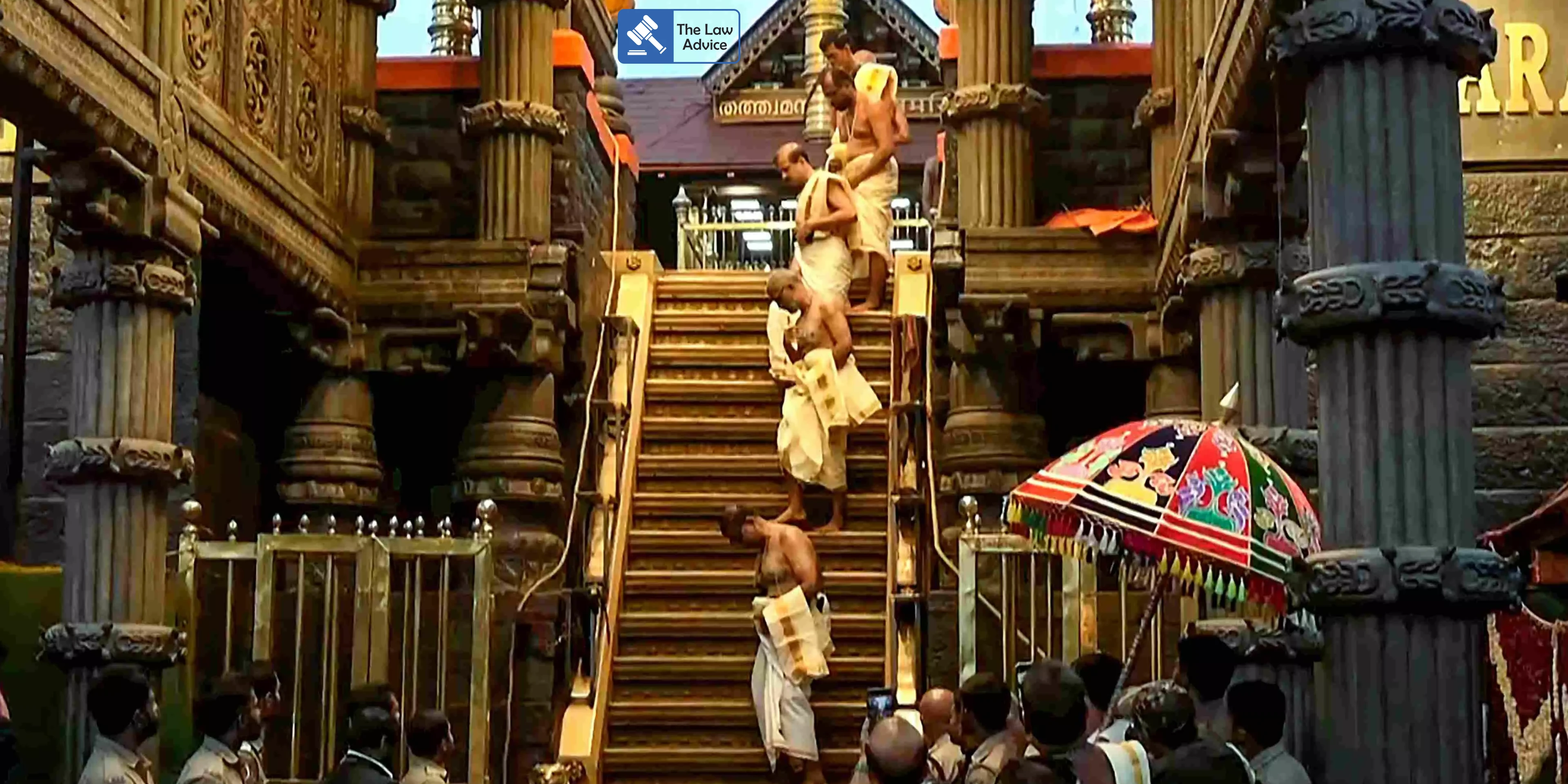
Today, the Supreme Court observed that India’s strength as a civilisation lies in its diversity and plurality, with Justice BV Nagarathna remarking that the issues being considered by the nine-judge bench in the Sabarimala reference would have implications far beyond a single religion.
The observations came during the hearing of submissions by senior advocate Raju Ramachandran on the issue of ex-communication in the Dawoodi Bohra community. The matter is part of the larger Sabarimala reference arising from the 2018 Constitution Bench verdict that allowed entry of women of all age groups into Kerala’s Lord Ayyappa temple.
During the hearing, Justice Nagarathna reflected on the unique nature of Indian society and said that despite its many diversities and differences, India continues to remain a civilisation.
“What is unique about India as compared to any other region? We are a civilisation despite having so many pluralities and diversities. Diversity is our strength,” she observed.
The judge said that while India is a sovereign democratic republic, one constant that continues to define Indian society is the deeply personal relationship people share with religion. She noted that the Court was grappling with difficult questions surrounding religious reform, including who can question a religious practice, whether reform must come from within a denomination, the extent to which the State can intervene, and the role courts should play in such disputes.
“What we lay down as a nine-judge bench is for a civilisation. That civilisation is India,” Justice Nagarathna remarked, adding that the Court was conscious of preserving the balance between constitutional values and India’s civilisational fabric.
Responding to the Court’s concerns, Ramachandran argued that India’s identity as a civilisation exists within the framework of the Constitution and practices contrary to constitutional principles cannot continue merely because they are rooted in tradition.
“We are a civilisation under a Constitution, and therefore nothing which goes against the grain of our Constitution can be continued in a civilised society governed by the Constitution,” he submitted.
He further argued that constitutional courts cannot adopt a “hands-off” approach in matters involving alleged violations of fundamental rights simply because such disputes arise from religious practices. According to him, it is the duty of the Court to determine whether a practice infringes constitutional protections.
Appearing for petitioners challenging the practice of ex-communication in the Dawoodi Bohra community, Ramachandran submitted that such practices often lead to severe social consequences, including ostracism, broken families, loss of employment and denial of access to community spaces such as mosques and burial grounds. He contended that ex-communication effectively deprives an individual of rights protected under Article 25(1) of the Constitution.
At the outset, Justice Nagarathna asked whether the practice of ex-communication still continued within the community. Ramachandran replied in the affirmative and said the issues before the Court went beyond temple entry and raised broader concerns about dignity, equality and religious freedom.
He argued that constitutional questions under Articles 25 and 26 cannot be examined in isolation without understanding the factual realities in which they arise. Referring to issues such as exclusion of Parsi women marrying outside the faith and female genital mutilation in the Dawoodi Bohra community, he said these examples highlighted the real-life impact of such practices.
Chief Justice of India Surya Kant clarified that the nine-judge bench was not deciding individual disputes concerning Parsis, Dawoodi Bohras or female genital mutilation, but was instead examining broader constitutional questions relating to the interplay between Articles 25 and 26 and the extent of judicial review over religious practices.
Ramachandran agreed that those specific controversies were not directly before the bench, but said generations of people had suffered humiliation and exclusion because of such practices.
“It amounts almost to a civil death for a person,” he submitted, adding that many affected individuals approach courts only after enduring years of indignity and social stigma.
He also pointed out that the petition challenging ex-communication had remained pending before the Supreme Court for nearly four decades before eventually being connected with the larger constitutional reference.
Justice Nagarathna also raised concerns about courts repeatedly being called upon to adjudicate competing claims within religious groups. She observed that another section of the same community could later approach the Court seeking restoration of ex-communication as part of their religious rights.
The nine-judge bench is presently hearing the Sabarimala reference and examining seven constitutional questions that are expected to have far-reaching implications not only for women’s entry into the Sabarimala temple, but also for issues involving entry of women into mosques, ex-communication practices among Parsis and Dawoodi Bohras, and female genital mutilation within the Dawoodi Bohra community.
Website designed, developed and maintained by webexy