
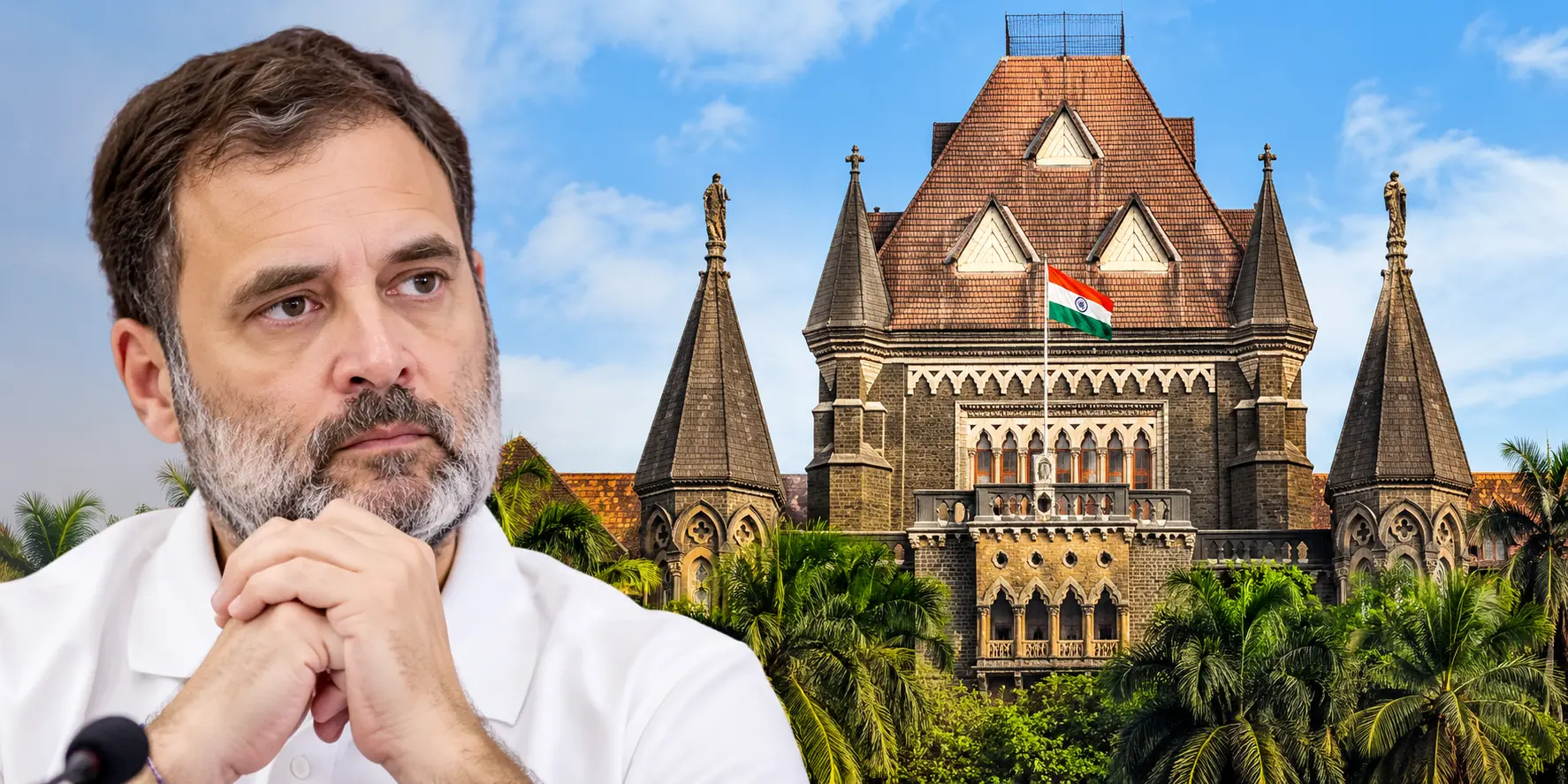
The Bombay High Court has refused to quash a defamation case filed against Congress leader and Leader of Opposition in the Lok Sabha Rahul Gandhi over alleged defamatory remarks concerning Prime Minister Narendra Modi.
Justice NR Borkar dismissed Gandhi’s plea challenging the order of the Girgaon Magistrate Court that had issued summons to him in the case.
The Court held that there was no apparent illegality or perversity in the Magistrate’s order warranting interference under the High Court’s inherent jurisdiction under Section 482 of the Code of Criminal Procedure (CrPC).
“In absence of any manifest illegality, perversity in the impugned order, it is not a fit case for interference in exercise of inherent jurisdiction under Section 482 of the CrPC.”
The Court further observed that, considering the overall facts and circumstances, it found no infirmity in the Magistrate’s order.
While rejecting the plea, the High Court granted Gandhi six weeks’ relief from appearing before the Magistrate Court, allowing him time to challenge the High Court's decision before the Supreme Court.
The case was initiated by Mahesh Shrishrimal, a member of the BJP Maharashtra Pradesh Committee, before the Girgaon Magistrate Court.
According to the complaint, Gandhi allegedly made defamatory remarks about Prime Minister Modi during a rally in Rajasthan in September 2018. The complainant alleged that the remarks resulted in Modi being trolled across news channels and social media platforms.
The Magistrate Court issued summons to Gandhi in August 2019. Gandhi subsequently challenged the summoning order before the Bombay High Court after receiving the summons in July 2021.
During the proceedings, the High Court had sought assistance from Maharashtra Advocate General Milind Sathe on important questions of law arising from Gandhi’s plea.
Appearing before the Court, Sathe submitted that the material on record disclosed a prima facie offence, thereby limiting the scope of the High Court’s interference at the stage of quashing.
He also argued that Section 199 CrPC and Explanation 2 to Section 499 IPC did not prevent the complainant from maintaining the proceedings, and submitted that a BJP member could claim to be an aggrieved person in the circumstances of the case.
Senior Advocate Sudeep Pasbola, appearing for Gandhi along with advocate Kushal Mor, argued that the complaint was frivolous, vexatious and politically motivated.
He contended that Section 199(2) CrPC barred such a private complaint concerning a public servant. He further argued that under Explanation 2 to Section 499 IPC, a political party does not constitute a “group of persons” capable of maintaining a defamation complaint merely because remarks were made against its leadership.
Pasbola also cautioned that permitting individual political party members to initiate defamation proceedings over statements concerning party leadership could result in a floodgate of politically motivated prosecutions.
Opposing Gandhi’s plea, advocate Rohan Mahadik, appearing for Shrishrimal, submitted that the complainant had established a prima facie case by deposing in support of his complaint and producing supporting material.
The Court ultimately held that the alleged defamatory imputation was capable, at this stage, of extending to persons clearly identified with the BJP and its leadership, including office bearers.
The Court relied upon the principle laid down in John Thomas, observing that whether the alleged imputations were confined only to the Prime Minister or also cast a shadow upon members and functionaries of the political party would require appreciation of the evidence and context.
According to the Court, that determination should be left for the trial, rather than conclusively decided while exercising the limited jurisdiction under Section 482 CrPC.
The High Court therefore declined to quash the Magistrate’s order summoning Rahul Gandhi.
Website designed, developed and maintained by webexy