
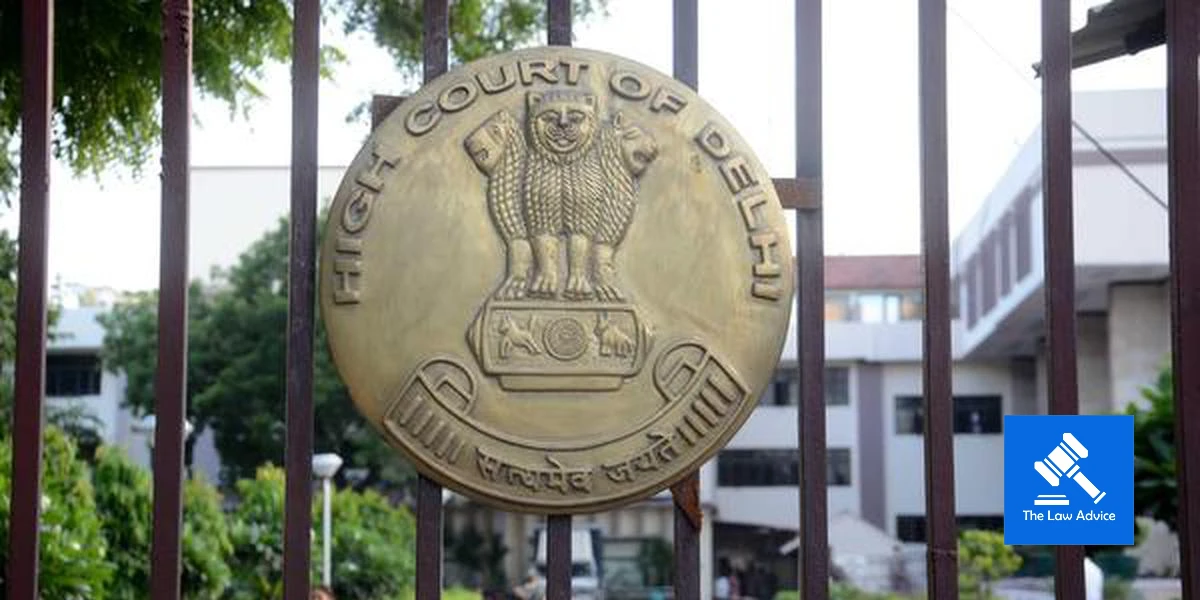
The Delhi High Court has dismissed a plea seeking directions to the Union Government to frame a policy mandating all Union Ministers to interact with citizens for at least two hours daily through video conferencing.
The bench of Justice Purushaindra Kumar Kaurav held that the relief sought falls squarely within the executive’s domain and cannot be enforced through a writ of mandamus under Article 226 of the Constitution.
“The grievance raised pertains to the formulation of a policy requiring Union Ministers to interact with citizens on a daily basis. It is well settled that framing policies, designing administrative mechanisms, and determining how executive functions are discharged lie exclusively within the executive’s domain,” the Court observed.
The Court further noted that constitutional courts ordinarily refrain from interfering in such policy matters unless there is a clear violation of statutory provisions, constitutional mandates, or evident arbitrariness.
The petitioner, Omkar Sharma, a retired senior manager from a nationalised bank, had urged the Court to direct the Centre to ensure daily virtual accessibility of Union Ministers to the public. He also sought to have his plea treated as a Public Interest Litigation (PIL).
Sharma claimed that he had faced repeated instances of mistreatment by government departments and argued that the absence of direct access to ministers hindered effective grievance redressal.
Rejecting the plea, the Court emphasized that issuing such directions would amount to encroaching upon the executive’s exclusive sphere and would violate the doctrine of separation of powers.
“There is no justification to direct the respondent to frame and implement such a scheme mandating daily interaction by Union Ministers through video conferencing,” the Court held.
It added that such matters must be addressed by the concerned ministries or public representatives, and no mandamus can be issued in this regard.
Accordingly, the Court dismissed the petition as devoid of merit, along with all pending applications.
Case Title: Omkar Sharma v. Union of India
Website designed, developed and maintained by webexy