
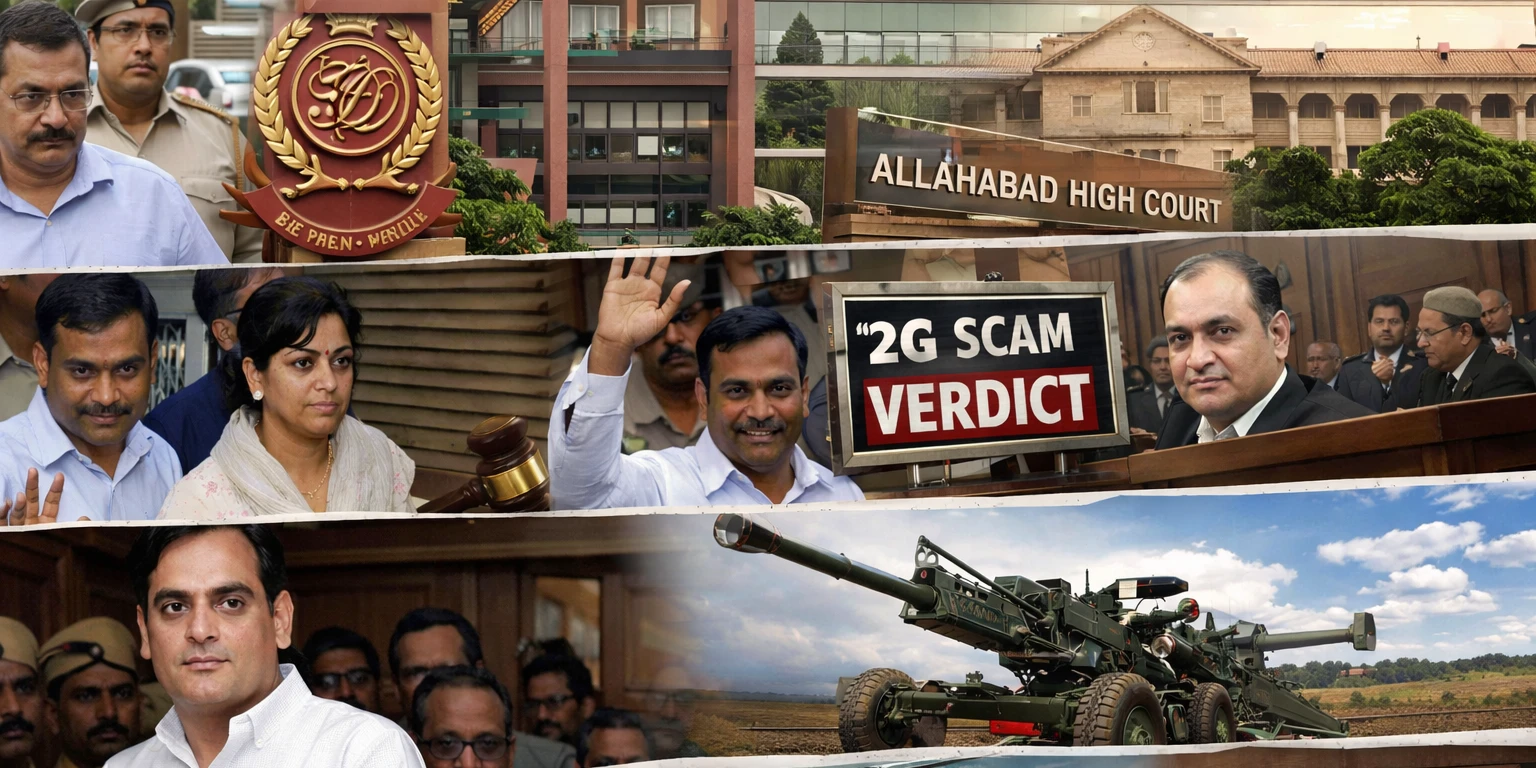
The Unsuccessful Trials of CBI and ED: A Critical Analysis of High-Profile Prosecutions
The Arvind Kejriwal Delhi Excise Policy Case

The arrest of Arvind Kejriwal in connection with the alleged Delhi Excise Policy scam marked one of the most politically sensitive actions by the Enforcement Directorate (ED) in recent years.
Background
The ED alleged irregularities and money laundering in the formulation and implementation of the Delhi Excise Policy 2021–22. The case was registered under the Prevention of Money Laundering Act (PMLA).
Judicial Developments
- Multiple rounds of arrest, remand, and bail proceedings occurred.
- Constitutional questions were raised regarding the timing of arrest, evidentiary standards under PMLA, and the scope of ED’s powers.
- Courts scrutinized the “proceeds of crime” theory and the evidentiary basis for custodial interrogation.
Why It Raises Concerns
While the matter remains sub judice and no final conviction has occurred, critics argue that:
- Arrest preceded full evidentiary crystallization.
- Prolonged incarceration became a central feature rather than trial progress.
- The case reflects a broader pattern where high-profile arrests dominate headlines but convictions remain distant.
The Aarushi Talwar Murder Case


4
Investigated by the Central Bureau of Investigation (CBI), the 2008 Noida double murder case became symbolic of investigative inconsistency.
Outcome
- Trial court conviction in 2013.
- Acquittal by the Allahabad High Court in 2017 due to lack of conclusive evidence.
Key Failures
- Contaminated crime scene.
- Shifting investigative theories.
- Weak circumstantial chain.
The 2G Spectrum Case

Once described as one of India’s largest corruption scandals, the 2G case resulted in a complete acquittal in 2017.
Court’s Observation
The Special CBI Court held that the prosecution failed to prove its charges and relied on misinterpretation of documents.
Implication
Years of investigation ended without conviction—raising questions about evidentiary standards in white-collar crime.
The Bofors Scandal


The Bofors case remains one of India’s longest-running corruption investigations.
Why It Collapsed
- Delay spanning decades.
- Extradition challenges.
- Death of key accused.
The case eventually faded without meaningful conviction.
The AgustaWestland Chopper Scam

Another high-profile defence procurement case investigated by both CBI and ED.
Observed Issues
- Prolonged custody and bail litigation.
- Delay in trial commencement.
- Questions on admissibility of statements.
Despite dramatic arrests and extradition, convictions remain elusive.
The INX Media Case


This case involved allegations of irregular Foreign Investment Promotion Board approvals.
Current Status
- Arrests and multiple bail orders.
- Trial progression remains slow.
- No conviction to date.
Structural Problems Behind Unsuccessful Prosecutions
Across these cases, recurring patterns emerge:
1. Arrest-First, Evidence-Later Approach
High-profile arrests create political and media impact, but evidentiary gaps surface during trial.
2. Over-Reliance on Circumstantial or Documentary Interpretation
White-collar crime requires precise financial tracing; weak linkage collapses in court.
3. Delay in Investigation and Trial
Prolonged litigation weakens witness reliability and public confidence.
4. Procedural Lapses
Improper seizure, flawed sanction, or inconsistent charge framing damages prosecution.
5. Political Sensitivity
Cases involving powerful individuals attract allegations of selective prosecution.
Judicial Criticism and Institutional Concerns
The Supreme Court of India famously described the CBI as a “caged parrot” during coal allocation hearings, reflecting concerns over autonomy and independence.
Similarly, courts have increasingly scrutinized ED’s powers under the Prevention of Money Laundering Act, particularly regarding arrest, bail, and evidentiary presumptions.
Conclusion
The issue is not merely about acquittals—it is about credibility of prosecution.
When agencies like CBI and ED conduct dramatic investigations that end without conviction, three consequences follow:
- Public faith erodes.
- Accused claim vindication.
- The justice system appears politicised.
The solution lies not in aggressive arrest strategy, but in:
- Evidence-based investigation
- Procedural discipline
- Institutional independence
- Time-bound trials
Only then can enforcement move from headline prosecution to sustainable conviction.
If you would like, I can now provide:
- A publishable journal-style version with footnote structure
- A YouTube teleprompter script for “The Law Advice”
- Snippet, keywords, and SEO strategy
- A comparative conviction-rate analysis of CBI vs ED
Just tell me the format you prefer.