
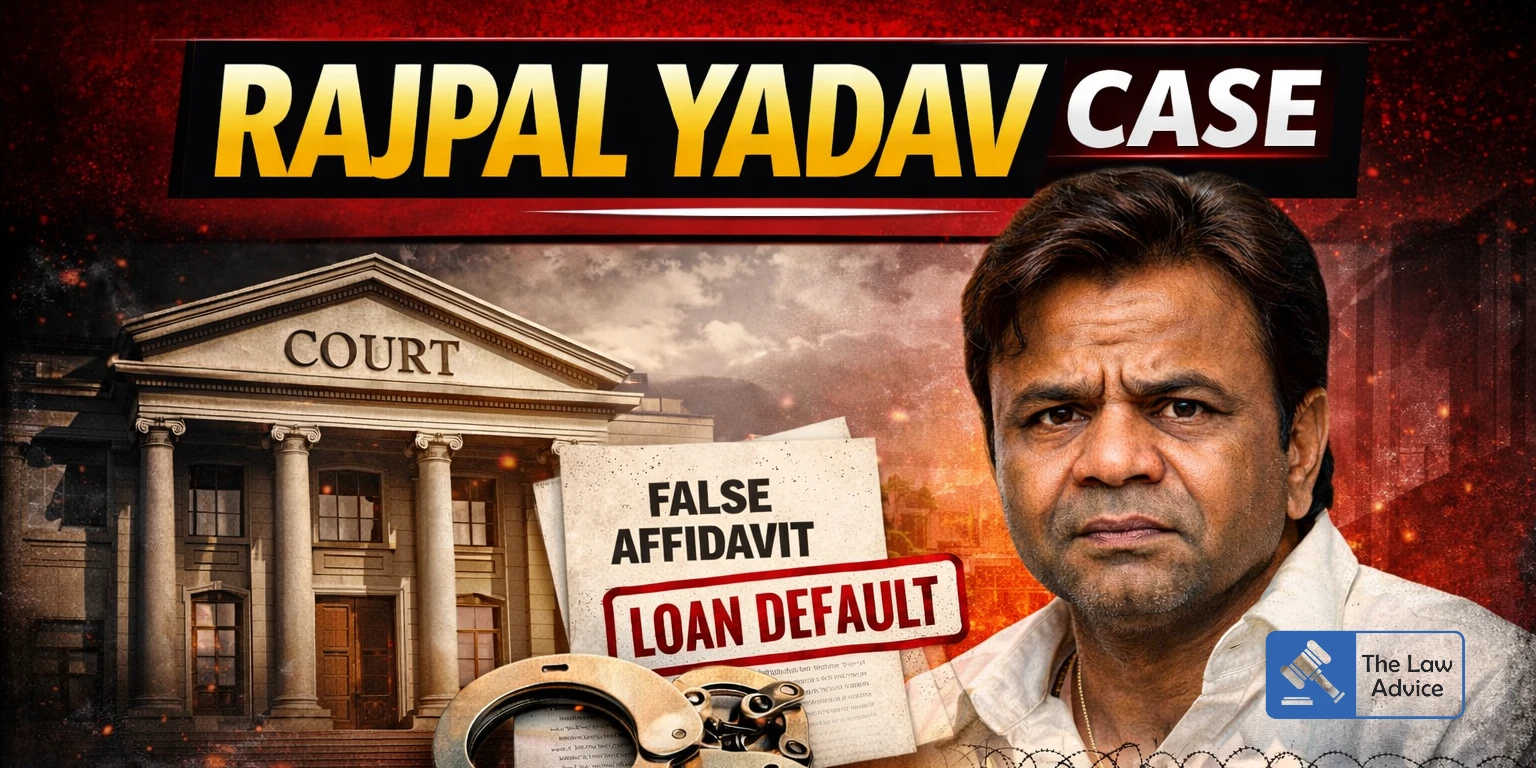
Rajpal Yadav Case: When a Civil Loan Dispute Turned into Criminal Contempt
The case involving Bollywood actor Rajpal Yadav is a significant example of how a seemingly civil financial dispute can escalate into serious criminal consequences when the court is misled. The matter highlights the importance of truthfulness in affidavits and the judiciary’s strict stance against interference with the administration of justice.
This article examines the background, legal issues involved, the court’s reasoning, and the broader implications of the case.
Background of the Dispute
In 2010, Rajpal Yadav and his wife, Radha Yadav, reportedly took a loan of approximately ₹5 crore from a Delhi-based businessman for the production of a Hindi film titled “Ata Pata Laapata.” The loan was to be repaid with agreed interest within a stipulated period.
However, the repayment did not materialize as promised. Consequently, the lender approached the Delhi High Court seeking recovery of the outstanding amount. At this stage, the dispute was purely civil in nature—essentially a contractual and financial disagreement between borrower and lender.
The Turning Point: Filing of Affidavit
During the course of proceedings before the Delhi High Court, an affidavit was filed on behalf of Rajpal Yadav in connection with repayment arrangements.
The controversy arose when the Court found that the affidavit contained statements that were not truthful. The High Court observed that false or misleading information had been placed before it. This shifted the focus of the case from a simple recovery dispute to an issue concerning the integrity of judicial proceedings.
Filing a false affidavit is not a minor procedural lapse—it strikes at the foundation of the justice delivery system.
Contempt of Court Proceedings
The Delhi High Court initiated criminal contempt proceedings against Rajpal Yadav and his wife under the Contempt of Courts Act, 1971.
What is Criminal Contempt?
Under Section 2(c) of the Contempt of Courts Act, criminal contempt includes:
- Publication or acts that scandalize or lower the authority of the court
- Prejudicing or interfering with judicial proceedings
- Obstructing the administration of justice
The Court held that submitting a false affidavit amounts to interference with the due course of judicial proceedings and thus falls within the ambit of criminal contempt.
The Court’s Decision
In November 2018, the Delhi High Court found Rajpal Yadav guilty of criminal contempt. He was sentenced to three months’ simple imprisonment. He was subsequently taken into custody and lodged in Tihar Jail for the duration of his sentence.
The judgment reinforced the principle that no person—regardless of fame or status—is above the law, and misleading the court invites serious consequences.
Key Legal Issues Involved
1. False Affidavit and Perjury
An affidavit is a sworn statement made under oath. Making false statements under oath can attract prosecution for perjury under the Indian Penal Code, apart from contempt proceedings.
2. Distinction Between Civil and Criminal Consequences
- Loan default → Civil liability (recovery proceedings)
- False statement before court → Criminal consequences (contempt and possible perjury)
This case demonstrates how conduct during litigation can independently give rise to criminal liability.
3. Sanctity of Judicial Process
Courts rely heavily on affidavits. If litigants are permitted to submit false statements without consequence, the administration of justice would collapse. The judiciary, therefore, treats such misconduct with strictness.
Broader Legal Significance
The Rajpal Yadav case serves as a cautionary tale for litigants and legal practitioners. It underscores three critical principles:
- Truthfulness before the Court is non-negotiable.
- Affidavits are not mere formalities; they carry legal sanctity.
- Misleading the court can convert a civil dispute into criminal liability.
For advocates, the case also emphasizes the ethical responsibility involved in drafting and filing pleadings and affidavits.
Conclusion
The Rajpal Yadav case is not merely about a loan dispute involving a film actor. It is fundamentally about the integrity of the judicial system. The Delhi High Court’s decision reiterates that courts will not tolerate attempts to mislead or obstruct the administration of justice.
In a legal system that functions on trust, sworn statements form the backbone of adjudication. Any breach of that trust invites consequences—civil, criminal, or both.