
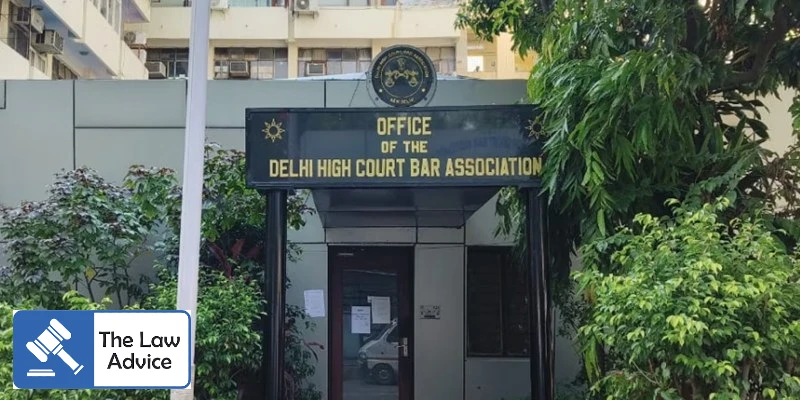
The Delhi High Court Bar Association (DHCBA) has decided to abstain from work on the first and third Saturdays of every month in protest against the Delhi High Court’s decision to treat those days as regular court sitting days.
In a notice dated April 2, the DHCBA’s Executive Committee said the resolution was passed unanimously in its March 27 meeting. The boycott is set to begin from April 4.
The Association stated that despite making several representations to the High Court seeking reconsideration of the decision, no response was received.
Earlier, the High Court had issued a notification declaring the first and third Saturdays of every month as official working days, marking a shift from the earlier practice where Saturdays were generally observed as holidays, except in limited situations.
The DHCBA said it took into account concerns raised by its members regarding the practical difficulties arising from Saturday sittings. According to the notice, lawyers highlighted disruptions to their professional schedules, including appearances before tribunals, arbitrations, mediations, and courts outside Delhi. The move was also said to affect preparation time, client meetings, and overall efficiency.
The Association has urged all members to support the decision and refrain from work on the designated Saturdays. It also informed that proxy counsel would be arranged for each court on those days.
At the same time, the DHCBA reiterated its request to the High Court to revisit the policy, expressing hope that the concerns of the Bar would be duly considered and an appropriate decision taken.
The issue of Saturday sittings has remained a point of tension between the Bar and the Bench for some time. In October 2025, the High Court had introduced a system requiring each Bench to sit on one Saturday every month to help expedite case disposal.
The DHCBA had opposed this move as well, stating that the Bar was not consulted and warning that it would lead to logistical challenges for advocates.
A recent survey within the legal community indicated considerable resistance to the idea of working Saturdays in High Courts.
A majority of respondents opposed the introduction of two working Saturdays each month and expressed concerns that the change would not significantly reduce case pendency. Many also felt that it would negatively impact the work–life balance of advocates, court staff, and judges.
Instead, most respondents suggested that increasing judicial strength and filling vacancies would be more effective measures to address the backlog of cases.
Website designed, developed and maintained by webexy