
In a significant judgment on service jurisprudence, the Supreme Court has held that an unauthorized acceptance of resignation can subsequently be validated through ratification by the competent authority, provided the original act was capable of being lawfully performed. The Court further ruled that an employee who has voluntarily acted upon the resignation and accepted its consequences cannot later seek to withdraw it by relying on technical defects in its acceptance.
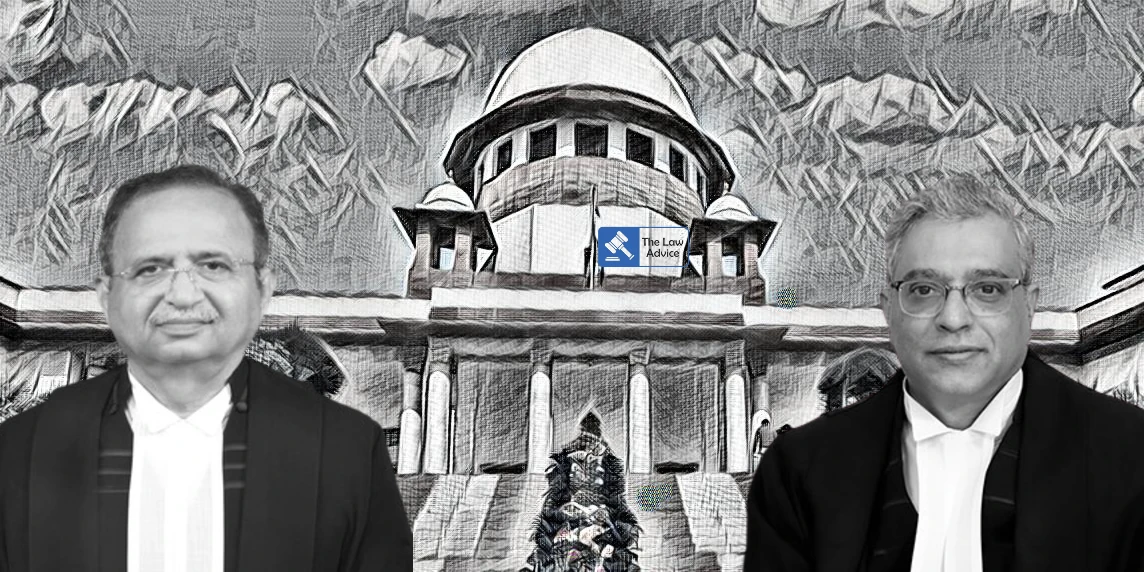
The judgment was delivered by a Bench of Justice Pamidighantam Sri Narasimha and Justice Alok Aradhe in Delhi Technological University v. B.S. Rawat and connected matters.
The case arose from two separate disputes involving B.S. Rawat, who had resigned from Delhi Technological University (DTU) and later joined the National Institute of Technology, Calicut (NITC).
In the DTU case, Rawat resigned in May 2016 and requested that his notice period be waived so that he could be relieved immediately. His resignation was accepted by the Vice-Chancellor holding additional charge, although the statutory authority to accept resignations vested in the University's Board of Management (BOM). Four months later, Rawat sought to withdraw his resignation, contending that it had never been accepted by the competent authority. Subsequently, the BOM ratified the earlier acceptance of resignation.
The Supreme Court elaborately explained the doctrine of ratification, holding that:
Ratification means making a previously unauthorized act legally valid.
Once the competent authority ratifies an earlier act, it is treated as if authority existed from the very beginning.
Ratification operates retrospectively and relates back to the date of the original act.
Only the legally competent authority can ratify such an act.
Ratification can cure defects of authority but cannot validate acts that are inherently illegal or beyond statutory powers.
The Court observed that Rawat himself had requested early acceptance of his resignation, obtained all consequential benefits, accepted his experience certificate, and later secured another job using that very certificate.
In these circumstances, the Court held that he could not later challenge the resignation merely because the initial acceptance suffered from an internal procedural defect.
The Bench remarked that an employee cannot claim the benefits of a completed resignation when it suits him and later argue that the resignation never legally took effect when he wishes to return.
In the connected matter relating to NIT Calicut, the Court held that under the applicable Statutes, a resignation becomes effective on the date it is accepted by the competent authority and not on the date the employee is relieved.
Accordingly, once the resignation had been accepted, the employee had no absolute right to withdraw it merely because the relieving date was yet to arrive. The competent authority was justified in refusing withdrawal after recording valid reasons.
Allowing DTU's appeal, the Supreme Court set aside the Delhi High Court's direction ordering reinstatement of the employee. It also dismissed the employee's appeal seeking back wages as well as the connected Special Leave Petition arising from the NIT Calicut dispute.
Case Details:-
CIVIL APPEAL NO.9308 OF 2024
DELHI TECHNOLOGICAL UNIVERSITY VS. B.S. RAWAT

Representation:-
For Appellant(s) :- Mrs. Avnish Ahlawat, Adv. Mr. Uday Singh Ahlawat, Adv. Mr. Atik Gill, Adv. Mr. Mohnish Sehrawat, Adv. Mr. Ankit Roy, AOR Ms. Mrinalini Ramesh, Adv. Petitioner-in-person
For Respondent(s) :- Caveator-in-person, AOR Mr. Ankit Roy , AOR Mrs. Avnish Ahlawat, Adv. Mr. Uday Singh Ahlawat, Adv. 2 Mr. Mohnish Sehrawat, Adv, Mr. Atik Gill, Adv. Mr. Shyam Padman, Sr. Adv. Mr. Jaimon Andrews, Adv. Mr. Piyo Harold J, Adv. Ms. Ashwathy Shyam, Adv. Mr. Firdouse C P, Adv. Mr. Naresh Kumar, AOR
Website designed, developed and maintained by webexy