
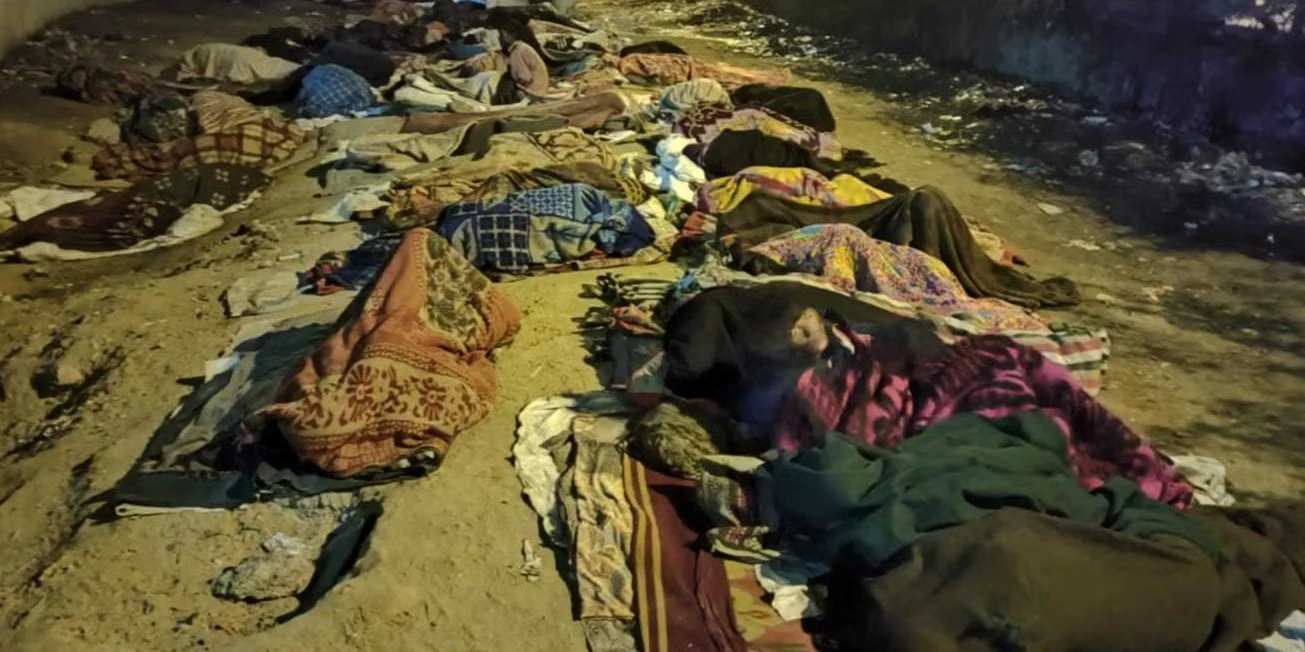
The Delhi High Court has ruled that people sleeping on pavements cannot be held responsible for road accidents caused by vehicles driving onto footpaths. The Court said such victims cannot be blamed for contributory negligence simply because they were resting on a pavement.
The bench headed by Justice Anish Dayal made the observation while hearing appeals against a Motor Accident Claims Tribunal (MACT) order that had reduced compensation by 50%, holding the victims partly responsible for the accident.
The case relates to a 2015 accident near Madipur Metro Station in Delhi, where a truck ran onto a pavement, killing two men and injuring two others who were sleeping there.
The High Court strongly disagreed with the MACT's reasoning. It said the real question should have been whether the truck driver had any legal right to drive on a pavement, which is meant exclusively for pedestrians.
The Court observed that many homeless people, labourers, and night-shift workers have no choice but to sleep on pavements because they have nowhere else to rest. They choose footpaths believing them to be safer than roads and cannot be expected to anticipate that a vehicle would drive onto them.
Justice Dayal said this practical reality cannot be treated as contributory negligence. Whether people are walking, standing, resting, or even sleeping on a pavement, they cannot be blamed when a vehicle unlawfully enters that space.
The Court emphasised that footpaths are reserved for pedestrians and not for motor vehicles. Drivers have a duty to exercise greater caution near pedestrian areas and cannot justify driving on pavements under any circumstances.
Setting aside the MACT's finding of 50% contributory negligence, the High Court held the truck driver solely responsible for the accident. It also enhanced the compensation awarded to the victims and directed the insurance company to deposit the revised amount, along with interest, before the MACT within six weeks.
Website designed, developed and maintained by webexy