
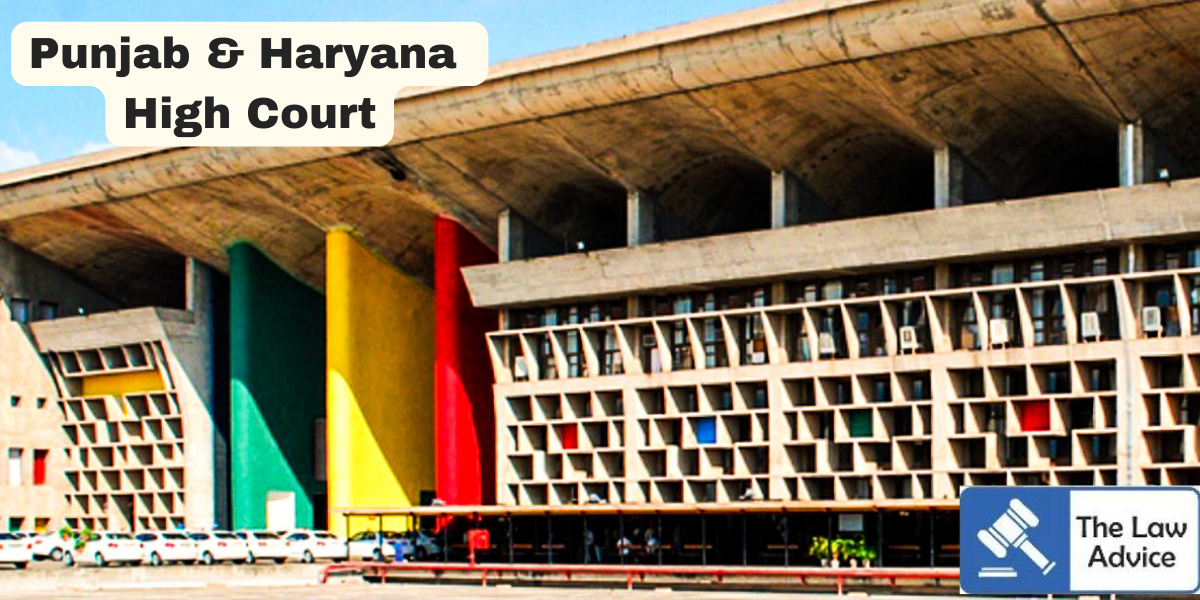
The Punjab and Haryana High Court has said that the shortage of courtrooms and other infrastructure is preventing it from recommending names for appointment as High Court judges, despite having a sanctioned strength of 85 judges.
A Bench of Chief Justice Ashwani Kumar Mishra and Justice Sanjiv Berry made the observation while stressing the urgent need for expanding the High Court complex. The Court noted that the existing infrastructure was inadequate to accommodate the full sanctioned strength of judges.
“We are not able to recommend names because ... if we say it on record, it will be very embarrassing for the government,” the Bench remarked.
The Court pointed out that although the High Court has a sanctioned strength of 85 judges, it has only 69 courtrooms, some of which are being used by Permanent Lok Adalats and Mediation Centres. It also flagged inadequate parking facilities and a shortage of space for lawyers.
The Bench observed that the High Court urgently requires additional infrastructure and asked Additional Solicitor General Satya Pal Jain to personally meet the Union Home Secretary and impress upon the Central government the need to expedite the expansion project.
Taking exception to the manner in which government officials were handling the proposal, the Court said that bureaucrats appeared to be following a routine procedure without appreciating the urgency of the situation.
“The usual bureaucratic approach is not needed... Please tell them that we are not able to have required number of judges. We are not having place for the lawyers,” the Bench told the ASG.
The Court further clarified that it was for the High Court to assess its infrastructure requirements and not for the governments to decide what facilities were needed for its functioning.
The High Court is currently considering a comprehensive development plan involving additional courtrooms, expanded parking facilities, administrative and judicial offices, and lawyers' chambers. The proposal has also been forwarded to UNESCO and other international institutions for review, given that the existing High Court building forms part of the UNESCO-listed Chandigarh Capitol Complex.
The Bench noted that the Union government had asked the Chandigarh Administration to share the financial proposal with the governments of Punjab and Haryana and obtain the High Court's views on the proposed development plan.
However, the Court said there was no need to seek its views afresh since the comprehensive project had originated with the High Court itself and was subsequently forwarded by the Chandigarh Administration.
The Court expressed hope that the authorities would accord priority to the infrastructure requirements, warning that the administration of justice could suffer unless the proposed development plan was implemented.
The Court was hearing a public interest litigation filed by a High Court employee highlighting the shortage of infrastructure. The matter will be heard next on December 11.
Case: Vinod Dhattewal and Others v. Union of India and Others
Website designed, developed and maintained by webexy