
Supreme Court Holds That OBC Creamy Layer Principles Must Apply To Pending Service Allocation In Civil Services Examination 2025; Rejects Centre's Plea For Two Years To Frame Uniform Policy
The Supreme Court has clarified the scope and application of its March 11, 2026 judgment concerning the determination of OBC creamy layer status, holding that completed selections, appointments and service allocations cannot be reopened merely on the basis of the principles laid down in that judgment.
However, the Court specifically directed that the OBC creamy layer principles laid down in its March 2026 judgment must govern the allocation of services to candidates selected through the Civil Services Examination (CSE) 2025, as their service allocation process had not yet been finalised.
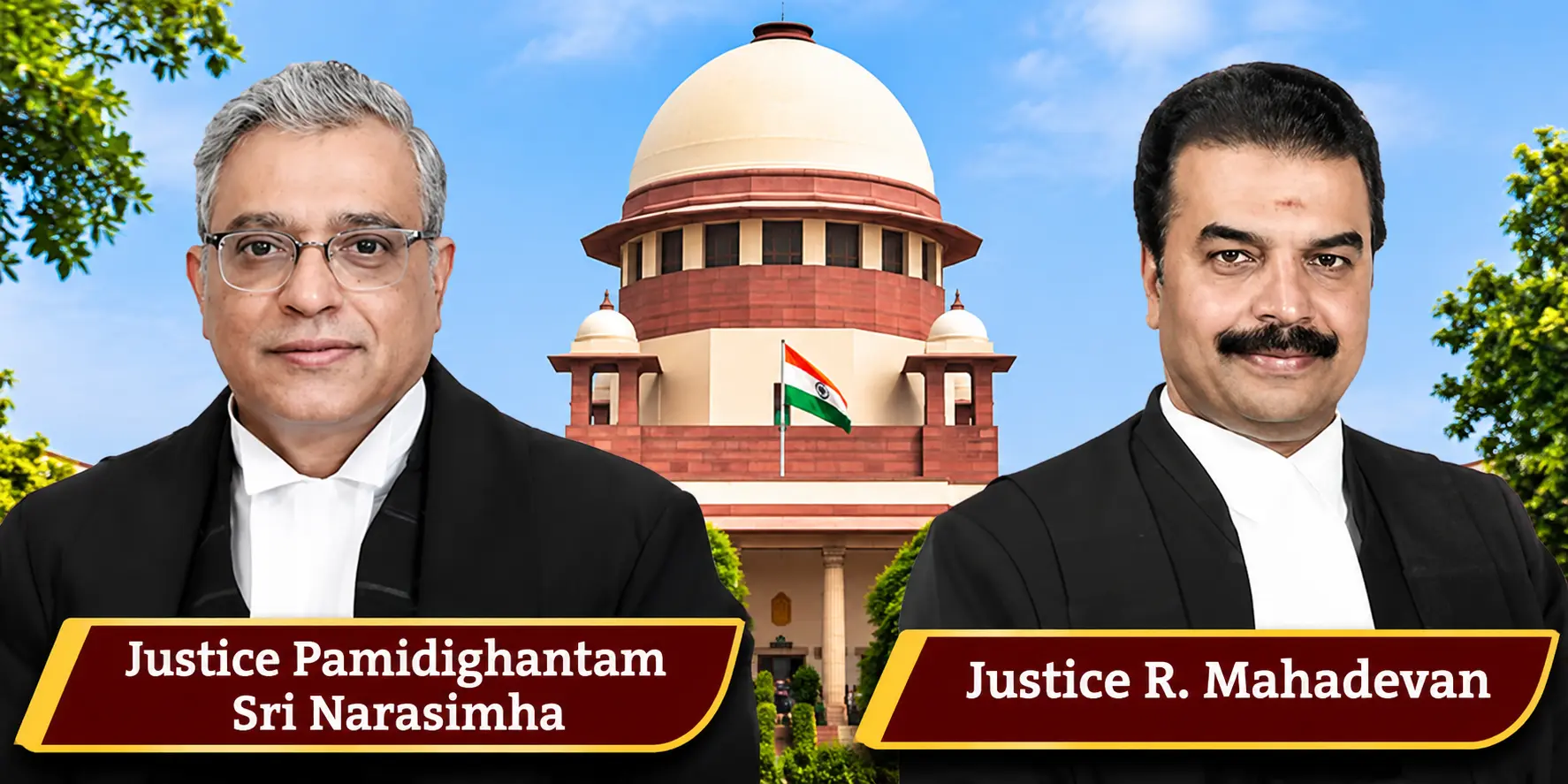
A Bench comprising Justice Pamidighantam Sri Narasimha and Justice R. Mahadevan passed the order while deciding miscellaneous applications filed by the Union Government seeking clarification and modification of the earlier judgment.
The Centre had sought permission to finalise service allocation for CSE 2025 candidates by applying the earlier OBC creamy layer criteria. It had also requested two years to establish equivalence between posts in Public Sector Undertakings (PSUs), banks and Government services and formulate a uniform policy for determining creamy layer status.
Rejecting the request for a two-year period, the Supreme Court held that no further time was required for undertaking an exercise that had not been directed by the earlier judgment in the first place.
Background: OBC Creamy Layer Dispute Involving PSU Employees
The dispute arose from the exclusion of certain OBC candidates from reservation benefits on the ground that their parents' salary income, while employed in Public Sector Undertakings, banks and other organisations, brought them within the creamy layer.
The Department of Personnel and Training (DoPT) had applied the Income/Wealth Test under Category VI of the Office Memorandum dated September 8, 1993, read with the clarificatory letter dated October 14, 2004.
Since equivalence between posts in PSUs and Government services had not been formally determined, the DoPT considered the income of the candidates' parents over the preceding three financial years and classified them as belonging to the creamy layer.
The affected candidates challenged this classification before the Central Administrative Tribunal (CAT), which granted relief. The subsequent challenges by the Union Government were dismissed by the Madras, Delhi and Kerala High Courts.
The matter ultimately reached the Supreme Court.
On March 11, 2026, the Supreme Court dismissed the Centre's appeals and directed the Government to reconsider the claims of the affected candidates and intervenors in accordance with the principles laid down in the judgment, within six months.
The Union Government subsequently approached the Supreme Court seeking clarification regarding the retrospective application and implementation of the judgment.
What Did The Centre Seek?
The Union Government sought several clarifications, primarily concerning the consequences of the March 11 judgment.
It requested the Court to:
1. Permit finalisation of service allocation for CSE 2025 candidates by applying the creamy layer principles followed before March 11, 2026.
2. Clarify that the judgment would not retrospectively reopen completed selections, appointments, service allocations, cadre allocations, seniority positions or admissions.
3. Grant two years to establish equivalence between posts in PSUs, banks and other organisations and Government posts.
4. Permit candidates participating in recruitment processes already underway on March 11, 2026, to be governed by the eligibility conditions applicable on the relevant cut-off date.
5. Protect completed admissions, academic sessions and degrees already conferred.
Solicitor General Tushar Mehta submitted that retrospective implementation could have far-reaching consequences for recruitment, service allocation, seniority and educational admissions.
He also pointed out that more than 6.69 lakh reserved vacancies, including approximately 3.70 lakh OBC vacancies, had been filled over the preceding ten years, and that reopening concluded selections could lead to widespread administrative disruption.
Supreme Court's Key Observations
1. Earlier Judgment Does Not Require Reopening Of Completed Selections
The Supreme Court clarified that its March 11, 2026 judgment did not direct the Union Government to revisit appointments already made, revise seniority or undertake fresh selection and service allocation exercises across successive recruitment years.
The Court distinguished between the binding legal principle declared under Article 141 of the Constitution and the operative relief granted to the candidates who were parties to the original proceedings.
It held that the earlier judgment determined the rights of the candidates before the Court and did not confer automatic individual relief upon persons who were not parties to those proceedings.
The Court observed that reopening concluded selections after a substantial interval could prejudice other candidates and disturb existing service arrangements, promotions and seniority.
2. Relief Confined To Candidates Who Were Parties To Earlier Proceedings
The Court clarified that the direction concerning the creation of supernumerary posts was intended to accommodate the intervenors whose claims were pending before the competent authorities or judicial forums and who satisfied the OBC Non-Creamy Layer criteria laid down in the judgment.
It held that the reference to candidates in Paragraph 43 of the March 11 judgment had to be understood in the context of the intervenors referred to in Paragraph 42.
The Government may accordingly create supernumerary posts to accommodate the parties before the Court who fulfil the requisite eligibility conditions.
3. Centre's Request For Two Years Rejected
The Union Government had sought two years to undertake an exercise of establishing equivalence between posts in PSUs, banks and other organisations and Government posts.
Rejecting this request, the Supreme Court held that the earlier judgment had not directed the Government to undertake any such general exercise within six months.
The Court observed that the Government's request for additional time to undertake an exercise that was never directed by the Court did not arise.
It further clarified that formulating policy concerning reservation and creamy layer criteria falls within the domain of the executive and legislature, subject to the Constitution and the principles laid down by the Supreme Court.
4. Claims Of Similarly Situated Candidates Can Be Considered Independently
The Supreme Court clarified that candidates who were not parties to the original proceedings but claim to be similarly situated cannot automatically claim the benefit of the judgment.
However, where their cases are pending before any Court, Tribunal or competent authority, their claims may be considered independently on their own merits.
The Court clarified that it was expressing no opinion on the merits of such claims, while reiterating that the interpretation of the 1993 Office Memorandum and the 2004 Letter laid down in the March 11 judgment may be taken into consideration.
5. OBC Creamy Layer Principles To Govern CSE 2025 Service Allocation
An important direction was issued concerning the Civil Services Examination 2025.
The Union Government had specifically sought permission to finalise service allocation for CSE 2025 candidates by applying the creamy layer principles that were followed before March 11, 2026.
The Supreme Court rejected this request.
The Court noted that although the final result of CSE 2025 had been declared on March 6, 2026, the allocation of services had not yet been finalised.
Since the allocation process remained pending and there was no convincing or reasonable justification for deferring implementation of the March 11 judgment, the Court held that the creamy layer principles interpreted in that judgment would govern service allocation to OBC candidates selected through CSE 2025.
The Court also clarified that selections, appointments and allotments against roster points made subsequent to March 11, 2026, concerning reservation and exclusion of the creamy layer, would be governed by the 1993 Office Memorandum as interpreted in the earlier judgment.
Final Directions
Disposing of the miscellaneous applications, the Supreme Court issued the following clarifications:
The Supreme Court extended the time for compliance with its March 11, 2026 judgment by a further period of two months.
Case Details:

Website designed, developed and maintained by webexy