
A petition has been filed before the Supreme Court seeking structural and institutional reforms in the functioning of the Bar Council of India (BCI), with particular emphasis on limiting the tenure of its Chairman and other key office-bearers.
The petition has been filed by Advocate M. Varadhan, represented by Advocates Sandeep Pandey and Rajesh Singh Chauhan. It challenges the proviso to Section 4(3) of the Advocates Act, which permits a BCI member to continue in office until his or her successor is elected.
The petitioner has sought directions prescribing a fixed two-year tenure for the offices of BCI Chairman and Vice-Chairman.
It has further sought a restriction that no person should be eligible to serve as Chairman or Vice-Chairman for more than three terms during their lifetime, whether the terms are consecutive or otherwise.
The plea also seeks safeguards to prevent the tenure limitation from being circumvented through alternative designations, interim arrangements, nominations, committees, re-election or any other mechanism conferring substantially similar authority.
A major concern raised in the petition relates to the concentration of leadership within the BCI.
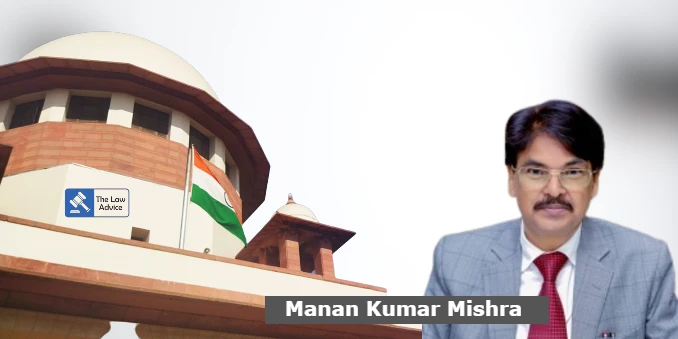
According to the plea, Manan Kumar Mishra has been serving as BCI Chairman since November 2014, while representatives from 20 of the 28 States have not occupied the office of Chairman during the past 30 years.
The petitioner has argued that, despite being the national regulatory body for the legal profession, the BCI should have a more transparent and equitable system allowing representatives from different States and geographical regions to periodically lead the organisation.
The petition therefore seeks a rational rotational mechanism for the office of Chairman to ensure wider regional participation.
The plea comes against the backdrop of the recent controversy involving the BCI's now-withdrawn decision concerning the enrolment of 2026 graduates of NALSAR University of Law, Hyderabad, following a campaign by students opposing the invitation extended to Chief Justice of India Justice Surya Kant for the university's convocation.
The petitioner has relied on the controversy to highlight concerns regarding institutional decision-making and the need for stronger checks and balances over regulatory powers.
The plea argues that elections alone cannot ensure meaningful democracy if the same individuals continue to dominate key offices.
It stresses the need to provide genuine opportunities for new representatives, ideas and diverse regional perspectives to participate in the leadership of the country's apex statutory body regulating the legal profession.
The petition has also sought stronger institutional, financial and regulatory accountability within the BCI.
Website designed, developed and maintained by webexy