
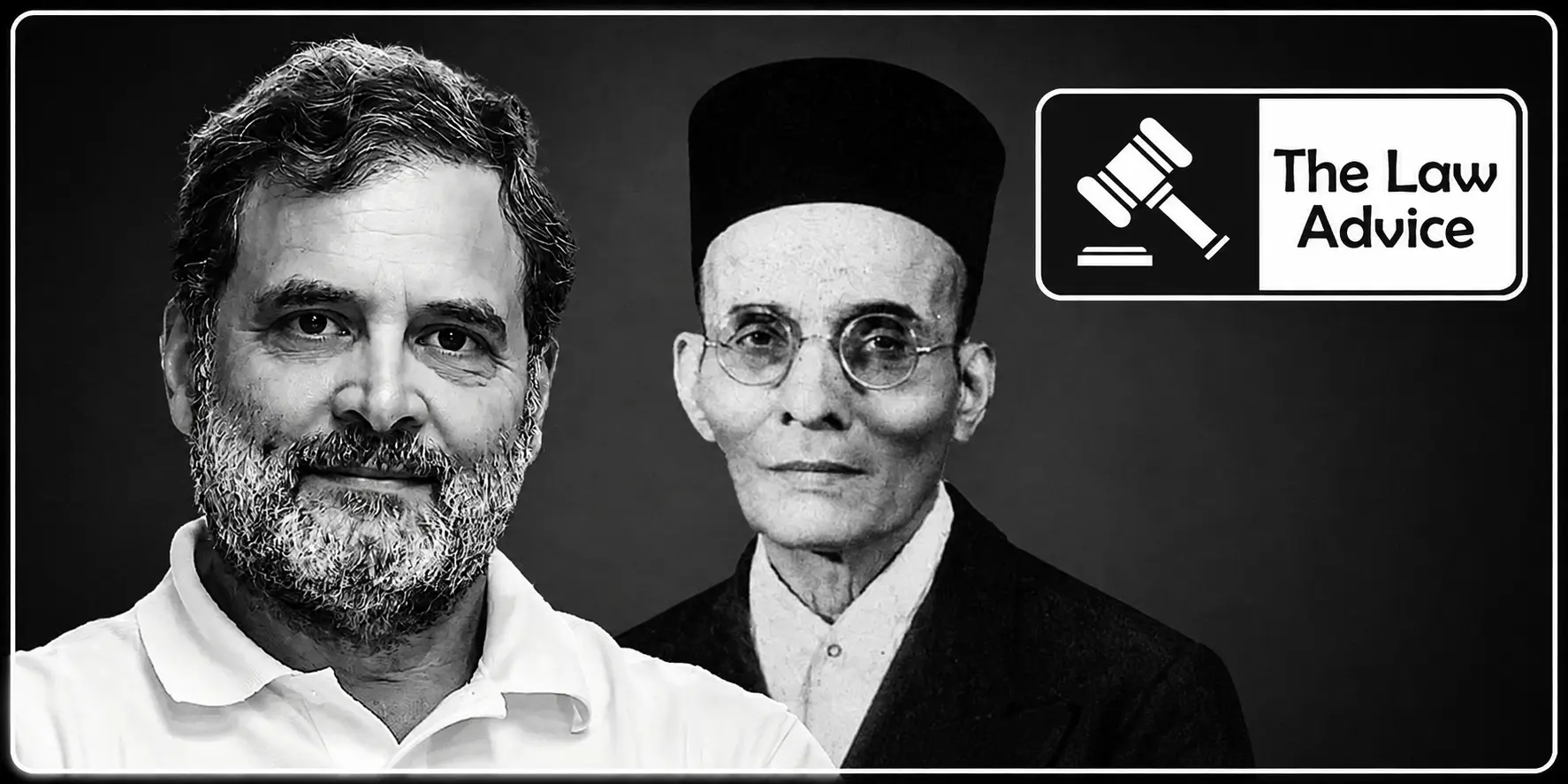
In a significant development in the criminal defamation case filed against Congress leader Rahul Gandhi, Satyaki Savarkar, the grandson of Vinayak Damodar Savarkar, on Thursday (July 30), admitted before a Special Court in Pune that his grandfather had authored the book 'सावरकरांचे विज्ञाननिष्ठ निबंध' (Savarkar's Science-oriented Essays), a work that contains rationalist views questioning the existence of God, criticising religious rituals, and advocating a scientific interpretation of Sanatan Dharma.
The admission came during Satyaki Savarkar's cross-examination before Special Judge Amol Shinde, where Rahul Gandhi's counsel Advocate Milind Pawar relied upon extracts from the book while questioning the complainant.
Court Allows Cross-Examination on the Book
During the proceedings, Advocate Pawar produced a copy of 'Savarkar's Science-oriented Essays' and questioned Satyaki Savarkar about its authorship.
While Satyaki accepted that the book was authored by Veer Savarkar, his counsel objected to Gandhi's reliance on the book during cross-examination. The Special Court, however, rejected the objection, observing that Satyaki himself had referred to the very book during his examination-in-chief. Therefore, the defence was entitled to cross-examine him on its contents.
Recording his admission, Satyaki told the court:
"It is true that the entire above-mentioned contents have been written by Savarkar in his book Savarkarche Vivajnavinshtha Vinabandha (Scientific Essays)."
The cross-examination of Satyaki Savarkar will continue on August 4.
Defence Relies on Savarkar's Own Writings
The criminal defamation complaint arises from Rahul Gandhi's speech delivered in London in March 2023, where he allegedly made defamatory remarks about Veer Savarkar.
During the cross-examination, Advocate Pawar read several passages from Savarkar's own book before the court in an attempt to demonstrate the ideological positions expressed by Savarkar himself.
Book Questions the Existence of God
One of the passages read before the court criticises the belief that God personally intervenes in human affairs.
Savarkar argues that people should abandon the expectation of establishing a personal relationship with God and questions the logic of thanking God for saving a person from suffering if the same God is believed to have caused that suffering in the first place.
The passage reflects Savarkar's rationalist critique of religious beliefs and divine intervention.
Criticism of Religious Practices During Medieval Invasions
Another extract highlighted by the defence questions why Hindu deities failed to intervene during periods when Muslim rulers invaded kingdoms, demolished temples and persecuted Hindus.
Savarkar wrote that despite widespread prayers, rituals and devotional practices, no divine intervention occurred to protect society during those historical events.
Questions on Rituals and Temple Worship
Advocate Pawar also referred to passages in which Savarkar criticised what he described as superstitious religious practices.
The book questions beliefs that God becomes angry if devotees fail to perform rituals such as offering coconuts or animal sacrifices, while allegedly remaining silent during the destruction of temples and suffering of the Hindu community.
Reference to Manusmriti
The defence further read portions of the book discussing verses from the Manusmriti, where Savarkar questioned whether practices prescribed in ancient scriptures should automatically be regarded as Sanatan Dharma.
The cited passage referred to scriptural prescriptions concerning offerings of meat to Brahmins and ancestors and questioned whether such practices represented eternal religious principles.
Scientific Temper Over Rituals
Advocate Pawar also highlighted passages in which Savarkar advocated scientific temper and described the laws of nature as the true and eternal foundation of Sanatan Dharma.
According to the extracts read before the court, Savarkar argued that merely chanting the names of deities or performing religious rituals would not lead to worldly success. Instead, he emphasised that progress depends upon scientific thinking, rationality and understanding the laws of nature, which continue to evolve with time.
Background of the Defamation Case
Satyaki Savarkar has alleged that Rahul Gandhi repeatedly defamed Veer Savarkar through various public statements made over the years.
A principal allegation relates to Gandhi's speech delivered before the Overseas Congress in the United Kingdom on March 5, 2023, where, according to the complaint, Gandhi falsely claimed that Savarkar had written in a book about assaulting a Muslim man.
The complainant contends that no such incident ever occurred and that Veer Savarkar never made any such statement in his writings. According to Satyaki, Gandhi knowingly made false and malicious allegations to tarnish Savarkar's reputation and to cause mental agony to his family.
Although the speech was delivered in England, Satyaki has argued that its publication and circulation across India caused reputational harm in Pune, giving rise to the cause of action.
To support his allegations, Satyaki has placed on record news reports and a YouTube link containing Gandhi's London speech.
The complaint seeks the maximum punishment under Section 500 of the Indian Penal Code for criminal defamation, along with maximum compensation under Section 357 of the Code of Criminal Procedure.
The proceedings are continuing before the Special Court in Pune.
Case Title: Satyaki Savarkar v. Rahul Gandhi
Website designed, developed and maintained by webexy