
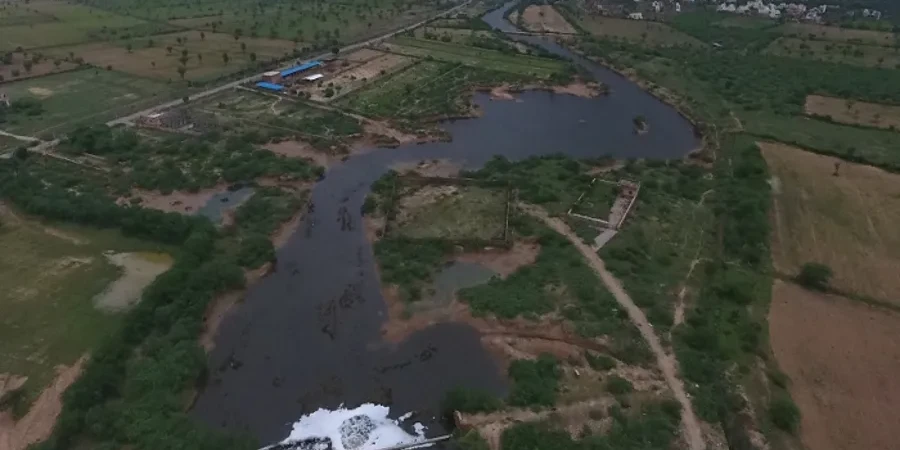
The Supreme Court on Monday imposed an interim ban on all construction and development activities within 100 metres of the edge of Rajasthan’s Jojari River, directing that the restriction will remain in force until the river’s high flood line and ecological buffer zones are scientifically determined and demarcated.
A Bench of Justices Vikram Nath and Sandeep Mehta passed the order while hearing a suo motu case concerning industrial pollution and the degradation of rivers in Rajasthan, including the Jojari.
The Court said a clear and measurable protective zone was necessary to safeguard the river ecosystem while the scientific assessment was underway. It, therefore, directed that no construction or development activity of any kind would be allowed within 100 metres of the river.
As an additional safeguard, the Bench also prohibited hazardous industries and other polluting activities within 500 metres on either side of the existing flood line, wherever it has already been identified. Where no flood line has been identified, the restriction will apply to 500 metres on either side of the river’s present flow path.
These interim measures will remain in effect until the high flood line and ecological buffer zones are scientifically identified.
The suo motu proceedings began after a documentary highlighting the severe pollution of the Jojari River and the risks faced by people in Jodhpur, Pali and Barmer districts brought the issue into focus.
In November 2025, the Supreme Court revived the National Green Tribunal’s 2022 directions for cleaning the Jojari, Bandi and Luni rivers and constituted a high-level ecosystem oversight committee headed by former Rajasthan High Court judge Justice Sangeet Lodha.
Since then, the Court has been monitoring the condition of Rajasthan’s rivers and water bodies with the assistance of the committee.
At the previous hearing, the Court had directed the Rajasthan government to establish an integrated coordination group to bring together efforts to control industrial pollution and restore degraded river systems. The move came after the Court observed that fragmented action by different departments was not sufficient to address the environmental crisis.
The coordination group has been tasked with working alongside the high-level committee to prepare a comprehensive plan setting out pollution-control measures, responsibilities, milestones and timelines for ecological restoration.
The State was also directed to establish an independent river commission or river rejuvenation authority for the conservation, rejuvenation and integrated management of rivers, river basins and catchment areas across Rajasthan.
The Court had further ordered the scientific identification and demarcation of high flood lines and ecological buffer zones for rivers across the State.
In Monday’s order, the Bench also issued directions to ensure smooth coordination between the high-level committee headed by Justice Lodha and the newly constituted coordination group. It clarified that the two bodies would not duplicate each other’s functions.
The Court said Justice Lodha, as chairperson of the committee, could issue necessary directions to ensure effective and coordinated implementation of the Court’s orders. It also clarified that the committee’s earlier powers to take necessary action and pass requisite orders would continue.
The matter has been listed for further hearing on September 22.
Website designed, developed and maintained by webexy