
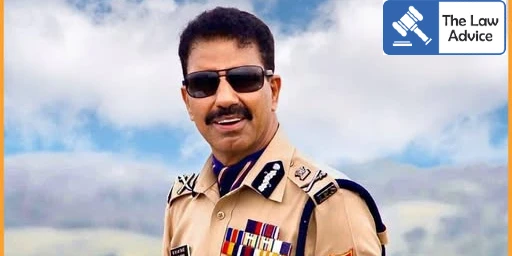
Dr. LR Bishnoi, former Meghalaya Director General of Police (DGP), has stepped down from the Supreme Court-appointed High-Powered Enquiry Committee (HPEC) constituted to probe allegations of violence during the July student protests.
A bench of Chief Justice of India (CJI) Surya Kant and Justice Joymalya Bagchi accepted his resignation on Thursday (November 5).
Bishnoi's resignation comes after petitioners had questioned his appointment to the committee, alleging a possible conflict of interest. The Supreme Court had earlier refused to reconstitute the panel despite these objections.
During the September 10 hearing, Advocate Prashant Bhushan had submitted that a former DGP of a northeastern state, who was part of the committee, shared a close association with a senior functionary likely to face scrutiny during the investigation.
The Supreme Court constituted the HPEC on August 18, 2026, to investigate allegations of police brutality and violence during student demonstrations held at Jantar Mantar in Delhi and other parts of the country over the alleged NEET examination paper leak and other irregularities.
Former Supreme Court judge Justice R. Subhash Reddy was appointed chairperson of the committee. Its other members included former Punjab and Haryana High Court Chief Justice Ravi Shankar Jha, former Delhi High Court judge Justice Shalinder Kaur, former CBI Director Rishi Kumar Shukla and Bishnoi.
The committee was entrusted with examining allegations of excessive force by police and paramilitary personnel against protesters, including the alleged use of pellet guns, electric batons, lathi charge and tear gas. It was also directed to investigate allegations of attacks on police personnel and damage to public property.
The Supreme Court had asked the committee to submit periodic interim reports, with particular attention to complaints of excessive force against protesters and incidents of targeted violence, harassment and molestation of women demonstrators.
While rejecting the demand to reconstitute the committee on September 10, the Court had described the objections to its composition as premature and founded on conjecture and preconceived notions.
The Court had nevertheless stressed that the investigation must remain fair and transparent. It also directed the committee to protect vulnerable witnesses and ensure that their identities and statements remained confidential.
The committee has further informed the Supreme Court that the National Informatics Centre (NIC) was developing an online portal to receive complaints from both protesters and police personnel. Separate complaint formats had been prepared for the two categories.
Website designed, developed and maintained by webexy