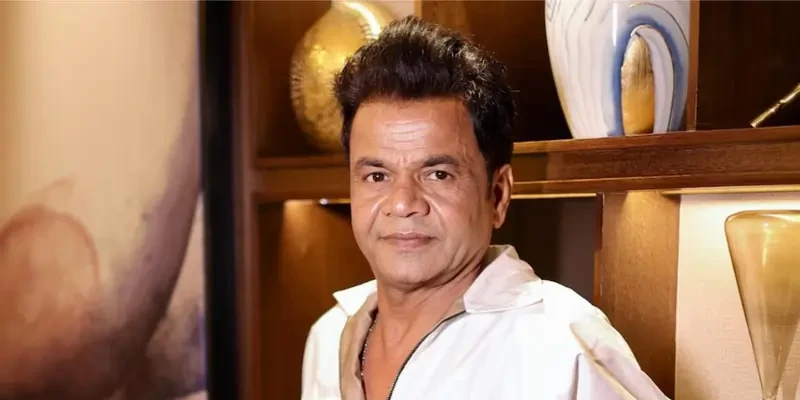
The Supreme Court on Wednesday accepted actor Rajpal Yadav’s proposal to sell his ancestral property to clear his outstanding dues in a long-running cheque bounce case linked to a loan taken for his 2012 film Ata Pata Laapata.
A Bench comprising Chief Justice of India Surya Kant and Justices Joymalya Bagchi and V Mohana took note of Yadav’s arrangement to make an immediate payment of ₹2 crore. Yadav produced demand drafts worth ₹1.15 crore, while another ₹85 lakh is proposed to be paid by a prospective buyer of his ancestral property.
The Bench said the ₹1.15 crore demand draft would be deposited with the Supreme Court Registry on Wednesday, while the prospective buyer, Anant Prakash Yadav, would deposit ₹85 lakh by Monday. The Court said it would thereafter frame a schedule for payment of the remaining dues and grant conditional relief to the actor.
“The petitioner has finally brought demand drafts in the sum of ₹1.15 crore, which shall be deposited with the Registry during the course of the day. As regards ₹85 lakh, the petitioner claims that the prospective buyer of his property is present in Court,” the Court recorded.
The Court was hearing Yadav’s plea challenging proceedings in the cheque bounce case arising from a ₹5 crore loan received by him and his wife from private entity Murli Projects in connection with the production of Ata Pata Laapata.
The dispute arose after the film could not be completed within the agreed timeline. The parties entered into four agreements, with Yadav issuing eight security cheques under the third agreement. The subsequent fourth agreement, described as a consent agreement dated April 21, 2013, allegedly provided for the return of the eight security cheques and issuance of four fresh cheques of ₹10 crore each.
Yadav has claimed that Murli Projects failed to return the eight security cheques and instead presented seven of them, which were dishonoured. This led to criminal complaints against Yadav and his wife under Section 138 of the Negotiable Instruments Act.
A sessions court convicted Yadav in May 2024 and sentenced him to six months’ imprisonment. The Delhi High Court subsequently suspended his sentence after his counsel assured the Court that the dispute would be settled.
The matter was also referred to the Delhi High Court Mediation
Website designed, developed and maintained by webexy