
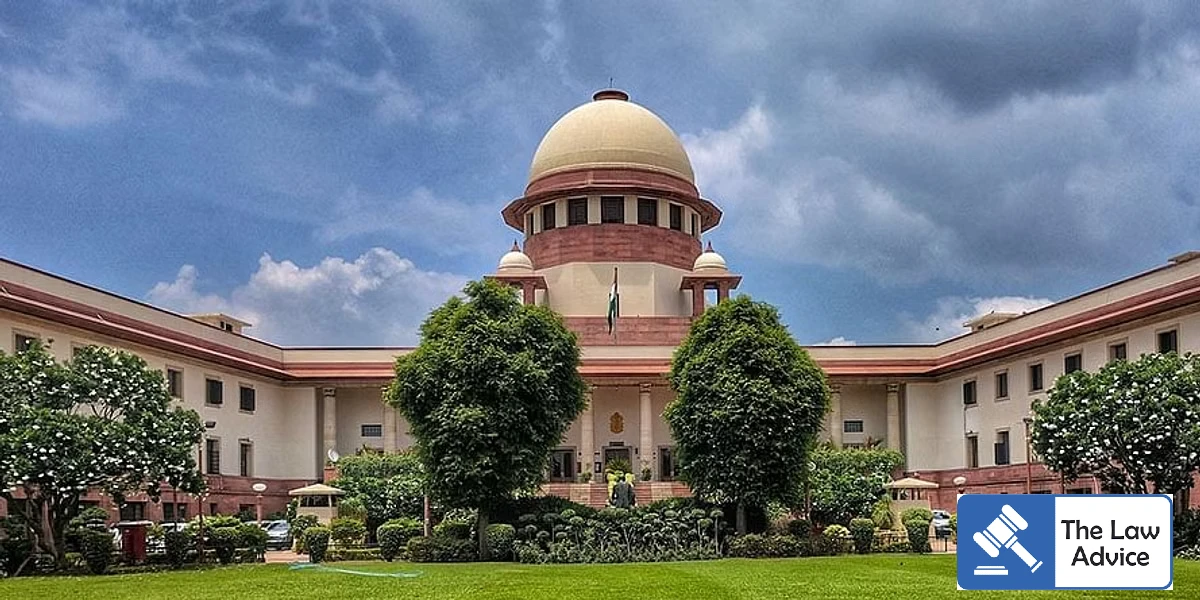
The Supreme Court on Monday sought responses from the Central Government, the Election Commission of India (ECI) and the Law Commission of India on a Public Interest Litigation (PIL) seeking to prevent legislators from using strategic resignations to escape disqualification under the anti-defection law.
A Bench comprising Chief Justice of India Surya Kant and Justices Joymalya Bagchi and V Mohana issued notices to the authorities, including the Ministries of Law and Justice and Parliamentary Affairs, on a petition filed by A Sethu.
The petition raises concerns over legislators resigning from their Assembly or parliamentary seats when disqualification proceedings under the Tenth Schedule of the Constitution are pending or anticipated. It argues that such resignations allow elected representatives to avoid the consequences of defection and facilitate political realignments.
The plea was filed through advocates R Satish Kumar and Jatin, while Senior Advocate A Sirajudeen appeared on behalf of the petitioner.
The Supreme Court has also tagged the matter with another petition, K Suthan v. Union of India, which raises the issue of recovering election expenses from candidates who get elected on one party's ticket, resign and subsequently contest elections on another party's ticket.
The petitioner has argued that legislators often resign before the Speaker or Chairman can decide disqualification proceedings against them. Such resignations, coupled with delays in deciding disqualification petitions, can affect the numerical strength of legislative assemblies and the stability of elected governments.
It has further contended that resignation and disqualification are governed by separate constitutional provisions. Therefore, a legislator's resignation should not automatically bring pending disqualification proceedings to an end.
In this regard, the plea relies on the Supreme Court's judgment in Shrimanth Balasaheb Patil v. Hon'ble Speaker, Karnataka Legislative Assembly, which held that resignation by a legislator does not, by itself, render disqualification proceedings infructuous.
The petition also highlights the absence of an effective mechanism to ensure timely disposal of disqualification proceedings. It points out that delayed decisions may lose their significance if the Assembly's term expires, a by-election is conducted or the government changes before the proceedings are concluded.
Seeking reforms, the petitioner has urged the Union Government to introduce a statutory timeline, ordinarily not exceeding three months, for deciding disqualification petitions. Any extension beyond this period, it suggests, should be permitted only for recorded reasons.
The plea relies on the Supreme Court's decision in Keisham Meghachandra Singh v. Hon'ble Speaker, Manipur Legislative Assembly, in which the Court indicated that disqualification petitions should ordinarily be decided within three months.
The petitioner has also questioned the authority of Speakers and Chairpersons to adjudicate disqualification disputes, citing their political affiliations and dependence on the legislature. It has urged the Centre and the Law Commission to examine the possibility of establishing an independent and permanent tribunal to decide such matters.
Another significant relief sought by the petition is a restriction on legislators who resign while facing, or anticipating, disqualification proceedings from being appointed as Ministers or given other remunerative political positions.
The plea seeks a declaration that such legislators should not be appointed to ministerial positions or other remunerative political offices until the disqualification proceedings are decided in their favour or they get re-elected. It refers to Articles 75(1B), 164(1B) and 361B of the Constitution in support of this relief.
The petitioner has additionally sought greater transparency in the resignation process, including public disclosure of resignation letters, notices, replies, hearing dates and final orders, subject to necessary redactions.
On the issue of government formation in hung assemblies, the plea argues that a claim of majority should be established through a floor test in a duly constituted House, after elected members have taken their oaths under Article 188 of the Constitution. It maintains that letters of support or demonstrations of strength outside the legislature should not be treated as substitutes for a floor test.
The petition also refers to the Supreme Court's judgments in Kihoto Hollohan v. Zachillhu, Subhash Desai v. Principal Secretary, Governor of Maharashtra and Padi Kaushik Reddy v. State of Telangana.
The petitioner has stated that representations seeking reforms were earlier submitted to the President, Prime Minister, Union Law Minister, Lok Sabha Speaker, Rajya Sabha Chairperson, Chief Election Commissioner and the Law Commission. However, no substantive response was received.
Website designed, developed and maintained by webexy