
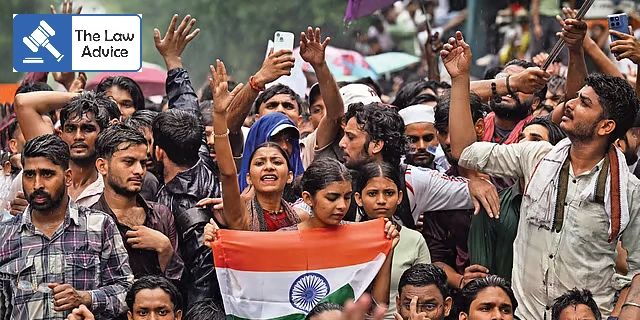
The Supreme Court on Tuesday directed all States not to take any coercive action against students who participated in protests organised by the Cockroach Janta Party (CJP), demanding the resignation of Union Education Minister Dharmendra Pradhan over the alleged NEET-UG 2026 paper leak.
A Bench comprising Chief Justice of India Surya Kant, Justice Joymalya Bagchi, and Justice V Mohana clarified that while the police are free to register First Information Reports (FIRs), no coercive measures should be taken against the protesting students at this stage.
The Court also ordered the immediate release of detained students who have no prior criminal record. However, it excluded individuals with criminal antecedents from the relief, leaving open the question of what action, if any, may be taken against them.
The directions were passed during the hearing of a batch of petitions alleging excessive use of force by the police against students protesting the alleged NEET-UG 2026 paper leak. The demonstrations, which began at Delhi's Jantar Mantar, later spread to Maharashtra, Bihar, Gujarat, Assam, West Bengal and Kerala.
According to the petitions, the police resorted to lathi-charge, tear gas, pellet guns and electric weapons to disperse peaceful protesters, allegedly violating the students' fundamental rights under Articles 14, 19, 20 and 21 of the Constitution.
Taking note of the allegations, the Bench observed that they prima facie warrant an independent and impartial investigation.
To ensure that crucial evidence is not lost, the Supreme Court directed authorities to preserve all CCTV footage, drone recordings, body-camera footage, wireless communication logs and Police Control Room (PCR) records relating to the protests across the country.
The Court further directed the police to preserve the digital data of protesters and restrained authorities from placing any personal information or identifying details of the protesters in the public domain.
Additionally, the Bench directed the Chief Secretaries and Directors General of Police (DGPs) concerned to remain present at the next hearing, which has been scheduled for August 3.
Website designed, developed and maintained by webexy