
The Supreme Court has held that the 24-hour constitutional period for producing an accused before a magistrate begins from the moment the person's liberty is curtailed through detention, and not from the time a formal arrest is recorded.
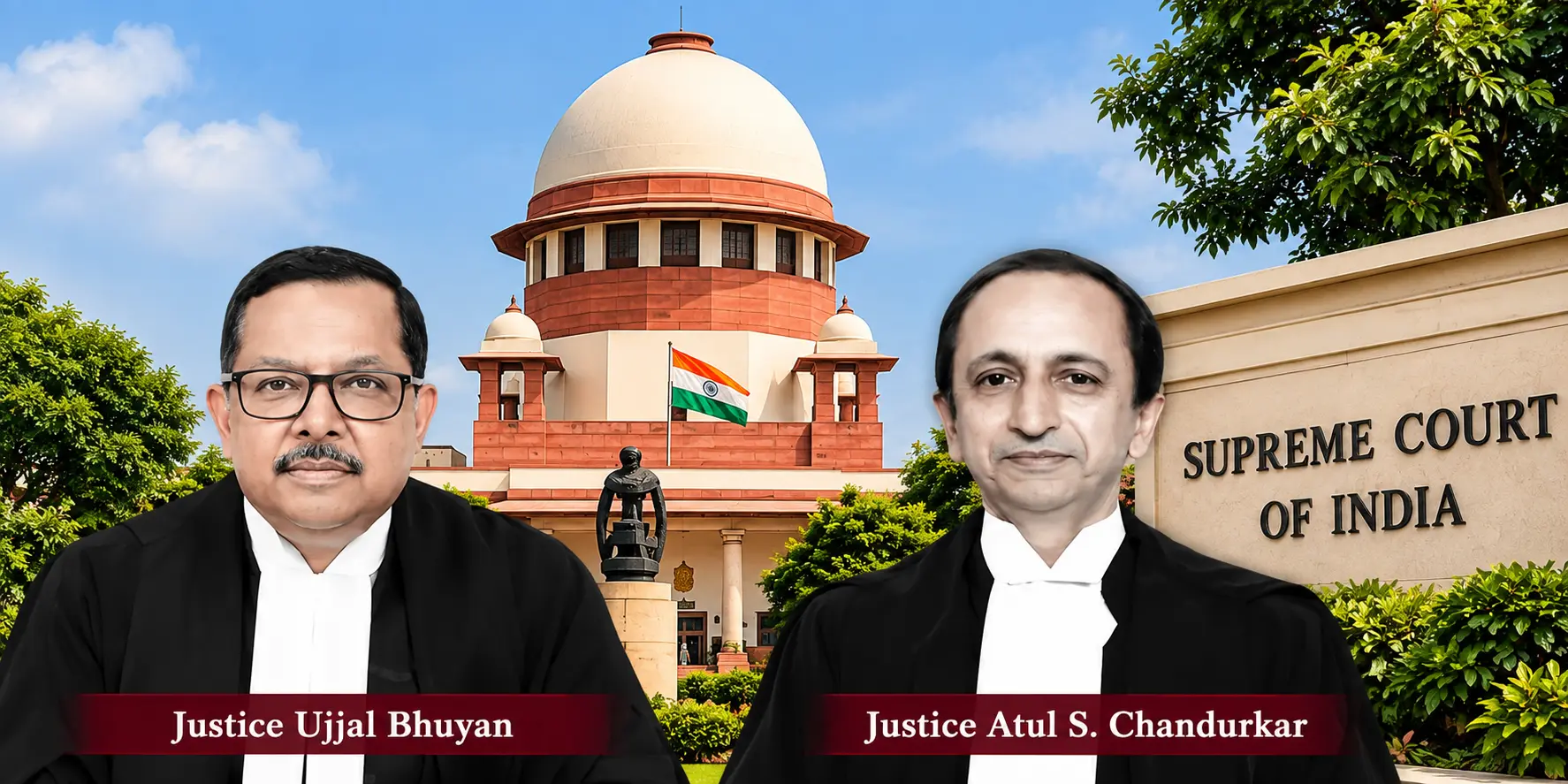
A Bench of Justice Ujjal Bhuyan and Justice Atul S. Chandurkar delivered the ruling in Sujit Das v. Union of India, holding that the Constitution does not recognise detention divorced from arrest. The Court clarified that detention beyond 24 hours without production before a magistrate, excluding necessary travel time, requires immediate release.
The case arose from a drug-smuggling investigation in which the accused were detained on September 29, 2025, but their formal arrest was recorded only on September 30. The investigating agency argued that the 24-hour period began from the formal arrest. The accused contended that the delay was intended to circumvent Article 22(2) of the Constitution.
Rejecting the distinction between detention and formal arrest, the Court held that the constitutional clock starts when a person is placed under the control and custody of the investigating agency and their liberty is effectively curtailed. It observed that any artificial distinction between detention and arrest would dilute constitutional safeguards and create an unconstitutional buffer period for investigation.
The Court emphasised that Article 22(2) safeguards individuals against prolonged detention without judicial oversight and helps prevent custodial torture. It noted that custodial violence may occur when authorities avoid recording an arrest or describe deprivation of liberty as prolonged interrogation.
Applying these principles, the Court found that the accused had been detained from 2 PM on September 29, 2025, but were produced before the Judicial Magistrate only at 4:45 PM on September 30, beyond the constitutional deadline. It held that the breach rendered their arrest and continued detention illegal and unconstitutional.
The Court also found that the 18-hour delay between the conclusion of search and seizure and the formal arrest was unreasonable under Section 58 of the Bharatiya Nagarik Suraksha Sanhita, 2023 (BNSS). It set aside the Tripura High Court’s order denying bail and directed the accused’s immediate release.
The Bench further reiterated that the stringent bail conditions under Section 37 of the NDPS Act cannot override fundamental rights under Article 21. It held that where constitutional safeguards are violated, the rigours of a special statute must give way to the protection of life and personal liberty.
Case Details:-
SUJIT DAS & ORS. VERSUS UNION OF INDIA
Special Leave to Appeal (Crl.) No(s). 12451-12453/2026
Representation:-
For the Petitioner(s): Mr. Rauf Rahim, Senior Advocate, Mr. Ali Asghar Rahim, Advocate, Mr. Mohsin Rahim, Advocate, Mr. Subhradip Sharma, Advocate, Mr. Shekhar Kumar, Advocate-on-Record.
For the Respondent(s): Mr. Raghavendra P. Shankar, Additional Solicitor General, Mr. Gurmeet Singh Makker, Advocate-on-Record, Mr. Karan Lahiri, Advocate, Ms. Shambhavi Sharma, Advocate, Mr. Gaurang Bhushan, Advocate, Mr. Vikas Sharma, Advocate.
Website designed, developed and maintained by webexy