
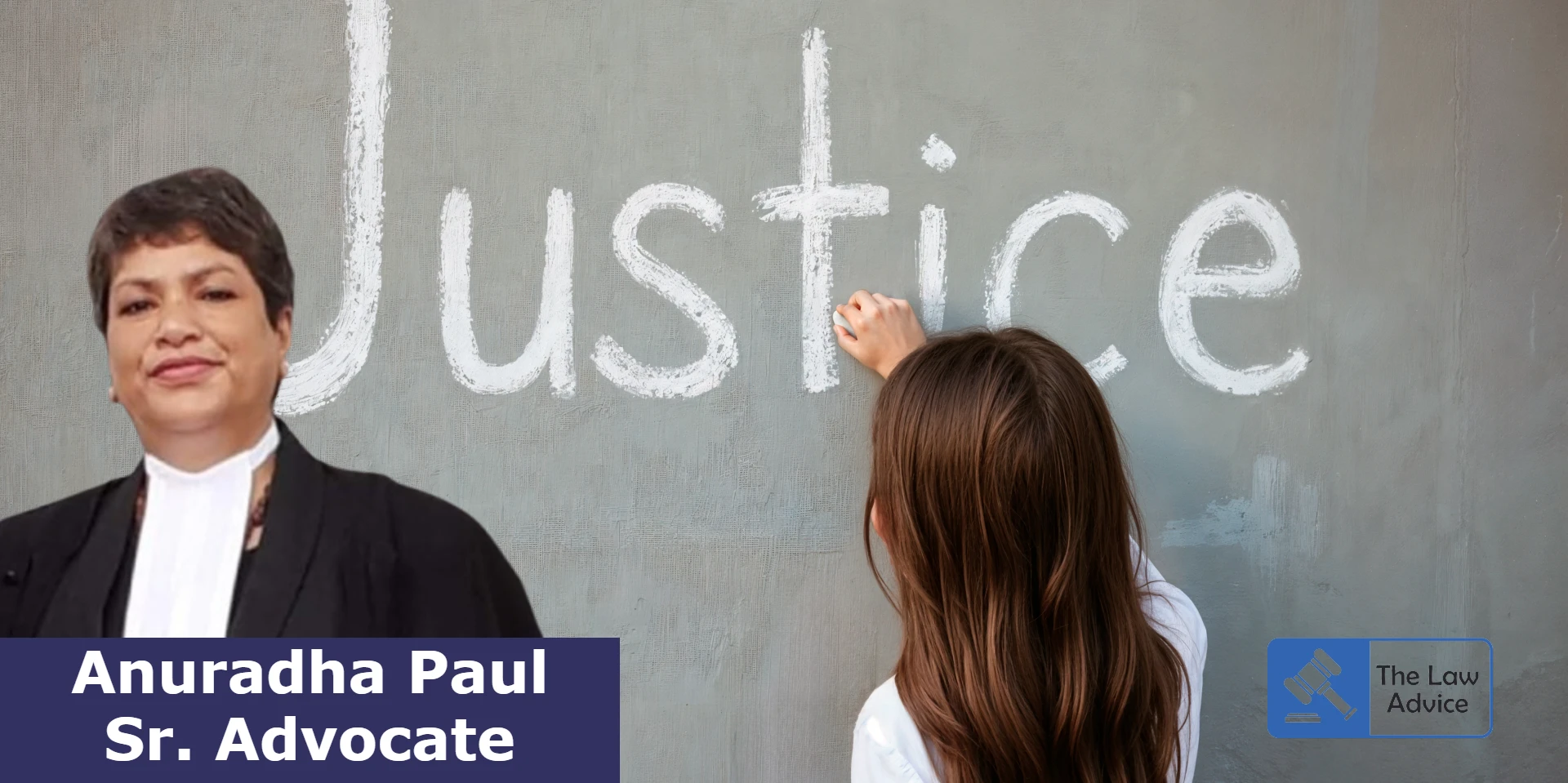
Juvenile Justice in Contemporary India: The Shift from Rehabilitation to Punitive Populism
Anuradha Paul is a designated Senior Advocate of the Meghalaya High Court and has previously served as the Assistant Solicitor General of India. In addition to her appearances before the Hon’ble Supreme Court of India, she regularly practices before the Meghalaya High Court and several other High Courts across the country. In the present article, she offers her considered views on the Juvenile Justice (Care and Protection of Children) Act, 2015, with particular focus on the subsequent amendments and their legal and social implications.
Abstract
India’s juvenile justice framework is currently at a critical juncture. The Juvenile Justice (Care and Protection of Children) Act, 2015 was enacted amid intense public outrage following high-profile crimes involving adolescents. While the law sought to respond to concerns of public safety and accountability, it simultaneously diluted the core rehabilitative philosophy that has historically underpinned juvenile justice systems worldwide. This article re-examines the Juvenile Justice Act, 2015 in light of contemporary legal standards, constitutional values, advances in neuroscience, and global best practices. It argues that the increasing shift towards punitive responses—particularly the provision allowing children aged 16–18 to be tried as adults for heinous offences—poses serious risks to child rights, long-term public safety, and the legitimacy of India’s justice system. The article advocates for a rights-based, evidence-driven juvenile justice model suited to present-day realities.
I. Introduction: Juvenile Justice in the Age of Public Outrage
More than a decade after the enactment of the Juvenile Justice Act, 2015, India continues to grapple with a fundamental question: Should juvenile justice prioritise punishment or reform? This question has gained renewed urgency in an era of instant media trials, viral outrage, and heightened demands for “zero tolerance” criminal justice.
India’s juvenile justice system was originally shaped by international commitments, particularly the UN Convention on the Rights of the Child (UNCRC), which recognises that children—even when they offend—are fundamentally different from adults in terms of maturity, decision-making, and capacity for reform. However, the public reaction to the 2012 Delhi gang rape case marked a turning point. The involvement of a juvenile accused triggered widespread calls for harsher punishment, reframing juvenile justice as a perceived threat to victim rights and societal security.
In today’s legal and social climate—characterised by rising cybercrime, changing patterns of youth violence, and greater visibility of crime—the pressure on lawmakers to appear “tough” has only intensified. This article argues that such pressure-driven lawmaking risks undermining both constitutional principles and long-term crime prevention goals.
II. Legislative Background: From Child Protection to Penal Exceptionalism
The Juvenile Justice Act, 2015 was not enacted in a vacuum. It emerged from a period where public trust in the justice system was shaken, and political discourse increasingly equated severity of punishment with effectiveness of law.
The most significant departure from earlier juvenile law was the introduction of a mechanism allowing children aged 16–18 accused of heinous offences to be assessed for trial as adults. This marked India’s first formal move towards a judicial waiver system, a concept borrowed from jurisdictions like the United States—despite substantial evidence of its failure there.
While the stated intent was to address “exceptional cases,” the amendment effectively created a new class of children: those who are children for some purposes, but adults for punishment. In contemporary constitutional terms, this raises serious concerns about equality, arbitrariness, and proportionality.
III. Core Features of the 2015 Act: Reform with Contradictions
The 2015 Act introduced several progressive measures, including:
- Statutory strengthening of adoption processes through CARA
- Introduction of foster care as a recognised child protection mechanism
- Criminalisation of new forms of abuse against children, including trafficking, corporal punishment, and exploitation by armed groups
However, these reforms coexist uneasily with punitive provisions that reflect a crime-control mindset rather than a child-welfare approach.
Preliminary Assessment and Transfer to Adult Courts
Under Section 15, Juvenile Justice Boards are empowered to assess a child’s mental and physical capacity, ability to understand consequences, and circumstances of the offence. In practice, this assessment raises serious challenges:
- Psychological maturity cannot be reliably determined through short, quasi-judicial inquiries
- The process risks subjective bias influenced by the nature of the offence rather than the child’s development
- Procedural safeguards remain weak, especially in under-resourced districts
IV. Contemporary Debates: Child Rights vs Victim Justice
Modern juvenile justice discourse often frames the issue as a binary choice between victim rights and child rights. This framing is misleading.
Victim justice does not require abandoning rehabilitative principles. In fact, global research consistently shows that rehabilitative juvenile systems reduce repeat offending, thereby offering better long-term protection to society and future victims.
India’s commitment under the UNCRC, read with Articles 14, 15, and 21 of the Constitution, requires that children be treated in a manner consistent with dignity, fairness, and developmental understanding. Any deviation must meet strict constitutional scrutiny—something the age-based transfer mechanism struggles to satisfy.
V. Institutional Reality: Rehabilitation in Crisis
In today’s governance context, the most glaring failure is not legislative intent but institutional capacity.
Numerous reports continue to document:
- Unregistered and poorly monitored child care institutions
- Widespread abuse, neglect, and exploitation within juvenile homes
- Lack of trained mental health professionals, counsellors, and educators
Scandals such as the Apna Ghar case are not historical anomalies but reminders that punitive laws without institutional reform merely relocate children from one unsafe space to another.
Trying juveniles as adults without first fixing the juvenile justice infrastructure amounts to systemic abdication of responsibility.
VI. The “Fresh Start” Principle in a Digital Age
The principle of a “fresh start”—which mandates erasure of juvenile records—is more important today than ever. In an era of permanent digital footprints, background checks, and algorithmic profiling, a single conviction can irreversibly damage a young person’s future.
While the 2015 Act recognises this principle, its vague exception for “special circumstances” creates uncertainty and potential discrimination. More troubling is the exclusion of children aged 16–18 convicted of heinous offences from protection against future disqualifications.
This approach contradicts modern privacy jurisprudence and undermines the rehabilitative promise of juvenile justice.
VII. What Modern Psychology and Global Evidence Tell Us
Contemporary neuroscience unequivocally establishes that adolescent brains—particularly areas governing impulse control and risk assessment—are still developing. This scientific consensus has been recognised by courts worldwide, including the Indian Supreme Court.
Experiments with harsh juvenile punishment in the United States led to higher recidivism rates, greater institutional violence, and long-term social harm. As a result, many jurisdictions are now reversing earlier punitive policies.
Countries like Australia have adopted evidence-based rehabilitation frameworks focused on:
- Risk assessment
- Individualised treatment
- Responsivity to psychological and social needs
These models align more closely with constitutional morality and contemporary human rights standards.
VIII. The Way Forward: A Juvenile Justice Model for Today’s India
India’s juvenile justice system must evolve—not regress. A contemporary response requires:
- Investment in mental health, education, and vocational training within juvenile systems
- Community-based interventions involving families, schools, and local stakeholders
- Clear legislative safeguards to prevent arbitrary adult trials
- Data-driven policy rather than outrage-driven amendments
Most importantly, juvenile justice must be understood as crime prevention, not crime indulgence.
Conclusion
In today’s legal and social environment, the Juvenile Justice Act, 2015 reflects a system torn between constitutional ideals and populist pressures. While accountability for serious offences is necessary, abandoning rehabilitative principles risks long-term harm—to children, victims, and society alike.
A modern juvenile justice system must be firm, fair, and forward-looking. Punishment alone cannot secure justice.
Only reform can.