
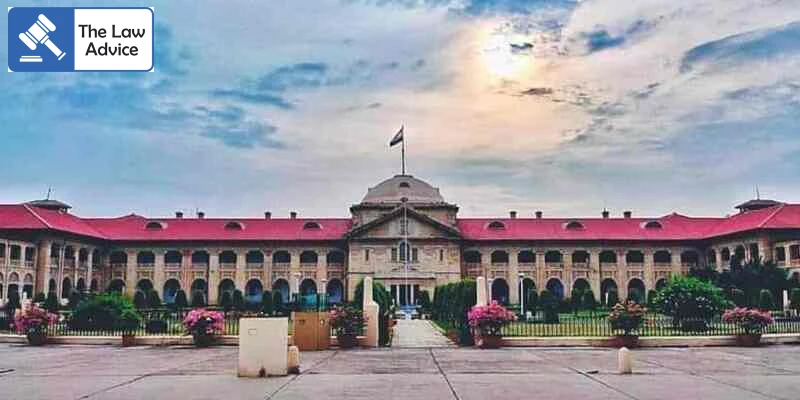
The Allahabad High Court recently observed that while discharging judicial duties, a judicial officer stands above the district magistrate, the district police chief, and even the political head of a State.
The bench headed by Justice Arun Kumar Singh Deshwal made the observation while hearing a case where the UP Police ignored a Chief Judicial Magistrate’s direction to produce CCTV footage from a police station accused of illegally detaining a man.
The Court noted that a judicial officer, while discharging judicial functions, occupies a position far above administrative and executive authorities, and that the role of the judiciary is on par with that of the legislature and the political executive (ministers), the Allahabad High Court observed.
Taking note of the Supreme Court of India’s observation in All India Judges Association v. Union of India that judges cannot be equated with administrative or executive officers, the Court held that—
Anyone entering his Court has to give respect to the Chair of the concerned Judicial Magistrate and disregarding the order of Judicial Magistrate is not only the contempt of Court, but also challenging the authority of law, as they are discharging their duty to uphold the rule of law. District Judicial Officers are the first who grant relief to a common person.
The Court made the allied observations on January 30, stating that police officers in Uttar Pradesh are routinely exerting pressure on judges—especially Chief Judicial Magistrates (CJMs)—to secure particular orders.
The Court has since incorporated these views into a formal judicial order. It further observed that CCTV cameras installed at police stations are not being regularly monitored, despite clear directions issued by the Supreme Court of India.
Accordingly, the Court directed that Chief Judicial Magistrates (CJMs) or concerned magistrates may conduct random inspections of police stations within their jurisdictions after court hours to assess the functioning of CCTV cameras, with prior intimation to their District Judge. It warned that all police personnel must cooperate during such inspections and that any obstruction or disrespect towards a judicial officer would be dealt with strictly.
On the merits of the case, the Court found that the petitioner had been illegally detained by the police for three days, with his formal arrest being shown only after his sister approached the CJM. Holding the detention to be unlawful, the Court directed the State to pay compensation of ₹1 lakh to the petitioner, while granting liberty to the State Government to recover the amount from the salaries of those responsible for the illegal detention.
Taking note of the admission of fault by the Station House Officer and the Investigating Officer, the Court also held them guilty of contempt of court on February 19. However, adopting a lenient approach, it sentenced them to custody only till the rising of the court. At the same time, the Court directed the State Director General of Police to examine the broader issues highlighted in the case and to initiate appropriate action against erring police officers in accordance with law.
Advocate Vijit Saxena appeared for the petitioner, while the State was represented by Additional Advocate General Anoop Trivedi, along with Advocates Pankaj Saxena and DPS Chauhan.
Website designed, developed and maintained by webexy