
In a landmark 297-page judgment delivered on May 29, 2026, the Supreme Court of India has held that victims of human trafficking for commercial sexual exploitation (CSE) have a fundamental right to rehabilitation flowing from Articles 21 and 23 of the Constitution. The Court simultaneously issued a comprehensive Victim Protection Plan that will operate as law until Parliament enacts a dedicated legislation on the subject.
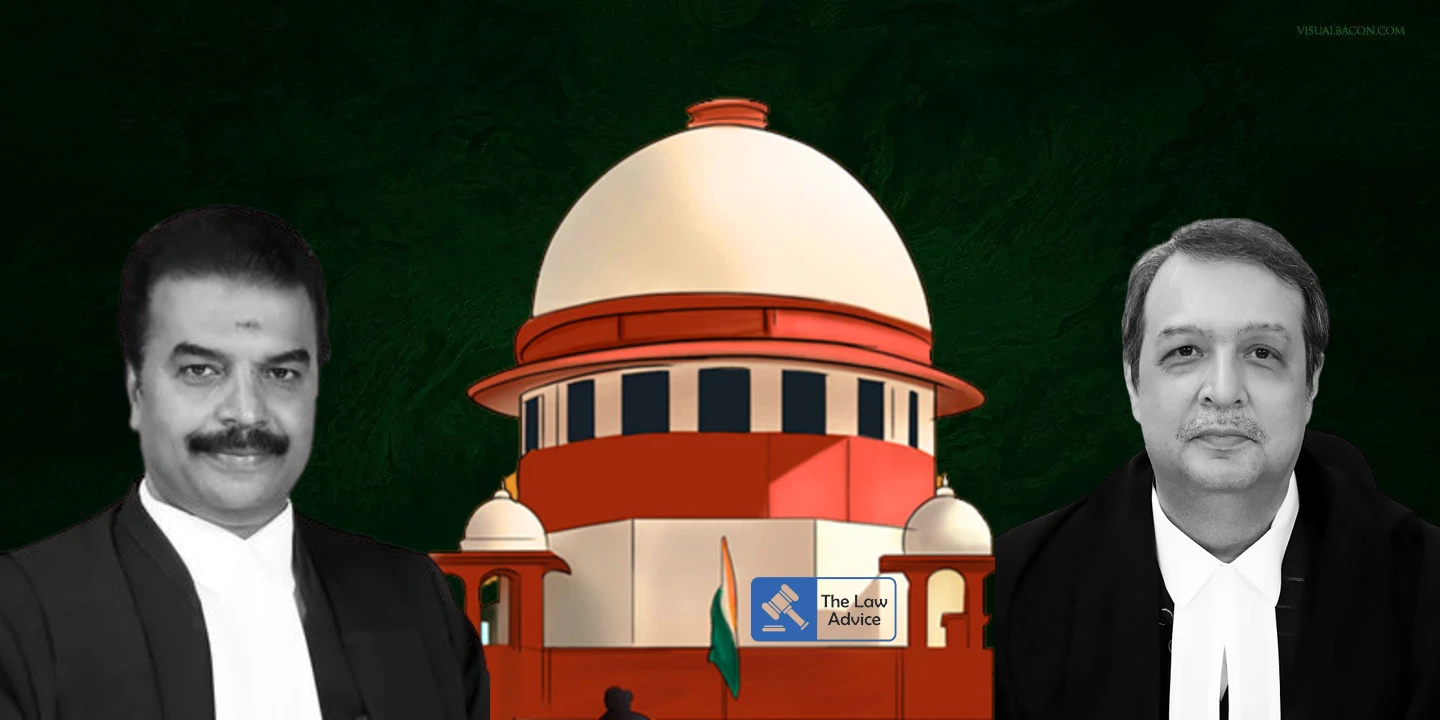
The judgment was delivered by a Bench of Justice J.B. Pardiwala and Justice R. Mahadevan in Prajwala v. Union of India, a case that traces its origins to a public interest litigation filed in 2004 by the anti-trafficking organisation Prajwala.
The Court held that rescue alone is not enough. Victims of trafficking remain vulnerable to re-trafficking, intimidation, social exclusion, poverty and psychological trauma even after being rescued. Therefore, the constitutional obligation of the State extends beyond rescue and prosecution to rehabilitation and reintegration.
According to the Court, a combined reading of Articles 21 (Right to Life and Dignity) and 23 (Prohibition of Trafficking and Forced Labour) creates a constitutional right to rehabilitation for victims of trafficking.
The Bench observed that rehabilitation must include:
Physical safety from traffickers.
Shelter, healthcare and psychological support.
Vocational training and economic empowerment.
Measures to combat stigma and social exclusion.
Respect for the victim's autonomy and choices.
The Court examined the existing legal framework, including the Immoral Traffic (Prevention) Act, Anti-Human Trafficking Units, NIA powers, shelter homes and rehabilitation schemes.
It concluded that despite various laws and schemes, there remained a significant gap in the form of the absence of a comprehensive and binding Victim Protection Plan governing pre-rescue, rescue, post-rescue, rehabilitation and reintegration stages.
The Bench noted that the lack of such a framework often results in victims being treated inconsistently, leading to re-victimisation and failure of rehabilitation efforts.
Invoking its powers under Articles 32 and 142 of the Constitution, the Court framed an extensive Victim Protection Plan, declaring that the guidelines would continue to operate until Parliament enacts an appropriate law.
The plan covers:
Pre-rescue operations.
Rescue procedures.
Post-rescue care.
Rehabilitation.
Repatriation and reintegration.
Investigation and prosecution.
Prevention and training measures.
Among the guiding principles laid down by the Court are:
Primacy of human rights and dignity.
Non-criminalisation of victims.
Informed consent.
Non-discrimination.
Safety and protection.
Privacy and confidentiality.
Significantly, the Court emphasised that victims should be treated as victims and not offenders and that rehabilitation measures should be responsive to their own choices and aspirations.
The Court acknowledged the need to distinguish victims of trafficking from voluntary adult sex workers.
It stressed the necessity of a threshold inquiry before subjecting adults to the full rescue-and-rehabilitation machinery and recognised the importance of consent in decisions relating to custody, rehabilitation and reintegration, subject to concerns regarding coercion, threats or safety risks.
This aspect is likely to have a significant impact on future anti-trafficking operations and the rights discourse surrounding sex work in India.
One of the original demands before the Court was the creation of an Organised Crime Investigation Agency (OCIA) dedicated to trafficking investigations.
The Court declined to issue a mandamus directing the Union Government to establish such an agency. It held that although the functions envisioned for OCIA are currently distributed across several institutions, including the NIA and Anti-Human Trafficking Units, there is no legal vacuum warranting judicial intervention on this issue.
However, the Court left it open to the Union Government to establish such a body in the future if considered necessary.
While refraining from directing the enactment of a law, the Court made several recommendations, including:
Reconsideration of provisions in the Immoral Traffic (Prevention) Act that may criminalise victims.
Strengthening rights protections for voluntary adult sex workers.
Revisiting shelter-home models.
Addressing cyber-enabled human trafficking.
Considering a comprehensive anti-trafficking legislation.
The decision is arguably the most comprehensive Supreme Court ruling on human trafficking and commercial sexual exploitation since Vishal Jeet v. Union of India.
Its most significant contribution lies in transforming rehabilitation from a welfare measure into a constitutional entitlement. By recognising rehabilitation as an enforceable right and by laying down an interim nationwide Victim Protection Plan, the Court has attempted to shift India's anti-trafficking framework from a rescue-centric approach to a victim-centric, rights-based model.
The Court directed the Union Government to ensure compliance with the directions within three months and fixed the matter for compliance review in September 2026.
Case: Prajwala v. Union of India, Miscellaneous Application No. 530 of 2022 in Writ Petition (Civil) No. 56 of 2004
Bench: Justice J.B. Pardiwala and Justice R. Mahadevan
Date: May 29, 2026.
Citation: 2026 INSC 609

Representation:-
For Petitioner(s) Ms. Aparna Bhat, Sr. Adv., Ms. Rajkumari Banju, AOR
For Respondent(s) : Ms. Aishwarya Bhati, ASG, Dr. N. Visakamurthy, AOR, M/S. Arputham Aruna And Co, AOR, Mr. T. V. Ratnam, AOR, Mr. T. V. George, AOR, Mr. Naresh K. Sharma, AOR, Mr. P. V. Yogeswaran, AOR, Ms. Kamini Jaiswal, AOR, Ms. Sumita Hazarika, AOR, Ms. Hemantika Wahi, AOR, Mr. Jatinder Kumar Bhatia, AOR, Mrs. Anil Katiyar, AOR, Mr. Rajesh Srivastava, AOR, Mr. Arun K. Sinha, AOR, M/S. Corporate Law Group, AOR, Ms. A. Subhashini, AOR, Mr. Sanjay Jain, AOR, Mr. Purushottam Sharma Tripathi, AOR, Ms. Ruby Singh Ahuja, AOR, Ms. K. Enatoli Sema, AOR, Mr. Gopal Prasad, AOR, Mr. V. N. Raghupathy, AOR, Mrs. B. Sunita Rao, AOR, Mr. Anil Shrivastav, AOR, Mr. Jogy Scaria, AOR, Mr. Mukesh K. Giri, AOR, Ms. G. Indira, AOR, Mrs. D. Bharathi Reddy, AOR, Mr. Ranjan Mukherjee, AOR, Mr. R. Ayyam Perumal, AOR, Mr. Sabarish Subramanian, AOR
Website designed, developed and maintained by webexy