
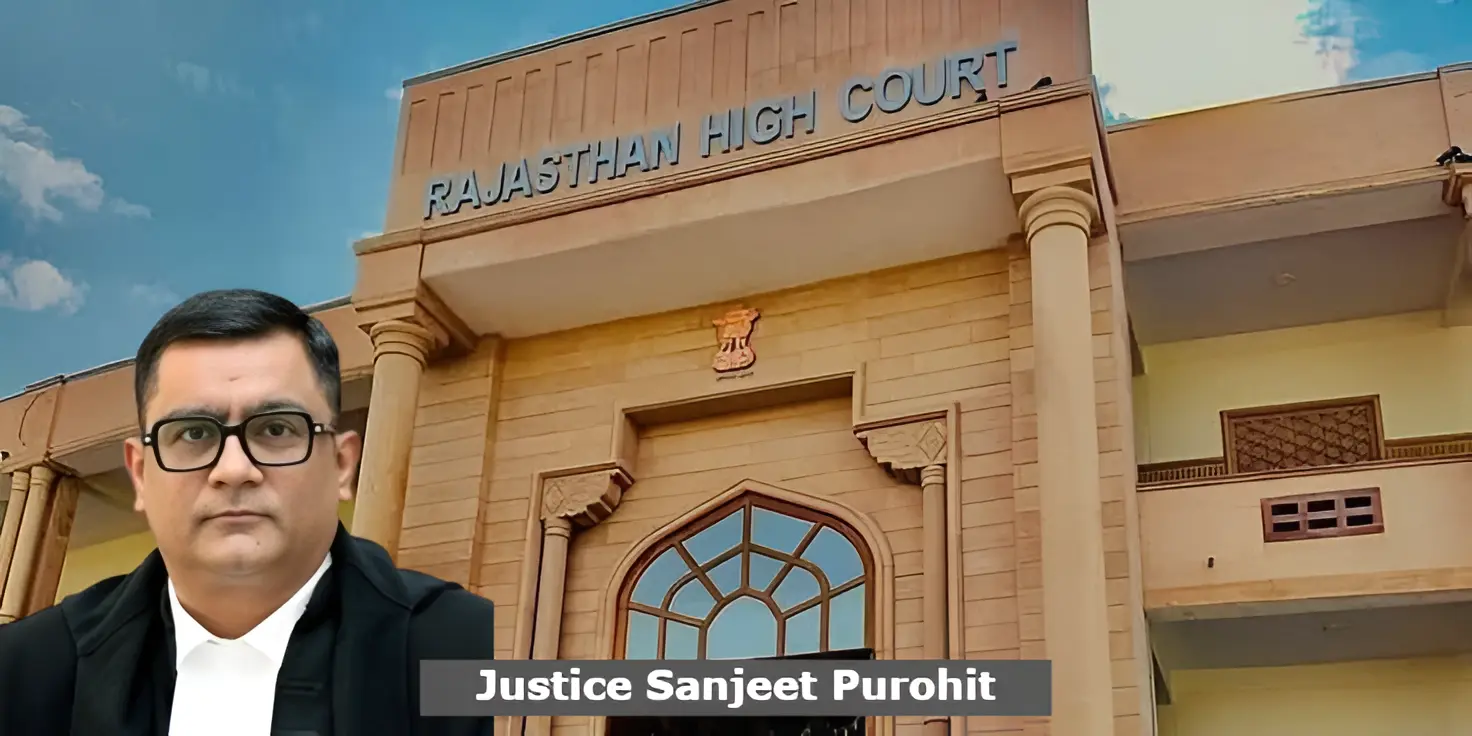
The Rajasthan High Court has directed the authorities of Central Jail, Jodhpur to continue all medical facilities and accommodations previously granted to convicted self-styled godman Asaram Bapu, holding that the rights of prisoners do not cease upon conviction and that the State remains constitutionally obligated to ensure their health, dignity, and humane treatment.
Justice Sanjeet Purohit, while deciding a criminal writ petition filed by the 85-year-old convict, observed that facilities extended to him were based on his advanced age and serious medical conditions rather than any special status or privilege. The Court emphasized that the disposal of an appeal cannot by itself justify the withdrawal of medical accommodations previously granted by courts.
Asaram, who is serving imprisonment for the remainder of his natural life following the dismissal of his appeal against conviction under the IPC, Juvenile Justice Act, and POCSO Act, contended that several facilities available to him during the pendency of proceedings had been discontinued after his surrender to prison authorities. He sought restoration of those facilities and additional accommodations on medical grounds.
The Court noted that medical records from AIIMS Jodhpur and certificates issued by treating doctors showed that the petitioner suffers from multiple ailments, including critical coronary artery disease, diabetes mellitus, recurrent electrolyte disorders, osteoporosis, sarcopenia, and severe mobility-related complications.
Relying upon landmark Supreme Court decisions including Sunil Batra v. Delhi Administration, Francis Coralie Mullin v. Administrator, Union Territory of Delhi, and D. Bhuvan Mohan Patnaik v. State of Andhra Pradesh, the Court reiterated that prisoners continue to enjoy fundamental rights under Article 21 of the Constitution, except those necessarily curtailed by lawful incarceration. It observed that the State's duty extends beyond custody and includes preserving the life, health, and dignity of inmates.
Allowing the petition in part, the Court directed jail authorities to provide Asaram with a bed and bedding facility, observing that his medical condition and difficulty in mobility justified such accommodation. The Court also ordered that alkaline drinking water be allowed along with food supplied from private sources under previously existing arrangements. Further, it directed that all earlier medical facilities, attendant support, treatment arrangements, and accommodations granted through judicial orders shall continue throughout his incarceration unless there is a substantial change in his health condition or a contrary order from a competent court.
However, the Court declined several additional requests. It refused permission for attendants of the petitioner's own choice, holding that jail authorities may continue providing attendants from among inmates. It also declined a blanket direction permitting the use of a private ICU-equipped ambulance and rejected the demand for a separate temperature-controlled ward. The Court further refused the request for daily visits by the petitioner's personal doctor, directing instead that such visits may ordinarily be permitted once every fortnight, with additional visits allowed in cases of medical necessity.
Concluding the matter, the High Court held that the constitutional rights of a prisoner cannot be diminished merely because appellate proceedings have attained finality and ordered that all previously sanctioned medical arrangements remain operative during the petitioner's custody.
Website designed, developed and maintained by webexy