
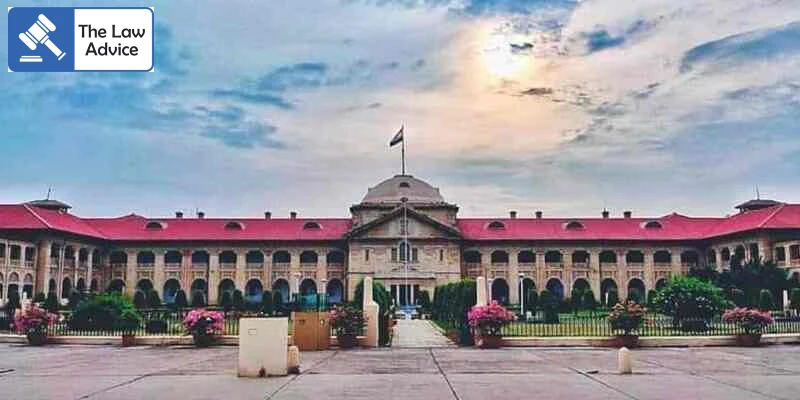
The Allahabad High Court has held that asserting any religion as the “only true religion” is inappropriate in a secular country like India, as it may amount to disparaging other faiths and invite legal consequences.
Dismissing a plea filed by Reverend Father Vineet Vincent Pereira, Justice Saurabh Srivastava observed that such statements could prima facie fall within the scope of Section 295A IPC, which penalises deliberate and malicious acts intended to outrage religious feelings.
In its March 18 order, the court remarked that claiming exclusivity for one religion inherently undermines others. As per the FIR, the petitioner allegedly conducted prayer meetings where he repeatedly described Christianity as the only true religion, leading to complaints from members of another community who said their sentiments were hurt.
During the investigation, while no evidence of illegal religious conversion was found, the police proceeded to file a chargesheet on allegations that the petitioner had criticised other religions.
The petitioner’s counsel argued that the case was false and that no offence under Section 295A was made out. It was further contended that the magistrate took cognisance of the chargesheet without proper application of mind.
The state opposed the plea, submitting that the case involved disputed facts that could only be assessed during trial. It emphasised that at the stage of cognisance, the court is only required to determine whether a prima facie case exists, not undertake a detailed evaluation of evidence.
Agreeing with this position, the High Court underscored India’s secular framework, where multiple religions coexist, and noted that Section 295A specifically addresses acts carried out with deliberate intent to offend religious sentiments. It concluded that, at this stage, it cannot be said that no prima facie case exists, adding that a magistrate is not expected to conduct a mini-trial or assess the defence while taking cognisance.
Website designed, developed and maintained by webexy