
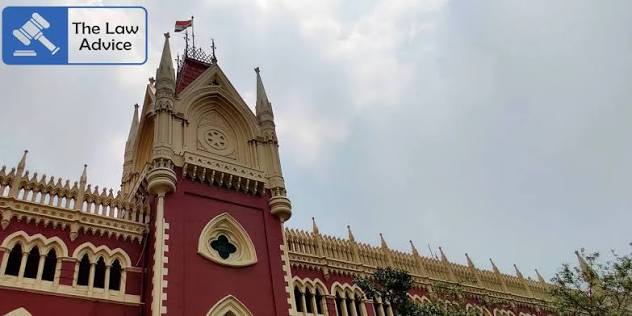
The Calcutta High Court has declined to grant interim protection to Sumit Roy, an aide of Trinamool Congress leader Abhishek Banerjee, who claimed that he was being falsely implicated in multiple criminal cases at the instance of the Bharatiya Janata Party (BJP).
Justice Saugata Bhattacharyya refused to grant protection from coercive action in five criminal cases, observing that there was no reason for the writ court to intervene at this stage.
During the hearing, Senior Advocate Gopal Sankaranarayan, appearing for Roy, informed the Court that his client was already in custody in one of the five cases. He sought protection from coercive action in the remaining four cases so that Roy could pursue appropriate legal remedies.
The Court, however, questioned the need for such protection when Roy was already in custody in one case.
It further observed that the writ jurisdiction in criminal matters must be exercised cautiously, particularly when other legal remedies are available. The Court was not inclined to examine Roy's allegations at this stage.
Additional Advocate General Rajdeep Mazumder appeared for the State of West Bengal.
Roy had approached the High Court under Article 226 of the Constitution, alleging that he was being targeted through politically motivated criminal cases following the May 4, 2026 Assembly election results, which brought the BJP to power in West Bengal.
His petition challenged five FIRs registered between July and August 2026 at Diamond Harbour and Jibantala police stations. Four of the FIRs were lodged by BJP leader Abhijit Das, also known as Bobby, and his associates.
The cases involve allegations of running illegal 'Sebashray' medical camps using unlicensed diagnostic equipment, facilitating fake educational certificates, involvement in organised crime, an armed political attack in 2018, and an assault in 2020 related to cyclone relief funds.
Roy relied on the Supreme Court's judgment in State of Haryana v. Bhajan Lal to argue that the complaints were filed after unexplained delays of up to ten years and did not contain specific allegations against him.
Website designed, developed and maintained by webexy