
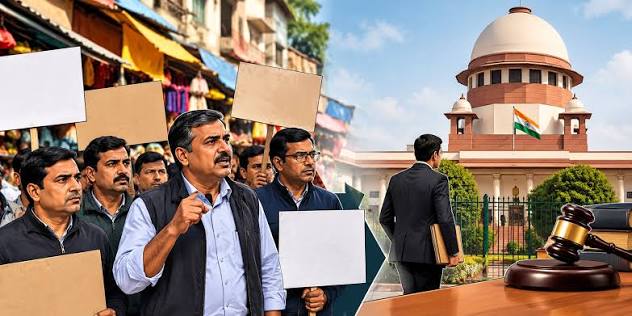
The Delhi Police has told the Supreme Court that social media influencers and reel-makers cannot automatically claim the same protection as professional journalists covering protests, arguing that the two categories need to be distinguished.
In an affidavit filed before the Court, the police submitted that professional journalists form a distinct category from individuals who carry cameras and microphones to create social media content, including for commercial purposes.
The affidavit was filed in response to petitions alleging that journalists were manhandled, detained and harassed by police personnel while covering protests against Chief Election Commissioner Gyanesh Kumar in Delhi last month.
The police stated that there could be no objection to individuals making reels, uploading videos or commercially using their content. However, it questioned whether such content creators could be treated as journalists or reporters.
"The question as to whether such reel-makers can be elevated to the status of journalists or reporters is yet to be determined," the affidavit stated.
The police further argued that the Supreme Court's direction protecting journalists from obstruction while performing their professional duties was not intended to exempt social media influencers, reel-makers or other individuals from general laws or lawful police directions at prohibited protest sites.
It also referred to instances where people carrying cameras and microphones allegedly identified themselves as journalists while participating in protests and raising slogans. According to the police, such activities made it difficult for personnel to distinguish between journalists and protesters.
The affidavit cited a video of a woman carrying a press card and a microphone identification, who initially described herself as a student and journalist but later admitted that she was "not a journalist yet".
At the same time, the Delhi Police acknowledged that the freedom to gather, record and publish news is not limited to journalists working for recognised media organisations. It stated that independent journalists, freelancers and individuals reporting through YouTube and other digital platforms also enjoy constitutional protection.
The police clarified that the absence of Press Information Bureau (PIB) accreditation, an employer-issued press card or employment with a recognised media organisation cannot, by itself, be a ground to deny an individual the right to gather and publish information.
The affidavit also denied allegations that the police deliberately obstructed journalists from covering the protests. It claimed that journalists from national, international, regional and digital media organisations, including those without official accreditation, were able to record the events.
The police further relied on CCTV footage and its own videography of the protest sites to support its submission that media personnel were not prevented from reporting.
Regarding allegations of sexual harassment made by three journalists against police personnel, the affidavit stated that two of them did not wish to pursue their complaints, while the third did not participate in the police inquiry. It added that an examination of CCTV footage did not reveal any incident of sexual harassment and that the complaints had been closed.
On allegations concerning the detention of journalists, the police maintained that some individuals were removed from protest sites as part of crowd-control measures or due to mistaken identity. It claimed that those identified as journalists were subsequently released.
The police also denied seizing any material or equipment belonging to journalists, stating that articles recovered from other individuals were seized in accordance with law.
The affidavit was filed in response to petitions by the Network of Women in Media, India, Free Speech Collective, Delhi Union of Journalists and Kerala Union of Working Journalists.
The petitions raised concerns over alleged police misconduct against journalists covering the protests at Jantar Mantar and other locations in Delhi.
On October 11, the Supreme Court had directed that lawyers, journalists and other professionals should not be obstructed while performing their professional duties.
The Delhi Police has maintained that it complied with the Court's directions and sought dismissal of the petitions.
Website designed, developed and maintained by webexy