
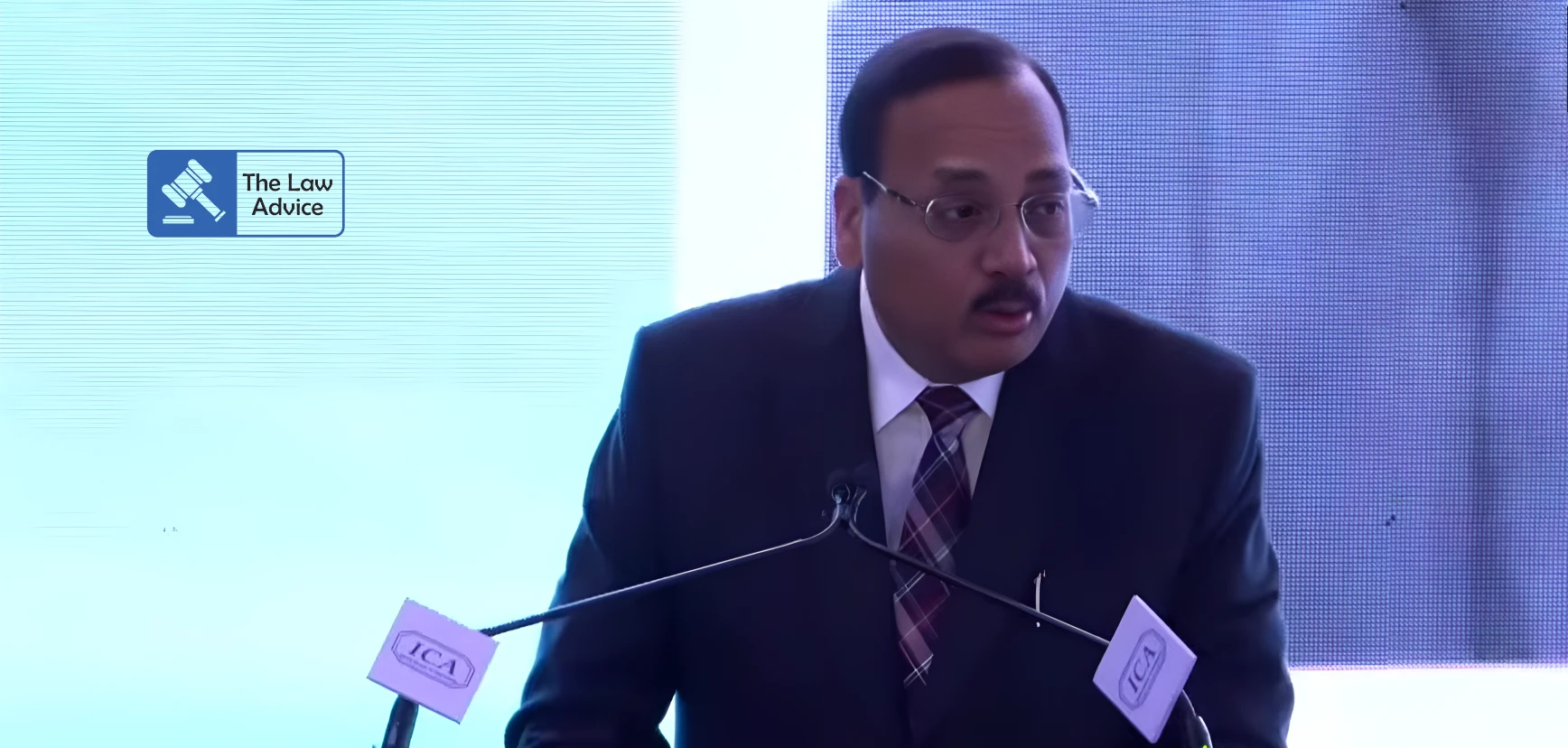
Chief Justice of India Surya Kant has delivered a strong critique of modern international arbitration, cautioning that the dispute resolution mechanism is increasingly developing the very defects it was originally designed to avoid.
Speaking at the 4th International Conference of the Indian Council of Arbitration (ICA) in London during London International Disputes Week 2026, the CJI remarked that arbitration, conceived as a faster and more efficient alternative to court litigation, is now becoming excessively expensive, slow, formal and inaccessible.
“Arbitration was built to be the answer to the pathologies of formal litigation, and it is seemingly acquiring each of those very failings. In other words, the remedy has come to resemble the disease it was designed to kill.”
The conference focused on arbitrating Indo-UK commercial disputes and strengthening economic cooperation through Alternative Dispute Resolution (ADR).
Tracing the historical roots of arbitration, Justice Surya Kant noted that the concept predates modern legislation and evolved naturally through commercial practice. Referring to medieval European trade fairs and India's traditional panchayat system, he emphasized that arbitration was founded on the principle that disputes should be resolved by individuals who understand the trade, industry and realities of the parties involved.
According to the CJI, the real problem arises when procedural machinery begins to overshadow the objective of delivering efficient justice.
“If arbitration becomes too expensive, too slow, too closed, or too formal for the parties it is meant to serve, then the institution must look within.”
The Chief Justice identified several structural concerns affecting contemporary international arbitration, including:
Concentration of appointments among a limited group of arbitrators;
Lengthy pleadings and procedural rounds;
Extended hearings;
Escalating arbitration costs and fee structures.
While clarifying that repeat appointments of experienced arbitrators do not automatically indicate impropriety, he warned that excessive concentration may create a perception that arbitration remains inaccessible to new entrants and smaller stakeholders.
Justice Surya Kant also cautioned against an expansive interpretation of party autonomy.
“Party autonomy was never intended to mean that parties are entitled to engineer the identity of the decision maker most likely to favour their position.”
He stressed that party autonomy should be understood as the right to a fair, impartial and independent dispute resolution process.
Referring to the recently concluded India-UK Free Trade Agreement, the CJI described it as a historic development but emphasized that commercial ambitions ultimately succeed through enforceable contracts and effective dispute resolution mechanisms.
He noted that future India-UK trade will increasingly involve pharmaceutical companies, fintech enterprises, digital platforms, clean energy businesses and mid-sized manufacturers. Therefore, ADR systems must remain affordable and accessible, not merely suitable for large corporations with significant legal budgets.
“If our ADR mechanisms work only for disputes large enough to justify high fee or large legal teams, that might fail the very commercial partnerships that they are meant to support.”
Concluding his address, the Chief Justice called for meaningful reforms rather than symbolic praise of arbitration's legacy.
“We must ensure that arbitration is not a privilege of scale, but an instrument of justice.”
The remarks are likely to resonate within the arbitration community, particularly at a time when concerns regarding costs, delays and procedural complexity are increasingly being raised by businesses and legal practitioners worldwide.
Website designed, developed and maintained by webexy