
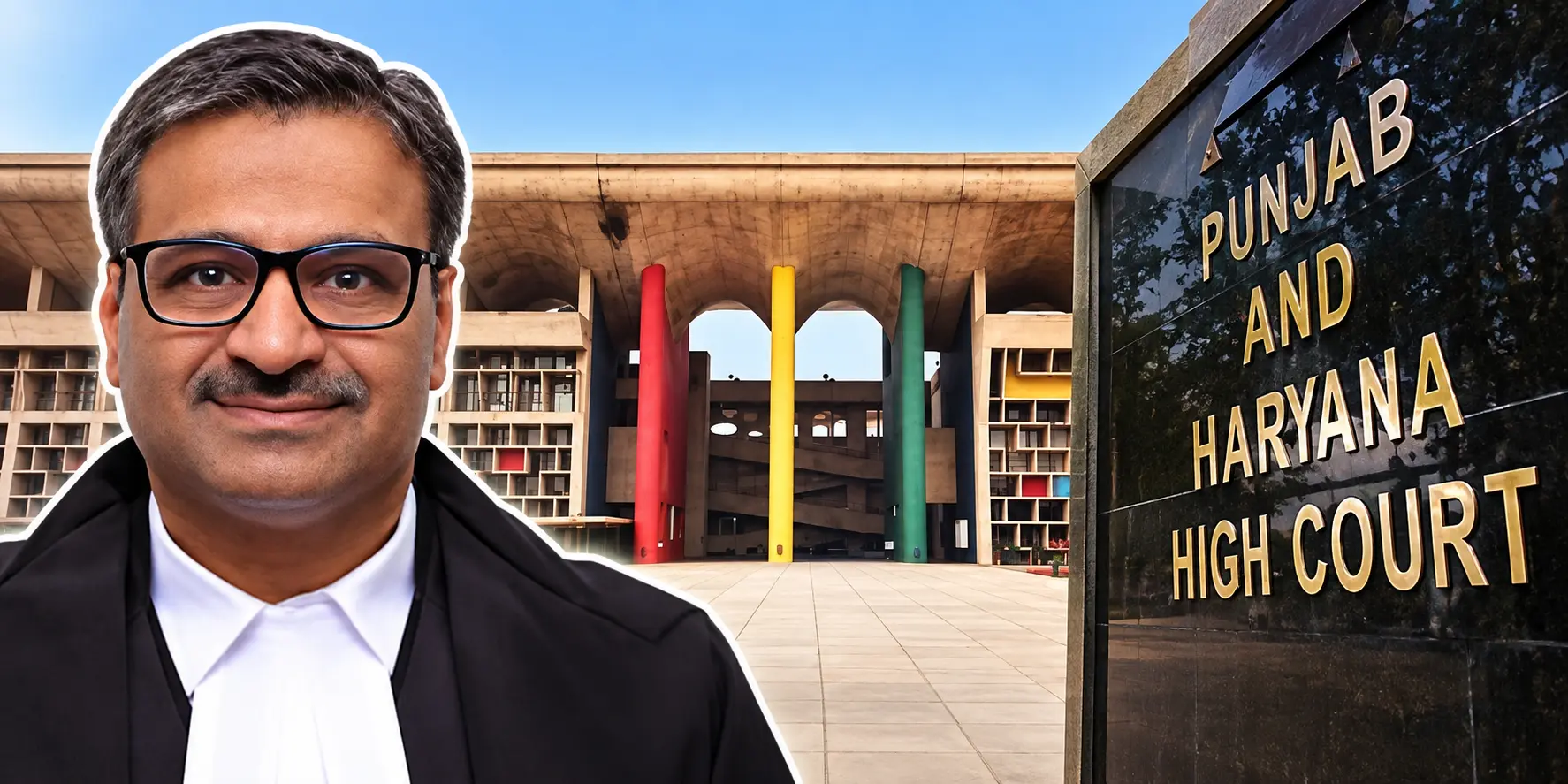
The Punjab and Haryana High Court has held that a foreign driving licence does not automatically authorise a person to drive a motor vehicle in India unless the licence is accompanied by the requisite international permit or valid authorisation under Indian law.
Justice Deepak Gupta, while deciding Sameer Gaba v. Priyanka & Others on September 7, 2026, observed that Section 3 of the Motor Vehicles Act, 1988 prohibits a person from driving a motor vehicle in a public place unless they hold an effective driving licence authorising them to drive that particular vehicle.
The Court clarified that merely possessing a valid driving licence issued by a foreign country does not confer a right to drive in India.
“A foreign driving licence does not, merely because it is valid in the country of its issuance, automatically confer a right upon its holder to drive a motor vehicle in India.”
Driver Relied on Australian Licence
The case arose from a 2015 road accident in which a nine-month-old child lost her life. The Motor Accidents Claims Tribunal (MACT), Kurukshetra, had awarded compensation of around ₹2.49 lakh to the victim's family and permitted the insurance company to recover the amount from the driver and owner on account of the driver not possessing a valid Indian driving licence.
The driver challenged the recovery direction before the High Court.
He first contended that he was not driving the vehicle at the time of the accident and pointed out that the victim's father had not identified him as the driver in subsequent criminal proceedings. He also relied upon his acquittal in the criminal case.
Alternatively, he argued that he possessed a driving licence issued by the competent authority in Victoria, Australia, which authorised him to drive a similar category of vehicle.
Foreign Licence Cannot Be Equated With Indian Licence
Rejecting the argument, the High Court noted that the driver had failed to produce an international driving permit valid for use in India or any endorsement or authorisation from a competent Indian authority.
The Court held that:
“A licence issued by a foreign authority cannot be equated with a driving licence valid under Chapter II of the Motor Vehicles Act merely on the ground that it authorised the holder to drive a similar class of vehicle in the foreign country.”
Criminal Acquittal Does Not Automatically Defeat MACT Finding
The High Court also rejected the driver's reliance on his acquittal in the criminal case.
It noted that the victim's father had clearly stated before the MACT that the petitioner was driving the vehicle at high speed and had struck the motorcycle while overtaking.
The Court explained that although the witness's subsequent failure to identify the driver in the criminal proceedings may have created reasonable doubt sufficient for an acquittal, it did not make the MACT's finding perverse.
This was because proceedings before the MACT are governed by the preponderance of probabilities, rather than the higher standard applicable in a criminal trial.
Driver's Liability Not Dependent on Employment Contract
The Court further rejected the argument concerning non-examination of the vehicle owner, holding that the liability of a person who drives an offending vehicle does not depend upon establishing a formal contract of employment between the driver and the owner.
The High Court consequently dismissed the appeal and upheld the recovery rights granted to the insurance company.
Advocates Prateek Mahajan and Arche Mahant appeared for the appellant, while Advocate Vinod Chaudhari represented the respondents.
Website designed, developed and maintained by webexy