
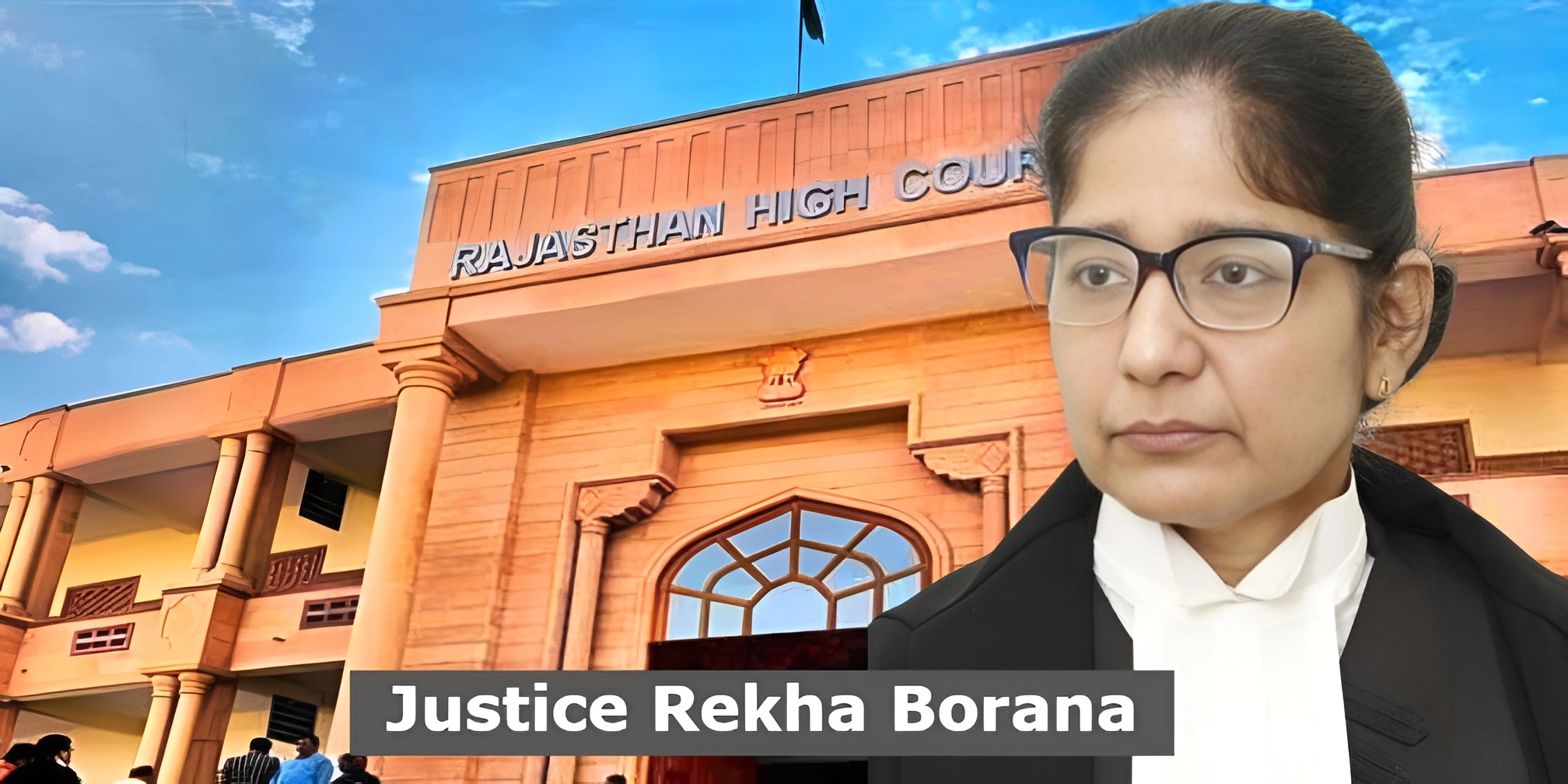
The Rajasthan High Court has held that Magistrates and Criminal Courts are under a "bounden duty" to supervise and monitor investigations ordered under Section 156(3) of the Code of Criminal Procedure (CrPC) or Section 175(3) of the Bharatiya Nagarik Suraksha Sanhita (BNSS), and cannot absolve themselves of responsibility after merely directing the police to investigate.
Justice Rekha Borana made the observation while disposing of a criminal writ petition filed by Sumann Mundhara, wherein the investigating agency had failed to submit a conclusive report before the Trial Court in Bikaner for more than a year despite specific judicial directions.
The Court directed the Trial Court to ensure that the Investigating Officer files the final report or charge-sheet within six weeks and granted liberty to initiate appropriate proceedings against the erring officer if the directions are not complied with.
The petitioner approached the High Court seeking a direction to the police authorities to complete the investigation expeditiously and submit a final report before the competent court.
The dispute originated from a complaint in which the Trial Court, after considering the material placed on record, had exercised its powers under Section 156(3) CrPC and directed the Circle Officer, Bikaner, to conduct a thorough investigation and submit a conclusive report within a stipulated period.
Despite the clear directions issued by the Court, the investigating agency failed to complete the investigation or file the final report. As a result, the matter remained pending for more than a year without any logical conclusion.
Expressing concern over the growing number of writ petitions arising from non-compliance of investigation orders passed under Section 156(3) CrPC and Section 175(3) BNSS, the High Court observed that criminal courts often continue granting adjournments while repeatedly recording that progress reports are awaited.
The Court emphasized that a Magistrate does not become functus officio after directing an investigation.
The Court observed:
"This Court feels constrained to observe that after a direction for investigation has been issued by the Criminal Court in terms of Section 156(3), Cr.P.C., it does not become functus officio so as to keep on repeating the order-sheets to the effect that the progress/conclusive report is awaited."
Justice Borana noted that merely recording on successive dates that the investigation report has not been received is not sufficient compliance with judicial responsibility.
The Court held that Criminal Courts are obligated to actively monitor investigations ordered by them.
According to the Court, where an investigation is not completed within a reasonable time, the Magistrate must call for progress reports and seek explanations from the investigating agency.
The Court observed:
"The Magistrate/Criminal Court does not absolve of its duties after sending the matter under Section 156(3) Cr.P.C. to the investigating agency for investigation. The Court is also under a bounden duty to supervise and monitor the said investigation."
The Court further stated that investigations cannot be permitted to continue indefinitely without any meaningful outcome.
Relying on settled principles laid down by the Supreme Court, the High Court reiterated that the constitutional right to a speedy trial extends to every stage of criminal proceedings, including investigation.
While acknowledging that rigid timelines cannot be prescribed for all investigations, the Court emphasized that investigations cannot be allowed to remain pending endlessly.
The Court observed that prolonged investigations adversely affect both the complainant and the accused and undermine the administration of criminal justice.
It held:
"The investigation cannot be lingered on by the investigating agency for years without any logical conclusion thereof. The same not only hampers the rights of the victim/complainant, but also that of the accused."
Finding the present matter to be a fit case for exercising its extraordinary jurisdiction, the High Court directed the concerned Trial Court to strictly ensure submission of the final report or charge-sheet within six weeks.
The Court further clarified that if the Investigating Officer fails to comply with the direction, the Trial Court shall be at liberty to initiate appropriate proceedings against the erring officer in accordance with law.
The judgment serves as an important reminder that judicial oversight does not end with the issuance of an investigation order under Section 156(3) CrPC or Section 175(3) BNSS. The decision reinforces the responsibility of Magistrates to actively monitor investigations and protect the constitutional right to a speedy criminal justice process for both victims and accused persons.
Case: Sumann Mundhara v. State of Rajasthan & Ors.
Neutral Citation: 2026:RJ-JD:23857
Website designed, developed and maintained by webexy