
The Supreme Court has set aside the bail granted to several accused in a 2010 murder case in Odisha, holding that a High Court cannot direct a trial court to grant regular bail after rejecting their anticipatory bail pleas.
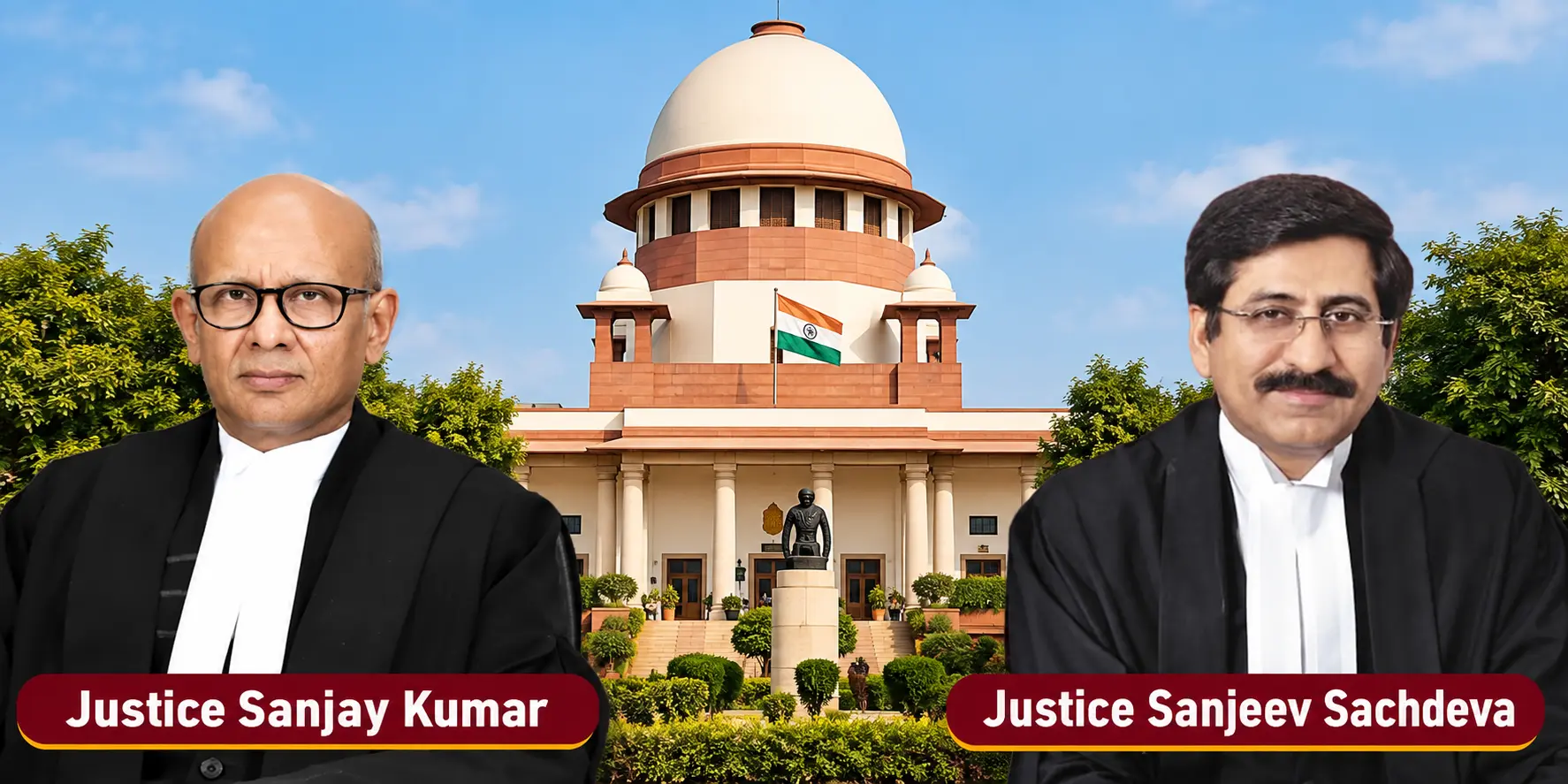
A Bench of Justice Sanjay Kumar and Justice Sanjeev Sachdeva passed the order on October 26, 2026, in appeals filed by complainant Jagannath Mandangi.
High Court’s directions exceeded its jurisdiction
The case arose from FIR No. 208/2010, registered at Rayagada Police Station, Odisha, for offences under Sections 120B, 302, 201, 364 and 34 of the Indian Penal Code.
The Orissa High Court had rejected the accused persons’ anticipatory bail applications. However, it directed them to surrender before the trial court and apply for regular bail within two weeks, further directing the trial court to release them on bail on specified conditions.
The accused surrendered and were granted regular bail by the Sub-Divisional Judicial Magistrate, Rayagada, on January 30, 2026.
Trial court’s discretion was usurped
The Supreme Court observed that once the High Court concluded that the accused were not entitled to anticipatory bail, it could not dictate the course of future proceedings or prescribe the terms on which the trial court should grant regular bail.
The Court held that the High Court’s directions exceeded its jurisdiction under Section 438 of the Code of Criminal Procedure, 1973, and effectively left the trial court with no discretion to independently decide the regular bail applications on their merits.
Accordingly, the Supreme Court set aside the relevant directions in the High Court’s order and also quashed the trial court’s January 30, 2026 order granting bail.
Accused directed to surrender within two weeks
The Supreme Court directed the accused to surrender within two weeks. Their bail bonds and sureties will stand discharged upon surrender.
The Court clarified that the accused may seek appropriate relief before the competent forum, in accordance with law, following the rejection of their anticipatory bail applications.
The appeals were disposed of accordingly.
Separate SLPs dismissed as abuse of process
In connected proceedings, the Supreme Court dismissed special leave petitions filed by the accused challenging the same High Court order.
The Court noted that the accused had already obtained the benefit of regular bail under that order and were now seeking to challenge it after the complainant had approached the Supreme Court. It termed the petitions an abuse of process.
Case Title: Jagannath Mandangi v. State of Odisha & Anr. Etc.
Case Details: Criminal Appeals arising out of SLP (Crl.) Nos. 6555–6559 of 2026
Bench: Justice Sanjay Kumar and Justice Sanjeev Sachdeva, Supreme Court of India
Date of Order: October 26, 2026

Representation:-
For the Petitioner(s): Mr. Tushar Garg AOR, Mr. Dhruv Raman Singh Advocate, Dr. Sumit Advocate, Mr. Himanshu Shammi Advocate, Mr. Rithin Gopi TG Advocate, Mr. Suchit Mohanty Advocate, Mr. Samarth Mohanty Advocate, Ms. Talat Chaudhary Advocate, Ms. Vandana Kaushal AOR.
For the Respondent(s): Mr. Anjuman Tripathy AOR, Mr. Mohit Singh Sikarwar Advocate, Mr. R. Basant Senior Advocate, Mr. Raunak Arora Advocate, Mr. Debabarata Dash Advocate, Ms. Apoorva Sharma Advocate, Mr. Amit P. Bose Advocate, Ms. Aditi Gouda Advocate, Mr. Soubhagya Ranjan Pati Advocate, Mr. Deepak Zindal Advocate, Mrs. Pooja Garg Advocate, Mr. Tushar Garg AOR, Ms. Rashmi Nandakumar AOR, Ms. Shomona Khanna Advocate, Ms. Yashmita Pandey Advocate, Ms. Ayesha Nasir Alavi Advocate, Ms. Anindita Mitra AOR, Ms. Srishti Ghoshal Advocate.
Website designed, developed and maintained by webexy