
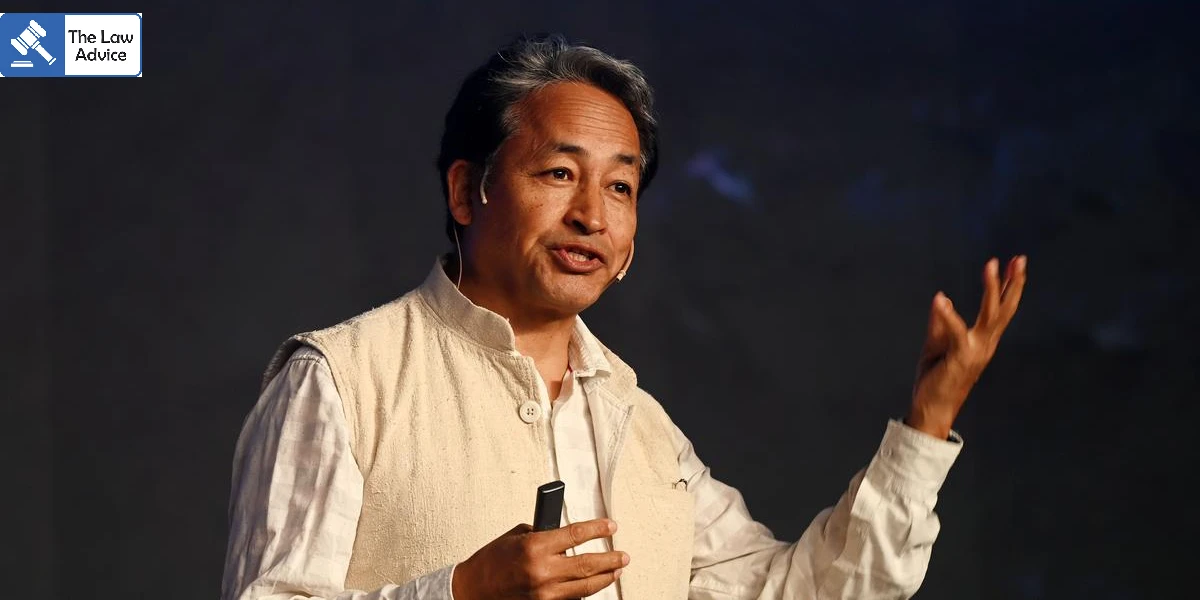
The Supreme Court on Wednesday asked the Central government to consider reviewing its decision to detain climate activist Sonam Wangchuk under the National Security Act (NSA), keeping in mind the length of his detention and his health condition.
A Bench of Justices Aravind Kumar and P.B. Varale was hearing a petition filed by Wangchuk’s wife, Gitanjali J Angmo, challenging his preventive detention. Addressing Additional Solicitor General K.M. Nataraj, who appeared for the Centre, the Court urged the government to take a fresh look at the matter.
The Bench noted that the detention order was passed on September 26, 2025, and that Wangchuk has been in custody for nearly five months. Referring to medical reports, the judges observed that his health was “certainly not very good” and asked whether the government could reconsider the decision. Nataraj said he would convey the Court’s suggestion to the authorities.
Wangchuk was detained under the NSA following protests in Leh in September 2025 over demands for statehood and Sixth Schedule status for the Union Territory of Ladakh.
Earlier, Angmo’s counsel argued that Wangchuk was exercising his democratic right to protest and criticise the government, and that such actions did not pose a threat to national security warranting preventive detention.
The Centre and the Leh administration, however, claimed that Wangchuk intended to provoke large-scale agitation and violence, similar to unrest seen in Nepal and Bangladesh. The government alleged that he showed “secessionist tendencies” by referring to the Central government as “them” and that he instigated young people, especially Gen Z, to push the region towards civil unrest.
On Tuesday, the government also maintained that all procedural safeguards under the NSA were followed while passing the detention order.
During Wednesday’s hearing, ASG Nataraj argued that Wangchuk was responsible for last year’s violence in Leh, in which four people died and over 160 were injured. He said that even if a person does not directly participate in violence, the ability to provoke or influence others is sufficient ground for preventive detention under the NSA.
Nataraj further submitted that only the original detention order had been challenged, not its approval or confirmation by the government. He added that an Advisory Board had examined the case, travelled to Jodhpur to hear Wangchuk, and found no procedural lapses.
The Court, however, questioned whether a detention order could still be challenged if it suffered from legal defects, even if subsequent approvals were not specifically assailed. The judges observed that if the very foundation of the detention order was flawed due to non-application of mind, the entire detention could be set aside.
Responding to further arguments, Nataraj said the NSA is a preventive, not punitive, law and gives wide discretion to the detaining authority. The Court countered that such discretion must operate strictly within the limits of law, and a mere perception of threat is not enough.
The Bench also discussed whether flawed grounds in a detention order could be separated under the principle of “severalty.” While the Centre argued that independent grounds could still sustain the order, the Court said that if the grounds are closely connected, the detention may not survive.
On allegations that the detention order was based on copy-pasted material, the ASG denied any wrongdoing and said the law only requires supplying relied-upon documents, not all referenced material.
The Centre and the Ladakh administration were represented by Solicitor General Tushar Mehta, along with senior law offic.ers and advocates appearing for the government
Website designed, developed and maintained by webexy