
‘Kidnapping’ of a President & the Limits of International Law: Ker Frisbie Principle, Implementation Loopholes & Global Implications of the U.S.-Venezuela Controversy
Shreya Rawat is an Assistant Professor at Law College Dehradun, Uttaranchal University, Uttarakhand. Her academic interests lie in public international law, human rights, and the evolving dynamics of state sovereignty in a changing global order. In this Article, she engages with contemporary international legal controversies through critical analysis, with a particular focus on jurisdictional overreach, accountability of powerful states, and the enforcement limitations of international legal institutions.
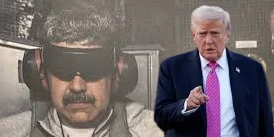
The year 2026 started with a big news and very unsettling one. The President of Venezuela, Nicholas Maduro was captured during nighttime in a coordinated operation by the U.S. state agents on account of ‘narco-terrorism’ and ‘drug trafficking’ operations that has allegedly impacted the U.S. The news prompted strong reactions from the international community and Venezuela itself, describing the act as illegal, coercive and a blatant violation of the principles of international law. This article dissects the laws violated, legal tactics used by the U.S., Ker Frisbie Principle and the dangerous precedent it sets for the future.
· What laws are violated?
The act challenges the State-Sovereignty principle guaranteed under Article 2 (1) and Article 2(4) of the United Nations Charter which lay down that no nation can threaten or violate territorial integrity of another nation. U.S. forces trespassing the Venezuelan territory is an extra-territorial exercise of a domestic law and a grave infringement of its exclusive authority. Moreover, the forcible apprehension of a sitting head of a state violates the head-of-the-state immunity that is provided under the customary international law. In Arrest Warrant Case (DRC v. Belgium, 2002), the International Court of Justice also affirmed that sitting state officials are entitled to immunity from foreign criminal jurisdiction. (Although as per Article 59 of ICJ Charter its judgments only bind the concerned parties, they remain highly persuasive under Article 38 of the Charter.) It should also be noted that even if Maduro was just another citizen, there was no host-state consent, no extradition plea which also breaches Article 9 of ICCPR (International Covenant on Civil and Political Rights) stating that no person can be arrested arbitrarily i.e. without a due legal procedure.
· What legal tactics did the U.S. use?
The U.S. took benefit of several loopholes to justify the operation. First, they don’t recognize Maduro as the legitimate President of Venezuela since 2019. Like many Latin American countries, they have been supporting Juan Guaidó. So, this removes the state of the head immunity for him. Secondly, the U.S. claimed the ‘effect doctrine’ as a justification; a legal principle as per the domestic law of U.S. (and sometimes cautiously applied as per customary international law), that permits jurisdiction beyond state territory if it substantially affects one’s nation. U.S. Narcotics statutes allow this principle, hence apparently authorizing extra territorial action on the basis of narco allegations. Thirdly, as a justification of the arrest it claims using the Ker-Frisbie doctrine.
· What is the Ker-Frisbie doctrine?
Ker-Frisbie is strictly a U.S. law Courts’ established principle, highly controversial in the international field. It states that the manner in which the defendant is apprehended before the court does not invalidate the legality of trial. The doctrine stems from Ker. V. Illinois (1886) and Frisbie v. Collins (1952). Though not accepted internationally, the principle has effectively enabled the U.S. forces to proceed even when it means forcible abduction from foreign soil. (e.g. the Manuel Noriega case)
· Only outrage or any remedies?
While International law does provide mechanism to invoke state responsibility, they fail in implementation. The jurisdiction of ICJ depends mainly on consent, general assembly lacks power, the security council is affected by veto politics. The incident actually signifies gap between international norms and their enforcement, rendering them ineffective.
· What it means for the future of the world?
The Maduro abduction is not just a bilateral clash. It raises serious questions on the worldly order and the existence of the U.N.O. The action sets a worrying precedent for the future indicating that ‘might is right’. If a country can abduct leader of another country and the UN sits there toothless, other powerful countries may also feel empowered to do the same leaning on domestic legal doctrines. Such incidents shaken the foundation of international law i.e. sovereignty of all nations. This also exposes a deep structural weakness: The selective application of international law; Superpowers can do whatever they want, bypass international obligations and are seldom accountable to anyone. It seems what was once restricted by conventions and laws, is driven by ambition now. Unchecked quest of power can submerge the structure-built years ago. What is happening today is a warning flare to the world. If this trend remained unchecked, the world risks descending into a future of constant fear where borders don’t protect and rules don’t matter.