
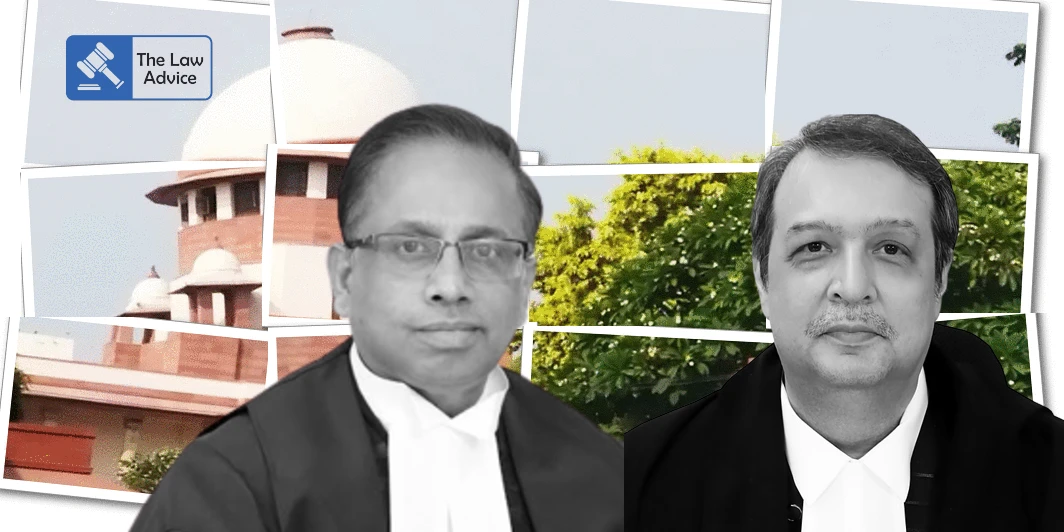
In a major step towards strengthening passenger safety across India, the Supreme Court on Wednesday directed all States and Union Territories to strictly enforce the installation of Vehicle Location Tracking Devices (VLTDs) and panic buttons in taxis and all public service vehicles.
A Bench of Justice JB Pardiwala and Justice KV Viswanathan observed that it was “disturbing” that less than one per cent of transport vehicles currently have location tracking devices installed, despite legal requirements under Rule 125H of the Central Motor Vehicles Rules, 1989.
The Court emphasised that such safety features are crucial for protecting passengers, especially women, children, and senior citizens.
The Bench directed that no public service vehicle should be granted a fitness certificate or transport permit unless it is equipped with a Vehicle Location Tracking Device and an emergency panic button.
The Court further ordered all States and Union Territories to ensure that these installations are integrated with the VAHAN database for real-time compliance monitoring.
The Bench also directed authorities to ensure retrofitting of VLTDs and panic buttons in all existing public service vehicles registered before December 21, 2018.
The Court agreed with the suggestion that vehicle manufacturers themselves should install tracking devices and panic buttons before vehicles are sold in the market.
To examine the feasibility of this proposal, the Court directed the Central government to hold consultations with automobile manufacturers and submit a report.
The Supreme Court also criticised several States for failing to submit compliance reports regarding the mandatory installation of speed-limiting devices (SLDs), commonly known as speed governors, in transport vehicles.
The Court reminded manufacturers that fitting speed-limiting devices is mandatory and ordered States to file fresh affidavits supported by VAHAN and Parivahan portal data.
Expressing dissatisfaction over delays in constituting the National Road Safety Board, the Bench granted the Centre “one last opportunity” to establish the Board within three months.
The Court also examined amendments introduced by the Uttar Pradesh government aimed at closing old motor accident cases to reduce backlog.
The Bench took note of a recent ordinance modifying the earlier amendment to exclude serious non-compoundable offences from closure. However, the Court said further deliberation was necessary and sought details regarding the number of cases likely to be revived.
The matter arises from a 2012 petition filed by a Coimbatore-based orthopaedic surgeon seeking stronger road safety measures, better accident prevention mechanisms, and improved post-accident medical infrastructure across India.
Over the years, the Supreme Court has issued several significant directions in the matter, including orders related to pedestrian safety, regulation of non-motorised vehicles, and road accident compensation mechanisms.
Senior Advocate Gaurav Agarwal appeared as amicus curiae, while Additional Solicitor General Vikramjeet Banerjee represented the Union government. Standing Counsel Ruchira Goel appeared for the State of Uttar Pradesh.
Website designed, developed and maintained by webexy