
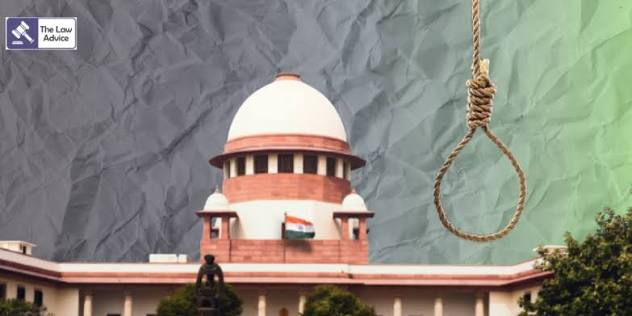
The Supreme Court on Tuesday dismissed a petition seeking to declare hanging unconstitutional as a method of executing the death penalty and replace it with a more humane and painless alternative.
A Bench comprising Justices Vikram Nath and Sandeep Mehta declined to refer the issue to a larger Bench for reconsideration of the constitutional validity of the provisions prescribing hanging as the mode of execution.
The Court was hearing the petition in Rishi Malhotra v. Union of India, filed in 2017 by Senior Advocate Rishi Malhotra challenging Section 354(5) of the Code of Criminal Procedure (CrPC), now replaced by the corresponding provision under the Bharatiya Nagarik Suraksha Sanhita (BNSS).
The provision mandates that a person sentenced to death shall be hanged until death.
The Bench said it was “not persuaded” that a case had been made out for reconsidering the decision of the three-judge Bench in Dina v. Union of India, which had upheld the constitutional validity of execution by hanging.
However, the Supreme Court clarified that its latest judgment would not permanently close the question.
The Court observed that future constitutional scrutiny could be undertaken if compelling scientific, medical or empirical evidence emerges showing that the factual and scientific basis underlying the Dina judgment has been materially altered by subsequent developments.
The Bench emphasised that constitutional interpretation is organic and must remain responsive to developments in constitutional doctrine as well as advances in scientific knowledge.
The Supreme Court also made it clear that the Union government remains free to independently examine whether an alternative method of execution would better meet constitutional objectives.
The Court said the government could constitute a comprehensive expert body comprising specialists in law, forensic medicine, neuroscience, criminology and allied disciplines to examine the existing method of execution.
Such an exercise, the Court noted, could consider whether an alternative method would minimise unnecessary pain while preserving the dignity of condemned prisoners.
The petition had argued that hanging is cruel and barbaric and that the constitutional right to life encompasses the right to die with dignity.
Malhotra had also pointed out that several countries have moved away from hanging and urged the Court to consider alternatives such as lethal injection.
The Court also heard submissions from Project 39A, a criminal justice programme providing legal assistance and representation to death-row prisoners.
Senior Advocate Meenakshi Arora, appearing for the project, submitted that lethal injection itself has not proved to be a consistently successful method of execution. She nevertheless supported the need for an expert committee to examine the issue comprehensively.
The Central government, represented by Attorney General R Venkataramani, had earlier informed the Court that the issue was already being examined at the highest level.
While dismissing the petition, the Supreme Court therefore left open the possibility of reconsidering the constitutionality of the method of execution if stronger scientific and medical evidence becomes available in the future.

Website designed, developed and maintained by webexy