
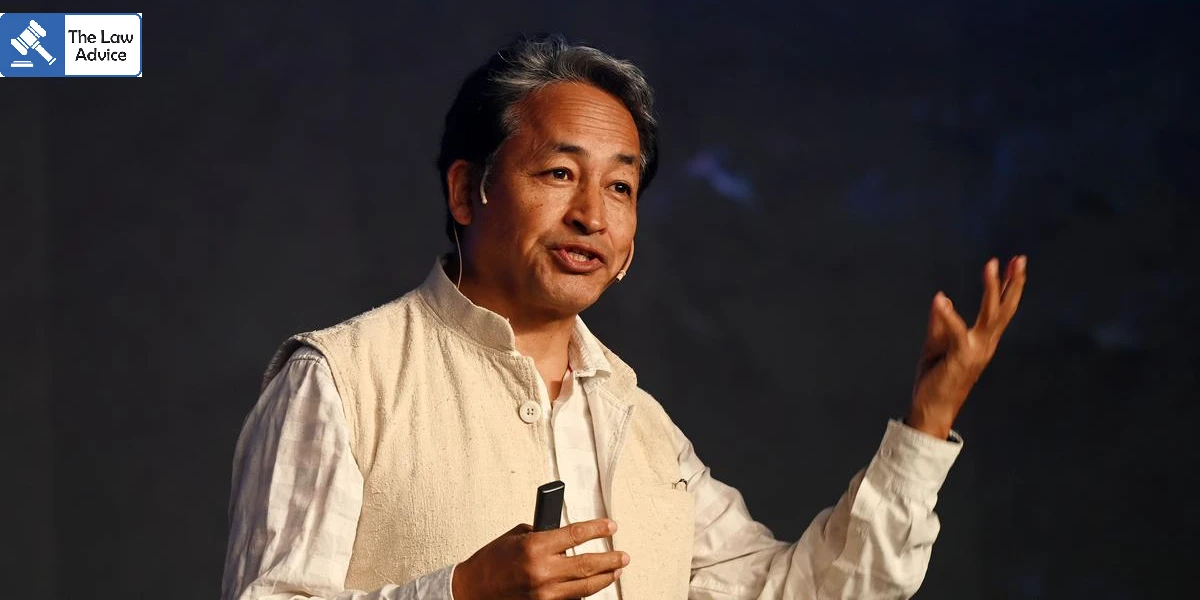
The Supreme Court on Monday once again urged the Central government to reconsider the detention of climate activist Sonam Wangchuk, flagging concerns over his deteriorating health.
During the hearing, the Centre informed the Court that Wangchuk is presently undergoing treatment at AIIMS Jaipur, which it said offers better medical facilities than those available in Ladakh.
When the government sought a week’s adjournment, citing the unavailability of Solicitor General KM Nataraj due to another matter, the bench reminded the Centre that the case involves a habeas corpus plea and cannot be delayed for long. The matter has now been listed for hearing on Wednesday.
Justice Aravind Kumar asked the Centre whether there had been any progress on the issue of releasing Wangchuk on health grounds. While the Additional Solicitor General maintained that Wangchuk’s health was stable, his counsel told the Court that his condition remained poor and had shown no improvement.
Wangchuk was detained on September 26 last year, two days after violent protests erupted in Ladakh demanding statehood and Sixth Schedule status. The clashes resulted in four deaths and left around 90 people injured. The government has accused Wangchuk of instigating the violence.
Earlier as well, the Supreme Court had asked the Centre to examine whether Wangchuk’s detention could be reconsidered in view of his health.
A bench of Justices Aravind Kumar and PB Varale noted that his medical report was unsatisfactory and directed the government to seek clear instructions on the matter.
On February 3, the Centre and the Ladakh administration told the Court that Wangchuk was detained for allegedly instigating people in a sensitive border region.
Defending the detention, Solicitor General Tushar Mehta submitted that all procedural safeguards under the National Security Act (NSA) were followed. He argued that Wangchuk had been treated fairly and that the provisions of the NSA were strictly complied with.
The Centre has also alleged that Wangchuk attempted to mobilise Gen Z for protests similar to those seen in Nepal and Bangladesh, and had referred to Arab Spring-like agitations that led to the overthrow of governments in several countries.
Website designed, developed and maintained by webexy