
The Supreme Court has held that an offence punishable under Section 302 of the Indian Penal Code (now Section 103 of the Bharatiya Nyaya Sanhita, 2023) is a "heinous offence" under the Juvenile Justice (Care and Protection of Children) Act, 2015, as imprisonment for life constitutes the minimum punishment prescribed for the offence. The Court consequently dismissed the appeal of a juvenile accused of murder, upholding the Patna High Court's decision directing that he be tried as an adult.
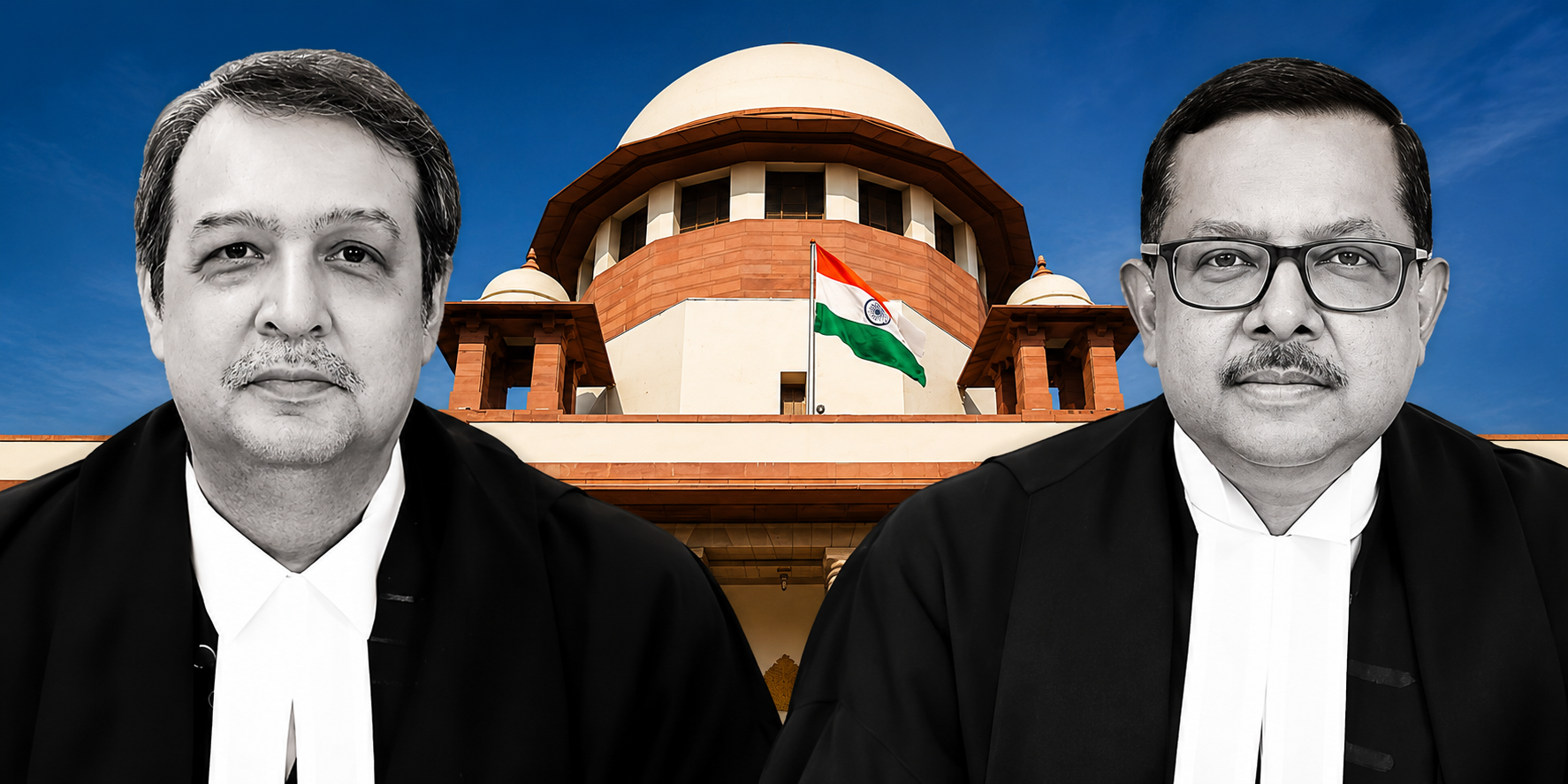
A Bench of Justice J.B. Pardiwala and Justice Ujjal Bhuyan clarified that the expression "death or imprisonment for life" under Section 302 IPC does not mean that the offence carries no minimum sentence. Since a court cannot impose any punishment lower than life imprisonment upon conviction under Section 302, life imprisonment must be treated as the minimum punishment, thereby bringing the offence within the definition of a "heinous offence" under Section 2(33) of the JJ Act.
The case arose from the alleged murder of a minor boy in Bihar. The appellant, who was 16 years and 4 months old on the date of the incident, was accused of offences under Sections 302, 201 read with 34 IPC. The Juvenile Justice Board (JJB), by majority, concluded that the child did not possess the mental and physical capacity to commit the offence and decided to retain the matter before the Board instead of transferring it for trial as an adult.
The complainant challenged the order. The appellate court set aside the Board's decision and directed that the juvenile be tried as an adult. The Patna High Court affirmed that order, following which the matter reached the Supreme Court.
Rejecting the appellant's principal argument, the Supreme Court held that offences punishable with death or life imprisonment cannot be classified as "serious offences" merely because the statute does not expressly use the words "minimum punishment."
The Court observed that the fourth category of offences recognised in Shilpa Mittal v. State (NCT of Delhi) applies only where courts have discretion to award punishment below seven years or where no minimum punishment exists. Section 302 IPC is fundamentally different because a court has no power to award any sentence below life imprisonment.
The appellant also argued that the appellate court was obliged to obtain assistance from psychologists and medical specialists under Section 101(2) of the JJ Act before deciding whether he should be tried as an adult.
The Supreme Court rejected this contention, holding that the word "may" used in Section 101(2) confers discretion upon the Sessions Court. The appellate court is required to seek expert assistance only where the facts of the case warrant such assistance. The Court distinguished its earlier ruling in Barun Chandra Thakur, explaining that the mandatory requirement regarding expert assistance applies to the preliminary assessment by the Juvenile Justice Board under Section 15, not automatically to appellate proceedings under Section 101(2).
The judgment also lays down important guidelines for Juvenile Justice Boards while conducting preliminary assessments under Section 15 of the JJ Act.
The Court emphasized that the Board must independently evaluate:
the child's mental capacity to commit the offence;
the child's physical capacity;
the ability to understand the consequences of the offence; and
the circumstances in which the offence was allegedly committed.
The Board cannot merely rely upon expert opinions. It must also consider the Social Investigation Report (SIR), Social Background Report (SBR), witness statements, and all other relevant material, and record detailed reasons for its conclusions. Importantly, the preliminary assessment is not a trial, and the Board must refrain from expressing any opinion on the child's guilt or innocence.
Summarising the legal position, the Court held:
Murder under Section 302 IPC is a heinous offence because life imprisonment is its minimum punishment.
The Sessions Court has discretionary power under Section 101(2) to obtain expert assistance where circumstances require.
The Juvenile Justice Board must independently evaluate all available material and not rely exclusively upon expert opinions while deciding whether a child should be tried as an adult.
Finding no legal infirmity in the Patna High Court's decision, the Supreme Court dismissed the appeal and directed that copies of the judgment be circulated to all High Courts.
Website designed, developed and maintained by webexy