
The Supreme Court on Thursday agreed to hear a significant constitutional challenge concerning political defections and the interpretation of the Tenth Schedule of the Constitution. The case raises the crucial question of whether a group of MLAs can validly merge with another political party without the approval of their original political party.
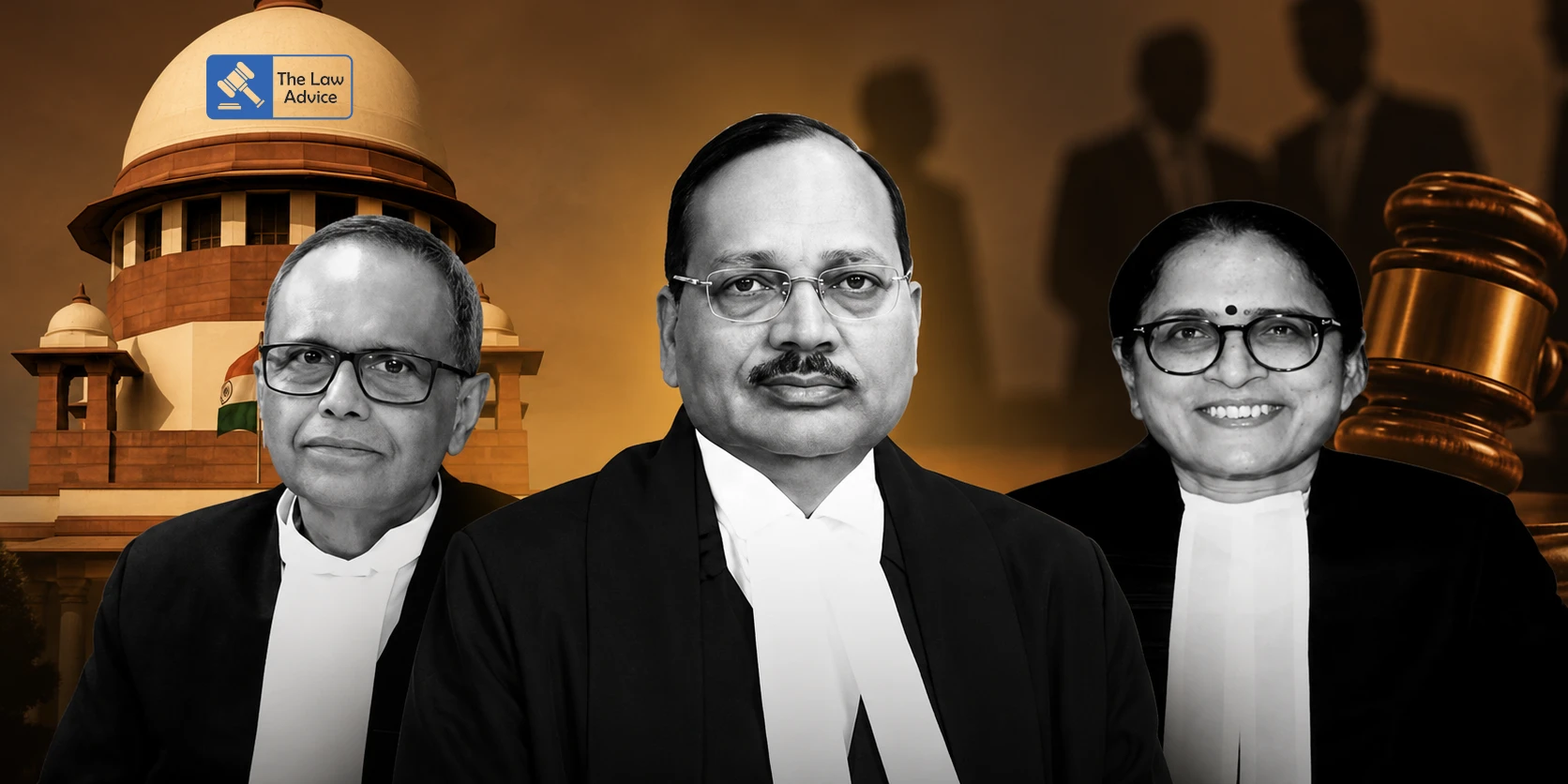
A Bench comprising Surya Kant, Joymalya Bagchi and V. Mohan Shantanagoudar (Justice V. Mohan—reported as Justice V. Mohana in court proceedings) granted leave to appeal in the Special Leave Petition filed by Girish Chodankar against the Bombay High Court's Goa Bench judgment. The matter has been listed for final hearing in December 2026.
The petition challenges the Bombay High Court (Goa Bench) decision that upheld the defection of 8 out of 11 Congress MLAs to the Bharatiya Janata Party as a valid "merger" under Paragraph 4 of the Tenth Schedule of the Constitution.
The High Court had affirmed the Goa Assembly Speaker's decision rejecting disqualification petitions filed against the eight legislators, holding that they were protected by the merger exception available under the anti-defection law.
The Supreme Court will determine whether:
A legislative party consisting of two-thirds of a political party's elected MLAs can claim protection under the merger provision without the consent or approval of the original political party.
The issue has gained national significance because similar merger and defection claims have arisen in recent political developments across several States.
Appearing for the petitioner, Advocate Abhishek Jebaraj argued that the distinction between a legislative party and a political party is well recognized under the Tenth Schedule.
He submitted that:
The Congress had won 11 seats in the 2022 Goa Assembly elections.
Eight MLAs later joined the BJP and claimed protection under the merger provision.
The original Congress party never approved or consented to such merger.
Therefore, merely having the support of two-thirds of the MLAs cannot amount to a valid merger.
Jebaraj further relied on the Supreme Court's 2023 Subhash Desai judgment, contending that a legislative party cannot function independently of the political party that sponsored its candidates.
He also pointed out that there are conflicting High Court decisions on the issue. While the Bombay High Court (Goa Bench) upheld the merger, both the Bombay High Court (principal bench) and the Punjab & Haryana High Court have held that the consent of the original political party is necessary.
Counsel also urged the Court to hear the matter urgently, noting that similar merger arguments are being raised in recent political defections involving leaders from different political parties.
Senior Advocate Mukul Rohatgi, appearing for the respondents, argued that Paragraph 4 of the Tenth Schedule is clear.
According to him, where not less than two-thirds of the members of a legislative party agree to merge with another political party, such action is protected from disqualification under the anti-defection law.
Since 8 of the 11 Congress MLAs joined the BJP, they fulfilled the constitutional requirement and were entitled to claim the merger exception.
Meanwhile, Tushar Mehta appeared on behalf of the Goa Assembly Speaker.
The present challenge arises from the Goa High Court's 2025 judgment, which relied upon its earlier 2022 decision involving the defection of 10 Congress MLAs to the BJP during the previous Assembly.
Although the 2022 judgment was challenged before the Supreme Court, that petition became infructuous after the previous Assembly completed its term.
The present appeal therefore provides the Supreme Court with an opportunity to settle the interpretation of the merger exception under the anti-defection law.
The ruling is expected to have nationwide implications for the operation of the Tenth Schedule and the anti-defection framework. The Court's interpretation will clarify whether the numerical strength of defecting legislators alone is sufficient to constitute a merger, or whether approval of the original political party remains an essential constitutional requirement.
The decision could significantly influence future political realignments and disqualification proceedings across State Legislatures.
Case: Girish Chodankar v. Speaker, Goa Legislative Assembly
Website designed, developed and maintained by webexy