
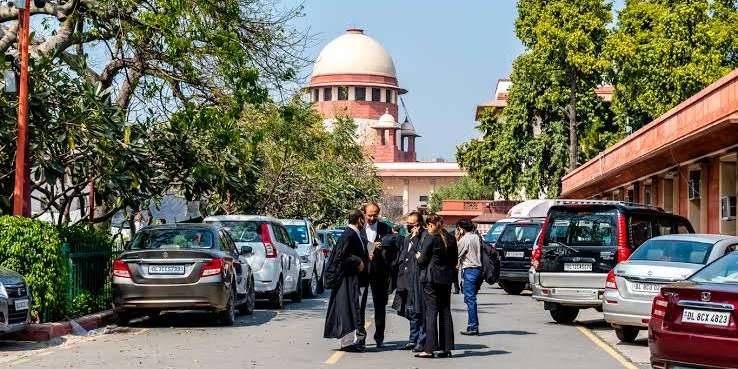
The Supreme Court on Tuesday quashed criminal proceedings initiated against a litigant and his lawyer, holding that a wrong statement made in court pleadings cannot automatically be treated as a false statement for the purpose of criminal prosecution under the Indian Penal Code (IPC).
A Bench of Justices Ujjal Bhuyan and Atul S. Chandurkar ruled that the lower courts had applied the wrong legal test while directing prosecution under Sections 193, 199 and 200 of the IPC.
The Court explained that there is a clear distinction between a wrong statement and a false statement. While a wrong statement may result from a typographical error or an inadvertent mistake, a false statement is one made intentionally to mislead the court or gain an unfair advantage.
“There is a material difference between making a ‘wrong statement’ and ‘false statement’ in the context of Sections 199 and 200 of the Penal Code. A ‘wrong statement’ of fact may not always have the character of a ‘false statement’,” the Court observed.
The case arose from a civil property dispute in which the respondents had obtained an interim injunction restraining interference with the property. During the pendency of the suit, appellant Prabhakar Yeshwant Masram purchased the property from the original defendants and was later added as a party to the case.
After the trial court found that the injunction had been violated and ordered restoration of the property's earlier status, Masram challenged the order before the appellate court, which granted a stay.
The respondents then accused Masram and his lawyer of obtaining the stay by making incorrect statements in the appeal memorandum and stay application. They pointed out that an earlier writ petition had been described as "dismissed" instead of "disposed of," and that the omission of the word "not" in one paragraph had changed the meaning of the pleading.
Although the Bombay High Court refused to initiate contempt proceedings, it allowed the respondents to seek prosecution under Section 340 of the Code of Criminal Procedure (CrPC), which deals with offences affecting the administration of justice.
Based on this, the appellate court directed prosecution of Masram and his lawyer under Sections 193, 199 and 200 of the IPC, holding that they had made "wrong statements" in the court documents. The Bombay High Court later upheld that order.
Before the Supreme Court, the appellants argued that the disputed statements were merely typographical mistakes and not deliberate falsehoods. They also informed the Court that they had already filed an application to correct the errors months before the respondents initiated proceedings under Section 340 CrPC.
Accepting this explanation, the Supreme Court held that inadvertent mistakes cannot, by themselves, amount to false statements attracting criminal prosecution. It noted that the appellate court had never recorded a prima facie finding that the statements were deliberately false, which was a necessary requirement for prosecuting the alleged offences.
The Court also found fault with the Bombay High Court for going beyond the appellate court's findings.
It observed that while the appellate court had only referred to "wrong statements," the High Court went on to conclude that the appellants had filed a false affidavit and even added findings on the need to prosecute them in the interest of justice.
The Supreme Court held that the High Court could not improve or supplement the reasoning of the lower court while deciding an appeal filed by the aggrieved parties.
Accordingly, the Court set aside the orders directing prosecution and quashed the criminal proceedings against Masram and his lawyer under Sections 193, 199 and 200 of the IPC.
Case Title: Prabhakar Yeshwant Masram v. Sou Tula Namdeorao Jaipurkar
Website designed, developed and maintained by webexy