
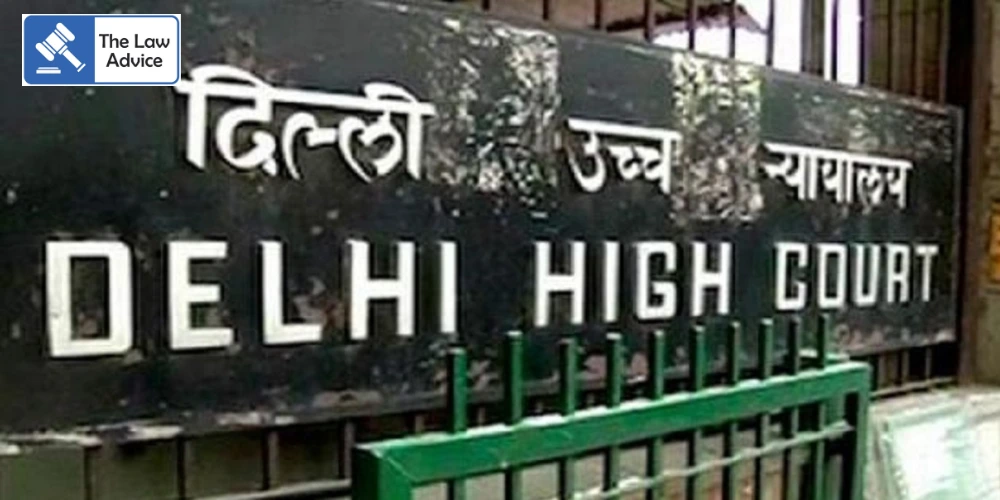
The Delhi High Court on Wednesday heard a PIL seeking an independent judicial probe into the large-scale flight cancellations by Indigo and expressed concern over lakhs of stranded passengers suffering at airports across the country. The Bench observed that while it appreciated the steps taken by the Centre, the magnitude of disruption had adversely affected not just individual travellers but also the nation’s economy.
A Division Bench of Chief Justice DK Upadhyaya and Justice Tushar Rao Gedela directed that compensation provisions under the Civil Aviation Requirements (CAR) must be “strictly adhered to by Indigo,” and that the Ministry of Civil Aviation and DGCA must ensure compliance.
Appearing for the Union Government, Additional Solicitor General Chetan Sharma submitted that a review committee had been constituted and that DGCA had repeatedly directed Indigo to comply with CAR norms and implement necessary measures on time.
The Chief Justice, however, questioned the extent of the regulator’s powers and asked:
“If any airline fails to adhere, what recourse do you have? Are you helpless? What action can you take?”
HC Pulls Up PIL Petitioner for Lack of Research
During the hearing, the Bench questioned the petitioner’s counsel regarding the current status of the crisis and steps taken by the authorities. When the counsel admitted he was “not fully aware,” the Court reprimanded him, remarking:
“You are not fully aware but you have filed a PIL. This is not a merry-go-round… Filing petitions like a layman is not expected. PILs cannot be filed on the basis of newspaper clippings.”
The Court emphasised that statutory duties, regulatory mechanisms, and legal responsibilities must be clearly pleaded in PILs.
‘Why Was the Crisis Allowed to Arise?’: Court Asks Centre
Turning to the government, the Bench asked why the situation was permitted to worsen to such an extent:
“Who is responsible? This is not only about passengers being stranded. It is a loss to the economy.”
Justice Gedela added that “harassment and trouble to passengers” was evident, and that airlines charging ₹30,000–₹35,000 for tickets that were earlier ₹5,000 raised serious questions.
The ASG said that the government had intervened promptly by capping fare surges within two days and insisted that a complete regulatory mechanism was already in place.
But the Bench was not convinced:
“These actions came only after the crisis erupted. Why did the situation arise at all? What were you doing?” the Chief Justice asked.
DGCA Explains FDTL Implementation, Safety Concerns Raised
The DGCA counsel informed the Court that Flight Duty Time Limitations (FDTL) reforms had been in progress since 2012 and that multiple consultations were held with airlines. He said airlines, including Indigo and Air India, had repeatedly sought extensions, and that DGCA granted limited exemptions to avoid disruption.
However, the Bench expressed concern over safety:
Justice Gedela asked,
“If a pilot is supposed to do two landings at night but ends up doing six, is that not a compromise with passenger safety?”
The Court also questioned why DGCA did not act when airlines failed to recruit adequate pilots despite being monitored.
ASG Sharma informed the Court that a high-level inquiry had been constituted, suspensions made, and show-cause notices issued. Penalty provisions were underway and the investigation report was expected by December 20.
DGCA added that compensation was mandatory:
“For every inconvenience, they have to pay.”
The government emphasised that it acted with “alacrity and severeness” and assured protection for senior citizens and medical passengers.
Indigo Claims Multiple Factors Behind Crisis
Senior Advocate Sandeep Sethi, representing Indigo, said the situation did not arise solely from flight rostering issues and cited multiple contributing factors, including technical glitches. He maintained that the airline was cooperating with the ongoing inquiry and had restored operations to 90% capacity.
The Bench, however, remarked:
“All others have complied with the measures. Only you have not.”
The Court clarified that while no adverse findings were being made at this stage, Indigo must begin compensating passengers immediately.
Court’s Oral Observations While Dictating Order
While dictating the order, the Bench said:
“What bothers us is how such a situation was allowed to precipitate. Stranded lakhs of passengers unattended at airports—this impacts not only convenience but also the economy.”
The Court appreciated steps taken by the Ministry and DGCA after the crisis unfolded but made it clear that corrective measures must continue without compromising passenger safety. It directed that all airlines, including Indigo, must employ adequate pilots to comply with FDTL norms.
It further stated that the inquiry committee’s findings would guide future action and that no conclusion was being drawn at this stage regarding Indigo’s operational lapses.
The Bench reiterated that compensation to stranded passengers must be paid at the earliest.
The matter will be heard next on January 22, 2026, with the inquiry report to be placed in a sealed cover if available.
Before concluding, the Court told Indigo’s counsel:
“It is not only about cancellation but also other damages and sufferings. We will pass orders directing you to compensate.”
Case Title: AKHIL RANA & ANR v. UNION OF INDIA & ORS
Website designed, developed and maintained by webexy