
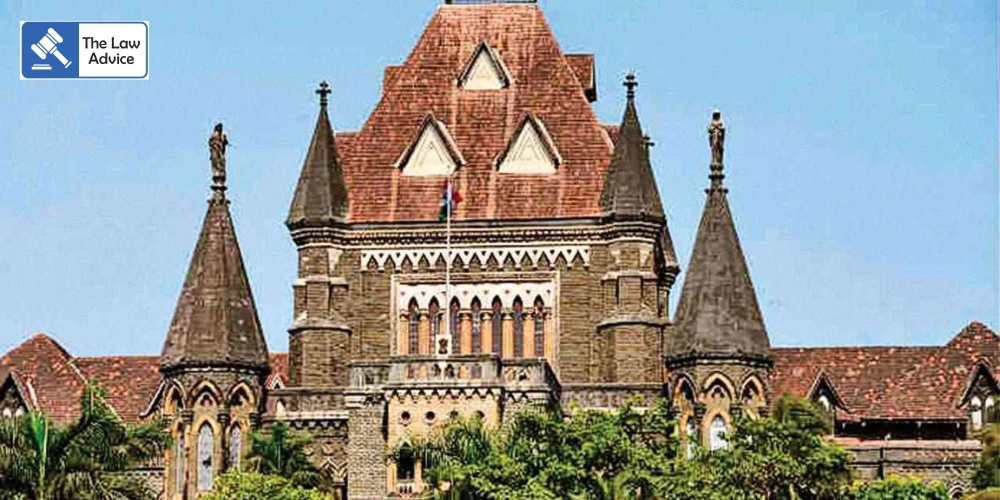
The Supreme Court on Wednesday (December 18) dismissed a writ petition filed by advocate Ranjeet Baburao Nimbalkar challenging the August 1 notification issued for the establishment of the Kolhapur Circuit Bench of the Bombay High Court. The notification, issued under Section 51(3) of the States Reorganisation Act, 1956, came into effect on August 18.
A Bench comprising Justice Aravind Kumar and Justice N.V. Anjaria held that the creation of the Kolhapur Bench aligns with the constitutional objective of ensuring access to justice for all citizens.
The Bench observed that Section 51(3) of the States Reorganisation Act preserves the authority of the Chief Justice of India to take an informed decision regarding the establishment of High Court benches.
“There is no material on record to indicate that the Chief Justice acted unilaterally or ignored institutional inputs or relevant considerations. Even if the consultative process does not meet the petitioner’s expectations, that alone cannot invalidate the exercise of power under Section 51(3),” the Court observed.
In the judgment authored by Justice Aravind Kumar, the Court noted that the fact that a different view may have been taken in the past on the question of establishing a Kolhapur Bench does not, by itself, render the present decision invalid. In the absence of any allegation or proof of mala fides or manifest illegality, judicial interference was unwarranted.
The Court further held that since the decision was taken bona fide, within the statutory framework, and for legitimate institutional reasons, there was no ground to interfere. An argument that public resources could have been utilised differently amounted to an alternative policy perspective, which cannot be a basis to strike down a decision lawfully taken within statutory limits.
Emphasising the constitutional perspective, the Bench observed that the establishment of the Kolhapur Bench brings justice closer to the people and does not violate Article 21 in any manner. It noted that the decision enhances access to justice for litigants residing in regions geographically distant from the principal seat of the Bombay High Court. The Constitution, the Court said, does not mandate a uniform model of judicial administration and permits institutional discretion to address practical and geographical requirements within the bounds of law.
The Kolhapur Bench was inaugurated in August by former Chief Justice of India B.R. Gavai.
In his petition, Nimbalkar had argued that the impugned notification failed to adequately consider the recommendations of the Jaswant Singh Commission on the establishment of High Court benches away from their principal seats. The Commission’s 1985 report had stated that such benches should be exceptions rather than the rule and laid down criteria including distance, volume of litigation from the concerned region, disposal rates, and whether increasing judicial strength would be a more effective solution.
The petitioner also relied on the Supreme Court’s decision in Federation of Bar Associations v. Union of India (2000), contending that the Chief Justice of the High Court is required to ascertain the views of other judges before exercising powers under Section 51(3). It was argued that no information had been disclosed regarding the consultative process in the present case.
During the hearing on November 26, Solicitor General of India Tushar Mehta questioned the locus standi of the petitioner. He defended the decision by outlining the factors considered by the State Government and the Bombay High Court in setting up the Kolhapur Circuit Bench. He also referred to an affidavit filed by the High Court stating that multiple representations had been received seeking the establishment of the Kolhapur Bench.
Case Details: Ranjeet Baburao Nimbalkar v. State of Maharashtra | W.P.(C) No. 914/2025
Appearances: Solicitor General Tushar Mehta and AOR Sandeep Sudhakar Deshmukh for the Bombay High Court; Shrirang Varma, AOR for the State of Maharashtra
Website designed, developed and maintained by webexy