
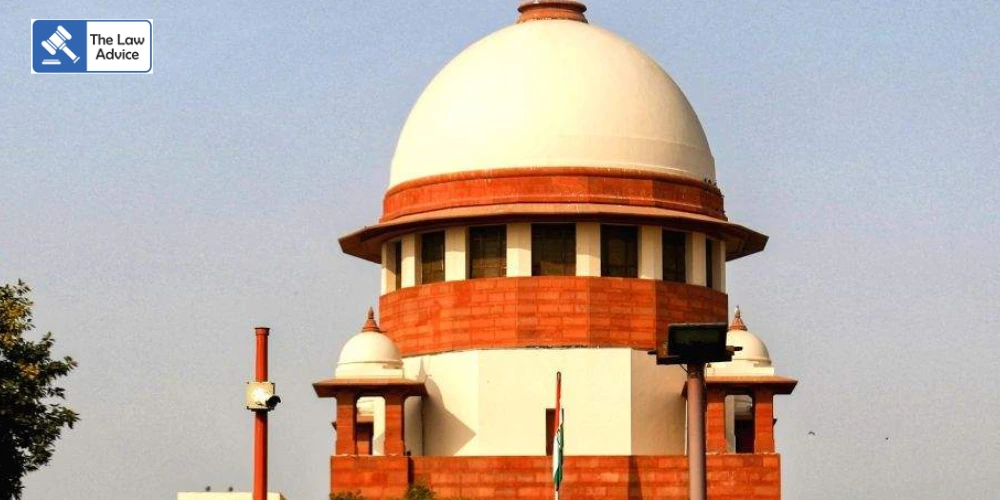
The Supreme Court has acquitted a murder accused, holding that a conviction based purely on circumstantial evidence cannot rest solely on the “last seen together” theory in the absence of other reliable and corroborative material linking the accused to the crime.
Allowing the appeal, a Bench comprising Justices Sanjay Karol and Prashant Kumar Mishra observed that where the prosecution relies exclusively on the last-seen circumstance, without establishing a complete and unbroken chain of incriminating facts, the conviction cannot be sustained.
“The present is a case where, except for the evidence of last seen together, there is no other corroborative evidence against the appellant. Therefore, conviction solely on the basis of last seen together cannot be sustained,” the Bench held.
The case arose from a gruesome murder in which the deceased’s body was discovered bearing multiple injuries, including ligature marks and extensive burn injuries. The prosecution case was founded entirely on circumstantial evidence, primarily an alleged motive involving theft of a tractor for monetary gain and the assertion that the accused was last seen in the company of the deceased.
According to the prosecution, witnesses had stated that on the evening of June 6, 2004, the appellant along with a co-accused was seen taking the deceased on a motorcycle, after which the deceased was never seen alive. Relying largely on this circumstance, and on the appellant’s failure to explain when he parted ways with the deceased, the Trial Court convicted him for murder, a finding that was later affirmed by the Chhattisgarh High Court.
Setting aside the High Court’s judgment, the Supreme Court noted that the lower courts had erred in placing the entire burden on the appellant under Section 106 of the Indian Evidence Act, without the prosecution first discharging its primary obligation of proving a complete chain of circumstances pointing unerringly to the guilt of the accused.
In a judgment authored by Justice Prashant Kumar Mishra, the Court referred to Kanhaiya Lal v. State of Rajasthan, (2014) 4 SCC 715, reiterating that “a conviction cannot be recorded against the accused merely on the ground that the accused was last seen with the deceased.”
Clarifying the scope of Section 106 of the Evidence Act, the Court held that the provision comes into play only when the prosecution has already established a reasonable and prima facie inference of guilt against the accused. It cannot be used to fill gaps in the prosecution’s case or to shift the burden of proof prematurely.
“Section 106 comes into operation only in situations where the prosecution has already established a reasonable inference against the accused,” the Bench observed.
The Court further held that while the circumstances on record might raise suspicion against the appellant, suspicion, however strong, cannot take the place of proof. In cases resting on circumstantial evidence, any reasonable doubt must necessarily enure to the benefit of the accused.
“We are of the opinion that the nature of circumstantial evidence available against the appellant, though raising a doubt that he may have committed the offence, is not so conclusive as to warrant conviction solely on the basis of the last seen theory. It is a settled principle that where doubt persists, the benefit must go to the accused. In the present case, except for the last seen evidence, there is no corroborative material against the appellant,” the Court concluded.
Accordingly, the appeal was allowed and the appellant was acquitted of the charge.
Cause Title: Manoj @ Munna v. State of Chhattisgarh
Website designed, developed and maintained by webexy