
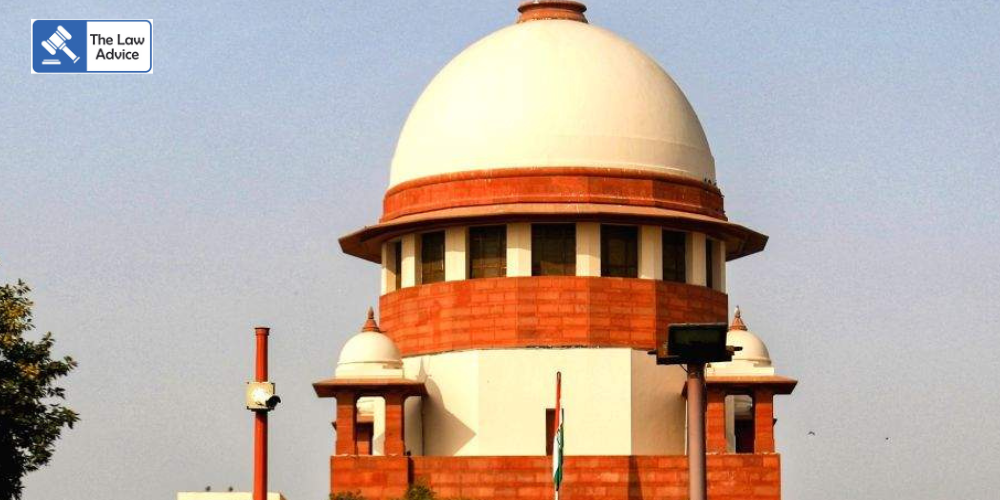
The Supreme Court of India has taken suo motu cognisance of the alarming rise in “digital arrest” scams—cases in which fraudsters impersonate law enforcement or judicial authorities, using forged court documents to extort money from unsuspecting citizens, especially senior citizens.
The case has been registered as SMW (Crl.) No. 3/2025, titled In Re: Victims of Digital Arrest Related to Forged Documents.
The Court’s intervention follows a complaint filed by a 73-year-old woman from Ambala, Haryana, who alleged that cybercriminals falsely claimed to be from law enforcement agencies and produced fake Supreme Court orders to digitally confine her and extort over ₹1 crore.
In her letter to Chief Justice of India Bhushan Gavai, the complainant stated that the fraudsters presented an order purportedly issued by former Chief Justice Sanjiv Khanna, thereby impersonating the Court’s authority to carry out the scam.
A Bench comprising Justice Surya Kant and Justice Joymalya Bagchi observed that the forgery and misuse of the Supreme Court’s name, seal, and authority constitute a “matter of grave concern” that directly undermines the public’s trust in the judiciary and the rule of law.
“The fabrication of judicial orders bearing forged signatures of judges strikes at the very foundation of public confidence in the judicial system. It is a direct assault on the dignity of the institution and cannot be treated as an ordinary offence of cheating or cybercrime,” the Bench stated.
The Court emphasized that such crimes require a coordinated national response, highlighting that both central and state law enforcement agencies must work together to expose the full scope of the network involved in these fraudulent activities.
The Bench issued notice to:
• Union of India, through the Secretary, Ministry of Home Affairs
• Central Bureau of Investigation (CBI), through its Director
• Principal Secretary (Home), Government of Haryana
• Superintendent of Police, Cyber Crime, Ambala
The Court also sought the assistance of the Attorney General for India, underscoring the seriousness of the issue and the need for systemic reform to prevent further misuse of judicial authority.
The Supreme Court noted that “digital arrest” scams—where victims are confined virtually through intimidation and threats—pose grave risks to citizens’ liberty and financial security. The impersonation of judges and the circulation of forged judicial documents, it said, erode institutional credibility and demand immediate investigation and deterrent action.
The Court’s suo motu case seeks to develop a coordinated legal and technological response to detect, prevent, and punish such acts of judicial impersonation and cyber extortion.
Case Title: In Re: Victims of Digital Arrest Related to Forged Documents
Case No.: SMW (Crl.) No. 3/2025
Website designed, developed and maintained by webexy