
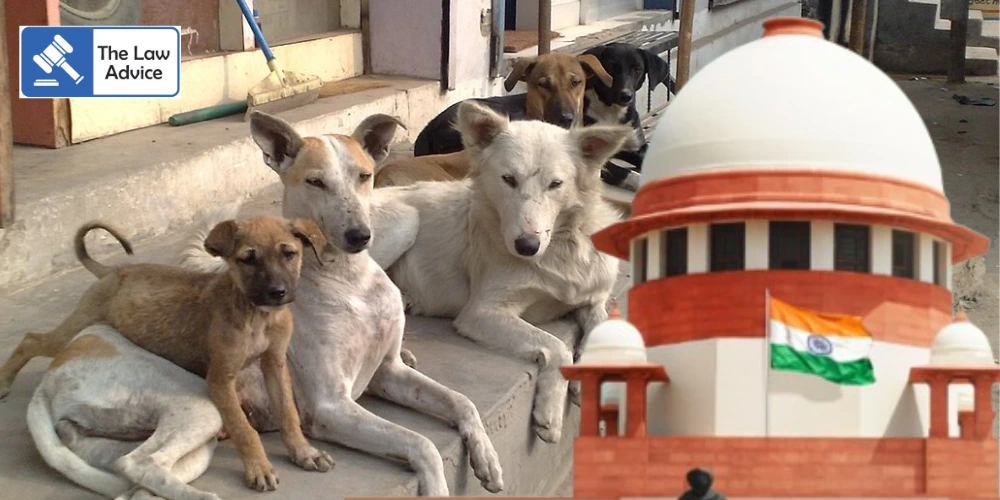
The Supreme Court on Tuesday expressed serious concern over the presence of stray dogs on roads and highways while hearing interlocutory applications in the ongoing stray dogs case, observing that unpredictable animal behaviour poses risks to public safety and can lead to accidents.
A bench comprising Justices Vikram Nath, Sandeep Mehta and N.V. Anjaria observed that it is impossible to predict an animal’s behaviour, noting that “no one can read a dog’s mind when it is in a mood to bite or not,” and stressed that “prevention is always better than cure.”
“The roads must be kept clear of dogs. Even if they do not bite, they can still cause accidents. Why should dogs be on streets, schools or institutional premises?” the bench remarked.
Questioning the implementation of the Animal Birth Control (ABC) Rules, the court asked what progress had been made since directions were issued in 2018. “If the government has failed to properly implement the ABC Rules, should the common man be made to suffer?” the bench asked, while posting the matter for further hearing on Thursday.
Senior advocate Kapil Sibal, appearing for the petitioners, submitted that aggressive or unruly dogs could be taken to designated centres, sterilised and released back into their territories. Responding wryly, the court remarked that the only thing missing was “counselling the dogs so that they do not bite when released.”
The bench reiterated that the concern was not limited to dog bites alone. “Even while running on roads with moving vehicles, dogs pose a serious risk. Accidents can occur. It is not just about biting,” the court said.
When Sibal argued that dogs generally remain within residential compounds and not on roads, the bench disagreed, stating, “Your information appears outdated. Roads must be kept clear and clean of dogs. They may not bite, but they still cause accidents.”
During the hearing, Solicitor General Tushar Mehta, appearing for the Centre, suggested that Residents Welfare Associations (RWAs) should be empowered to decide whether stray dogs should be permitted within gated societies.
The Supreme Court has been monitoring stray dog-bite incidents through a suo motu proceeding. On November 7 last year, it directed the removal of stray dogs from educational institutions, hospitals, bus stands, sports complexes and railway stations, ordering that they be shifted to designated shelters and not released back into those premises.
The court had also instructed municipal authorities to conduct regular inspections to ensure that no stray dog habitats exist within institutional areas, warning that recurring dog-bite incidents reflect administrative apathy and a systemic failure to prevent foreseeable hazards.
In a separate ruling in July last year concerning Delhi and adjoining regions, the Supreme Court ordered that stray dogs be relocated from residential areas to shelters in view of rising rabies-related deaths. It described the situation as “extremely grim” and warned that any individual or organisation obstructing authorities from lifting stray dogs would face the “strictest action.”
However, the court clarified that dogs infected with rabies, suspected of being rabid, or displaying aggressive behaviour would not be released back into the same area even after sterilisation and immunisation.
The court also directed municipal bodies to earmark designated feeding zones for stray dogs, making it clear that feeding in public spaces would not be permitted and violations would invite strict action.
Website designed, developed and maintained by webexy