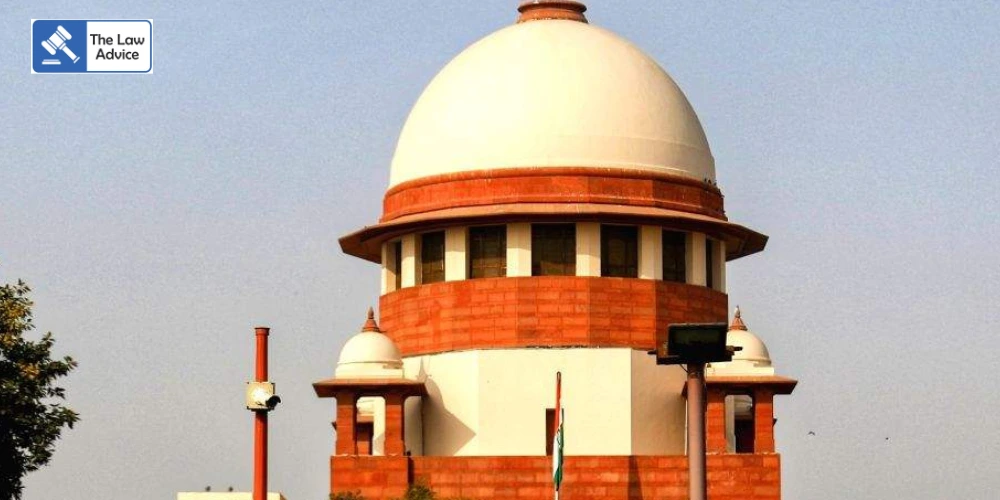
Calling the present moment a defining phase for India’s judiciary, Supreme Court Judge Justice Manmohan recently stressed the urgent need to integrate Artificial Intelligence (AI) into court processes to tackle overwhelming case pendency—while warning against allowing technology to overshadow human judgment.
Speaking at a conference in New Delhi on November 29, 2025, themed “Transforming Justice Delivery System with AI & Technology”, he pointed out a growing disconnect in the legal ecosystem: although society has rapidly shifted into a digital world, the laws being interpreted continue to be anchored in a physical realm. This outdated framework, he noted, leads to challenges in disputes involving modern digital assets like NFTs and virtual art.
Justice Manmohan noted that courts—while tasked with safeguarding rights under the Constitution—must now evaluate whether traditional justice systems can address emerging, complex disputes. The judiciary, he remarked, cannot “steer toward the future by constantly relying on the rearview mirror.”
Technology as the Force Multiplier the Judiciary Needs
He emphasized that technological adoption is no longer a matter of choice but a necessity for a justice system that serves a population of 1.4 billion, with more than 50 million pending cases—each representing an individual waiting for resolution.
Given the severe shortage of judges—just 21 per million people—traditional reforms alone cannot bridge the gap. Recalling the COVID-19 period, he said the Indian judiciary demonstrated remarkable agility by shifting to virtual hearings, conducting millions of court sessions online to ensure uninterrupted access to justice.
AI for Judicial Assistance, Not Judgment Replacement
Describing the transition from an “information age” to an “intelligence age,” Justice Manmohan clarified that AI integration is intended to assist judges—not create automated courts ruled by algorithms.
Examples of this shift already functioning include:
• SUVAS – speeding up translation of judgments into regional languages
• SUPACE – an AI tool that analyzes case material and supports judicial research
• Real-Time Transcription Tech – ensuring precise recording of pivotal Constitution Bench hearings
He said AI could revolutionize docket management by clustering identical or connected cases—such as those from a single land acquisition—to allow faster, consolidated hearings.
Looking Abroad: Inspiration with Caution
While citing global experiments with AI in courts, he stressed that India must adopt its own calibrated model. He noted:
• China’s Internet Courts conduct fully digital trials and resolve routine matters within minutes
• The U.S. uses COMPAS, an AI tool in criminal law, which has drawn criticism for racial profiling
Justice Manmohan insisted that India’s constitutional values, social diversity, and litigation realities require an approach that keeps a “human-in-the-loop”—ensuring technology remains a tool, not the decider of rights and liberties.
Guarding Against Bias, Exclusion & Privacy Breaches
Highlighting risks, he said AI adoption must be carefully regulated to avoid:
• Algorithmic bias that reinforces caste, gender, or class-based inequalities
• Opaque decision-making where technology becomes a “black-box authority”
• Privacy violations, as judicial data contains sensitive personal information
• A widening digital divide, disadvantaging rural litigants and small-practice advocates
Only open, transparent, and accountable systems can align with constitutional guarantees, he emphasized.
Why Judges Cannot Be Replaced
Calling judging an “artful exercise of human wisdom,” he explained that technology can assist but not replicate:
• Sensitivity to emotion and trauma
• The ability to detect coercion or deceit
• Balancing factors like equity, rehabilitation, and societal impact
• Moral reasoning embedded in constitutional values
Even with increased automation, he said, judges will continue to play a central role in ensuring justice is empathetic, fair, and humane.
A Hybrid Future: Digital Strength with Human Values
Looking forward, Justice Manmohan envisioned a blended model that uses both physical and virtual processes to maximize efficiency without compromising judicial ethos. He proposed:
• Expanding Online Dispute Resolution to handle minor, high-volume cases
• Using AI-based settlement prediction tools to promote early dispute resolution
• Revamping legal education to include digital literacy and tech competency
He stressed that technology must reduce judges’ administrative workload so they can focus on core adjudicatory responsibilities.
Concluding his address, Justice Manmohan asserted that AI should operate as an assistant within the constitutional framework. Innovation must progress without displacing empathy, human oversight, or the fundamental principles of justice that anchor the Indian judiciary.