
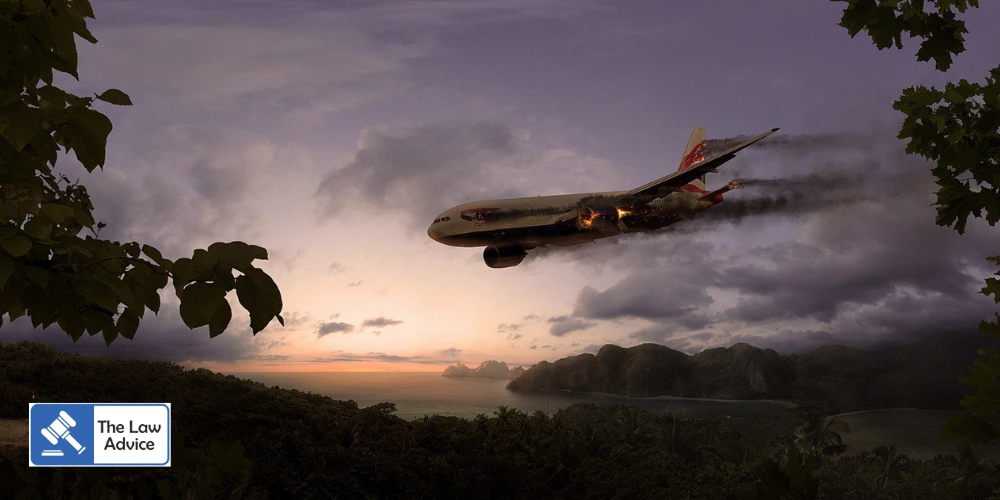
The Supreme Court on Thursday underscored that the objective of an investigation conducted by the Aircraft Accident Investigation Bureau (AAIB) is not to assign blame but to identify the causes of an aviation accident to prevent future occurrences.
Hearing petitions related to the tragic Air India Flight crash that occurred shortly after take-off from Ahmedabad airport on June 12, 2025, killing 260 people, a Bench of Justices Surya Kant and Joymalya Bagchi said that the enquiry must be viewed in light of its preventive purpose rather than punitive outcome.
Appearing for the Union of India, the counsel clarified that the AAIB operates under a statutory and international framework for air accident investigations and has not attributed fault to any individual. The Centre added that following a misunderstanding arising from the interim report, the Ministry of Civil Aviation issued a press statement clarifying that no blame was assigned to the pilot or crew.
One of the petitions, filed by Safety Matters Foundation, an aviation safety NGO led by Capt. Amit Singh FRAeS, contends that the AAIB’s probe violates fundamental rights under Articles 14, 19, and 21 of the Constitution. The NGO has questioned the transparency of the investigation, alleging that key flight data — including the Digital Flight Data Recorder (DFDR), Cockpit Voice Recorder (CVR) transcript, and Electronic Aircraft Fault Recording (EAFR) data — were withheld from public disclosure.
The petition further challenges the Preliminary Report dated July 12, 2025, which referred to “fuel cutoff switches” being moved from RUN to CUTOFF, implying pilot error. The petitioners argue that such conclusions are speculative and unsupported by complete technical evidence.
A second petition, filed by Pushkar Raj Sabharwal, father of deceased pilot Commander Sumeet Sabharwal, along with the Federation of Indian Pilots, seeks a judicially monitored independent inquiry into the crash. They allege a conflict of interest, pointing out that members of the current AAIB investigation team belong to agencies like the DGCA, whose actions are themselves under scrutiny.
Earlier, during hearings in September 2025, the Bench had expressed concern over selective leaks of the preliminary findings, observing that such leaks were “unfortunate” and had fueled an unwarranted media narrative blaming the pilots. The Court emphasized the need for strict confidentiality until the inquiry reaches its final stage.
Reiterating that no blame should be cast on the pilot, Justice Surya Kant remarked, “That is nasty reporting. No one in India believes it was the pilot’s fault,” in reference to an article published by The Wall Street Journal on the incident.
On Thursday, the Supreme Court issued notice on the petition filed by Commander Sabharwal’s father but declined to entertain a similar plea filed by a student. The matter will be heard further in due course.
Case Titles:
(1) Safety Matters Foundation v. Union of India & Ors., Diary No. 53715/2025
(2) Pushkar Raj Sabharwal & Anr. v. Union of India & Ors., W.P.(C) No. 1031/2025
Website designed, developed and maintained by webexy