
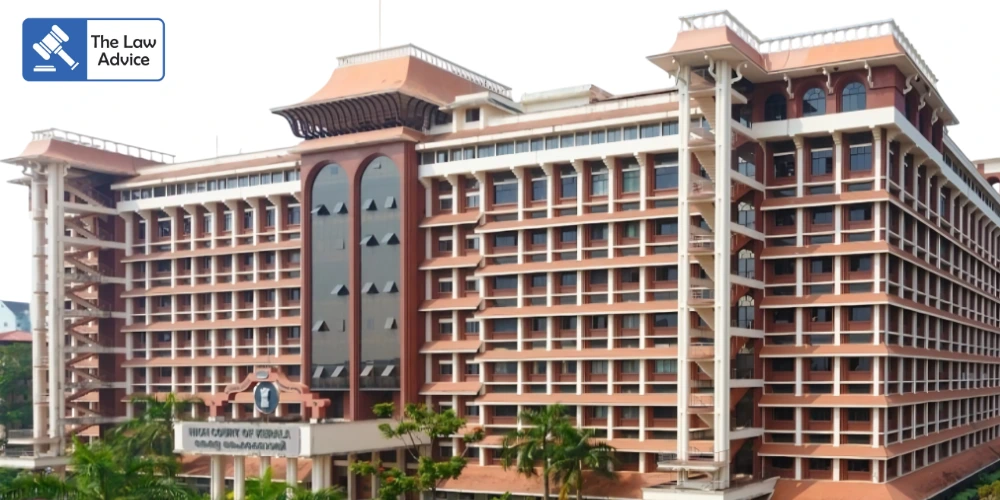
The Kerala High Court has ruled that a bank cannot be treated as an “assessee in default” for failure to deduct tax at source (TDS) on interest income once it has accepted valid Form 15H declarations from senior citizen depositors under Section 197A(1C) of the Income Tax Act.
A Division Bench comprising Justices A. Muhamed Mustaque and Harisankar V. Menon considered whether the appellant bank could be held liable as an assessee in default for not deducting TDS on interest paid to senior citizens who had submitted declarations in Form 15H.
The Court examined Section 197A(1C) of the Income Tax Act, which provides that where a depositor furnishes a declaration in writing, in the prescribed form and manner, stating that the tax payable on his estimated total income for the relevant previous year would be NIL, the person responsible for paying such income is not required to deduct TDS.
In the present case, the appellant bank was otherwise under a statutory obligation to deduct TDS on interest paid on fixed deposits in terms of Section 194A of the Income Tax Act, 1961. However, a special dispensation exists for interest paid to persons aged above 60 years under Section 197A(1C) of the Act.
The prescribed declaration under Section 197A(1C) is Form 15H, framed under Rule 29C of the Income Tax Rules, 1962. Relying on the Form 15H declarations submitted by senior citizen depositors, the bank did not deduct TDS during the relevant assessment years.
These declarations were also produced by the bank along with its TDS returns. Despite this, proceedings were subsequently initiated proposing to treat the bank as an “assessee in default” for not deducting TDS on the interest paid.
The proceedings were primarily based on Footnote No.10 appended to Form 15H. Disregarding the objections raised by the bank, the authorities passed separate orders treating it as an assessee in default and raising demands of tax under Section 201(1) and interest under Section 201(1A) of the Act.
The bank’s first appeals against these orders were dismissed by the Commissioner of Income Tax (Appeals), following which the bank approached the Income Tax Appellate Tribunal. The Tribunal also rejected the appeals, prompting the present proceedings before the High Court.
The revenue contended that in all the cases, since the interest income exceeded the basic exemption limit, the bank ought not to have acted upon the declarations in Form 15H, as clarified in Footnote No.10.
Rejecting this argument, the High Court observed that Footnote No.10 would require the payer to assess whether the amount credited exceeds the maximum income not chargeable to tax after factoring in deductions under Chapter VIA and set-off of losses. The Court termed this requirement a “herculean task” for the payer.
The Bench held that if Footnote No.10 were to be treated as mandatory, the payer would be compelled to demand details of deductions and set-offs from the payee, which would defeat the very object of granting beneficial treatment to senior citizens under Section 197A(1C). This was particularly significant as Form 15H itself does not contain any column requiring disclosure of deductions under Chapter VIA or set-off of losses.
The Court further noted that the prescription under Footnote No.10 amounted to an instance of excessive delegation of power.
In view of these findings, the High Court allowed the appeal and set aside the orders treating the bank as an assessee in default.
Case Title:
The South Indian Bank Limited v. Income Tax Officer
Case Number:
ITA No. 64 of 2024
Website designed, developed and maintained by webexy