
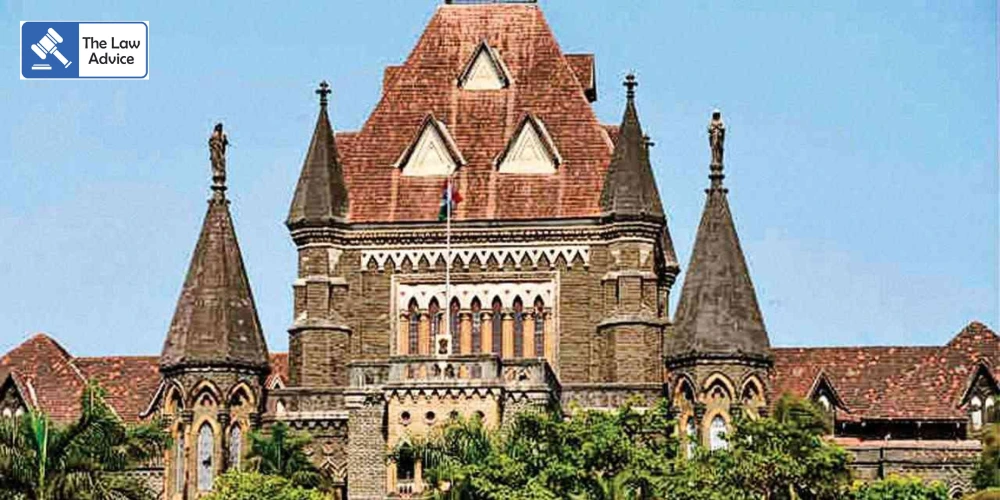
The Bombay High Court has dismissed a petition filed under Section 34 of the Arbitration and Conciliation Act, 1996, thereby upholding a 2017 arbitral award which directed specific performance of a development transaction concerning approximately 57,000 sq. metres of land situated at Ghatkopar (West), Mumbai.
Justice Somasekhar Sundaresan held that there was no material on record to indicate that Nilkanth Enterprise was either unwilling or incapable of fulfilling its contractual obligations. The Court observed that the findings did not disclose any inherent contradiction but instead reflected that one party was not ready and willing to perform. It was noted that BTRA, having shown reluctance to perform and having not even called upon Nilkanth to perform, could not accuse the latter of non-performance.
Background
The dispute traces its origins to negotiations initiated in 2003, when Nilkanth Enterprise proposed to acquire and develop land belonging to the Bombay Textile Research Association (BTRA). A series of correspondences followed, pursuant to which Nilkanth paid an amount exceeding ₹4.03 crore. This was followed by a stamped execution draft of a Development Agreement in December 2005, along with Minutes of Meeting (MOM) modifying certain operational aspects of the transaction.
When the transaction failed to progress, Nilkanth instituted a suit for specific performance in 2009. Subsequently, by consent terms recorded in 2013, the parties referred the dispute to arbitration. The Arbitral Tribunal granted specific performance of what it termed the “Enforced Agreement”, comprising the November 2003 letter, the execution draft Development Agreement, and the 2005 MOM.
BTRA challenged the arbitral award on the ground that the Tribunal had exceeded its jurisdiction and granted reliefs beyond those sought. It was argued that the Tribunal enforced an agreement different from the one referred to arbitration, relied upon a combination of documents that did not constitute the “Suit Agreement”, and rendered an award that was vague, contradictory and incapable of execution. BTRA further contended that the correspondence suggested a “sale” transaction, whereas the Development Agreement contemplated “development”, and alleged improper reliance on internal documents and a purportedly privileged legal opinion.
Opposing the challenge, Nilkanth Enterprise submitted that the documents from the 2003 correspondence through the 2005 MOM formed a continuous chain of negotiations culminating in a concluded and binding contract. It was argued that the alleged distinction between “sale” and “development” was illusory, as all documents consistently reflected a development arrangement.
Findings
The High Court held that the three letters, the execution draft Development Agreement and the MOM constituted a single continuum of negotiations, which the Arbitral Tribunal had rightly interpreted as a composite agreement.
The Court observed that the distinction sought to be drawn between the nature of the transaction emerging from the correspondence and the Development Agreement was not such as to disrupt the understanding between the parties or render the award incapable of execution. It held that the inclusion of the November 2003 letter did not materially alter the relief sought or granted.
Justice Sundaresan further held that the plaint, the original statement of claim and the amended claims consistently referred to the same chain of documents, and that the Arbitral Tribunal had acted squarely within the scope of its authority.
Rejecting the plea of inherent contradictions, the Court found that Nilkanth’s readiness and willingness to perform was supported by evidence, including substantial payments and steps taken to obtain requisite permissions. It reiterated that there was nothing on record to demonstrate Nilkanth’s inability or unwillingness to perform its obligations.
The Court also noted that BTRA’s own internal board minutes acknowledged that an agreement had been arrived at between the parties, and that the nature of the transaction consistently remained one of development rather than an outright sale.
On the issue of an allegedly privileged legal opinion attributed to the then Advocate General, the Court held that the controversy was inconsequential, particularly since the opinion was obtained when BTRA and Nilkanth were acting in alignment. It held that any alleged failure of the Tribunal to deal exhaustively with the question of privilege did not amount to perversity warranting interference under Section 34.
The Court further rejected BTRA’s reliance on judgments such as Mademsetty Satyanarayana and K.S. Vidyanadam, noting that those decisions applied to situations involving steep escalation in property prices coupled with delay or inaction by the plaintiff. In the present case, the Court found that a concluded agreement existed, the suit was filed within limitation, and Nilkanth had acted promptly after BTRA’s repudiation.
Accordingly, the Commercial Arbitration Petition was dismissed.
Case Title:
Bombay Textile Research Association v. Nilkanth Enterprise
Case Number:
Commercial Arbitration Petition No. 519 of 2017
Judgment Date:
12 December 2025
Website designed, developed and maintained by webexy