
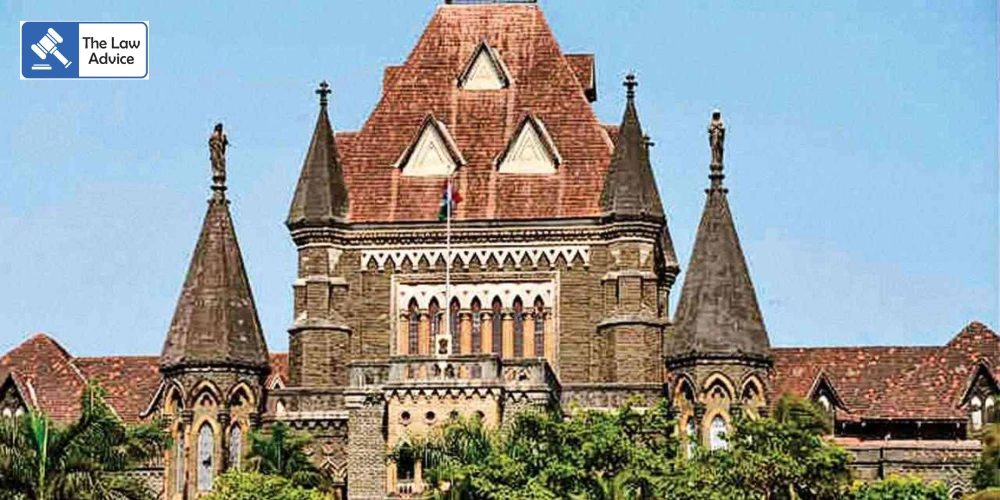
The Bombay High Court has overturned an arbitral award that had ordered Sharekhan Limited to return ₹4.87 lakh in brokerage to its client, Darshini Shah. The Court held that the arbitral tribunals had adopted an untenable approach by treating the same 2007 agreement as valid for permitting trades but invalid for levying brokerage—an interpretation it described as fundamentally incompatible with contract law principles.
Justice Sandeep V. Marne, in a judgment delivered on December 9, 2025, concluded that the arbitrators had wrongly applied an NSE circular dated February 10, 2020. He observed that Indian law “does not permit a contract to operate for one purpose and not for another. The contract is held valid for legitimizing trades but is held illegal for charge of brokerage.” The Court held that such reasoning was irrational and contrary to the public policy of India.
The dispute originated from a 2007 agreement under which Shah enrolled in Sharekhan’s AMC scheme by paying ₹6,000 annually for reduced brokerage rates. After discontinuing AMC payments in 2013, Shah was treated as a regular client. When she resumed trading in May 2021, Sharekhan charged standard brokerage, raising an invoice of ₹5.08 lakh on November 1, 2021.
Claiming that the brokerage was excessive, Shah approached the NSE and relied on a 2020 circular dealing with inactive accounts to argue that Sharekhan was still bound by the AMC scheme. When the NSE’s grievance committee rejected her claim, she initiated arbitration.
Before the Sole Arbitrator, Shah argued that her account’s inactivity required Sharekhan to obtain fresh KYC, making the 2007 agreement inapplicable for brokerage determination. The Sole Arbitrator accepted this contention and held that Sharekhan had violated the NSE circular. The Appellate Arbitral Tribunal affirmed the award.
Sharekhan, before the High Court, contended that the circular related solely to operational compliance and had no bearing on brokerage charges or the subsistence of contractual obligations. It argued that the arbitrators had effectively revived an AMC scheme that had lapsed eight years earlier.
The High Court agreed, holding that the 2020 circular on inactive accounts could not erase Shah’s duty to pay standard brokerage after the AMC had long expired. While failure to update KYC may attract regulatory consequences, the Court said it cannot nullify a binding contract.
The Court criticised the arbitral tribunals for disregarding the AMC form and effectively rewriting the parties’ agreement, observing:
“The Sole Arbitrator and the Appellate Arbitral Tribunal have adopted a non-judicious approach by relying on an NSE circular to free the respondent from her contractual obligations under the 2007 agreement.”
Finding the awards “egregiously perverse and unsustainable,” the Court set them aside, allowing Sharekhan’s petition.
Case Title: Sharekhan Limited v. Darshini Shah
Case Number: Arbitration Petition No. 94 of 2024
For Petitioner: Prathamesh Kamat, Ativ Patel, Viloma Shah & Viraj Raiyani, i/b AVP Partners
For Respondent: Saurabh Bacchawat & Rajesh Khandelwal, i/b Juris Link
Website designed, developed and maintained by webexy